


Bacterial Sialate O-Acetyltransferases

- Authors: Martina Mühlenhoff1, Anne K. Bergfeld2
-
View Affiliations Hide Affiliations1 Institut für Zelluläre Chemie, Medizinische Hochschule Hannover, Carl-Neuberg- Str. 1, D-30623 Hannover, Germany 2 Department of Cellular & Molecular Medicine, University of California at San Diego, La Jolla, CA 92093, USA
- Source: Sialobiology: Structure, Biosynthesis and Function. Sialic Acid Glycoconjugates in Health and Disease , pp 209-235
- Publication Date: January 2013
- Language: English


Bacterial Sialate O-Acetyltransferases, Page 1 of 1
< Previous page | Next page > /docserver/preview/fulltext/9781608053865/chapter-7-1.gif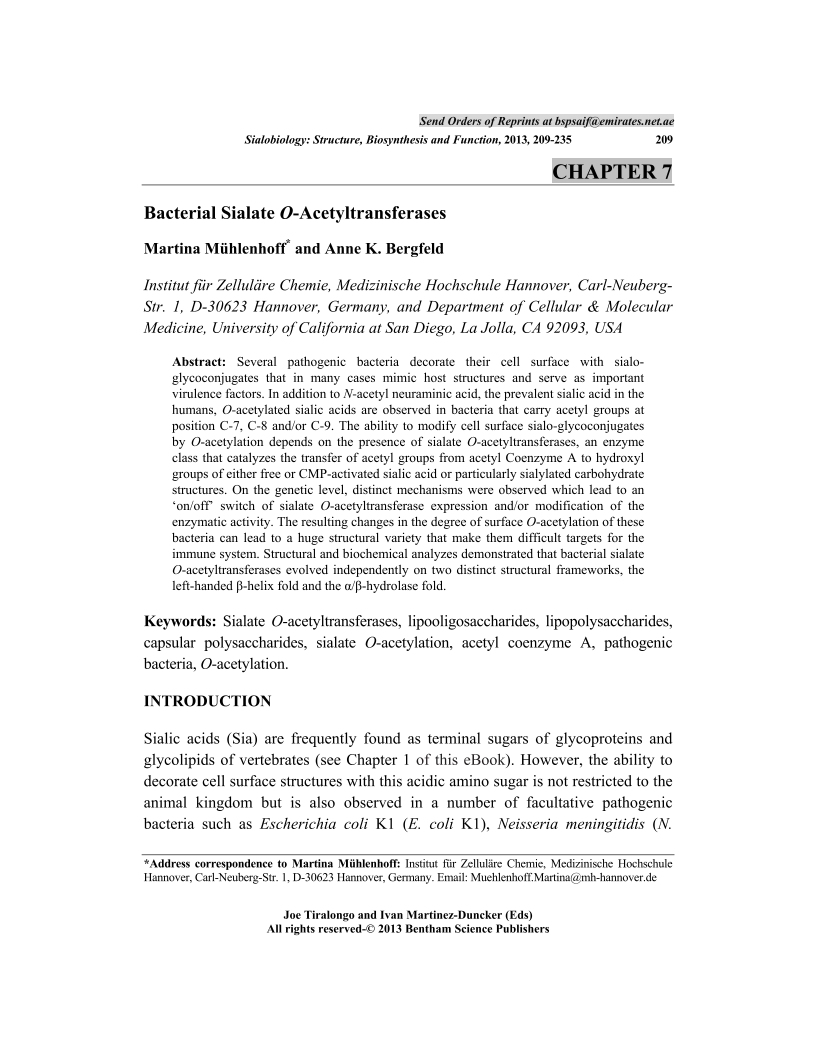
Several pathogenic bacteria decorate their cell surface with sialoglycoconjugates that in many cases mimic host structures and serve as important virulence factors. In addition to N-acetyl neuraminic acid, the prevalent sialic acid in the humans, O-acetylated sialic acids are observed in bacteria that carry acetyl groups at position C-7, C-8 and/or C-9. The ability to modify cell surface sialo-glycoconjugates by O-acetylation depends on the presence of sialate O-acetyltransferases, an enzyme class that catalyzes the transfer of acetyl groups from acetyl Coenzyme A to hydroxyl groups of either free or CMP-activated sialic acid or particularly sialylated carbohydrate structures. On the genetic level, distinct mechanisms were observed which lead to an 'on/off' switch of sialate O-acetyltransferase expression and/or modification of the enzymatic activity. The resulting changes in the degree of surface O-acetylation of these bacteria can lead to a huge structural variety that make them difficult targets for the immune system. Structural and biochemical analyzes demonstrated that bacterial sialate O-acetyltransferases evolved independently on two distinct structural frameworks, the left-handed β-helix fold and the α/β-hydrolase fold.
-
From This Site
/content/books/9781608053865.chapter-7dcterms_subject,pub_keyword-contentType:Journal -contentType:Figure -contentType:Table -contentType:SupplementaryData105
