


Mammalian Sialidases

- Authors: Tadashi Suzuki1, Kazunori Yamaguchi2
-
View Affiliations Hide Affiliations1 Glycometabolome Team, RIKEN Advanced Science Institute, Wako, Japan and CREST (Core Research for Evolutionary Science and Technology), JST (Japan Science and Technology Agency) Japan 2 Division of Biochemistry, Miyagi Cancer Center Research Institute, Natori, Japan
- Source: Sialobiology: Structure, Biosynthesis and Function. Sialic Acid Glycoconjugates in Health and Disease , pp 188-208
- Publication Date: January 2013
- Language: English
Preview this chapter:


Mammalian Sialidases, Page 1 of 1
< Previous page | Next page > /docserver/preview/fulltext/9781608053865/chapter-6-1.gif
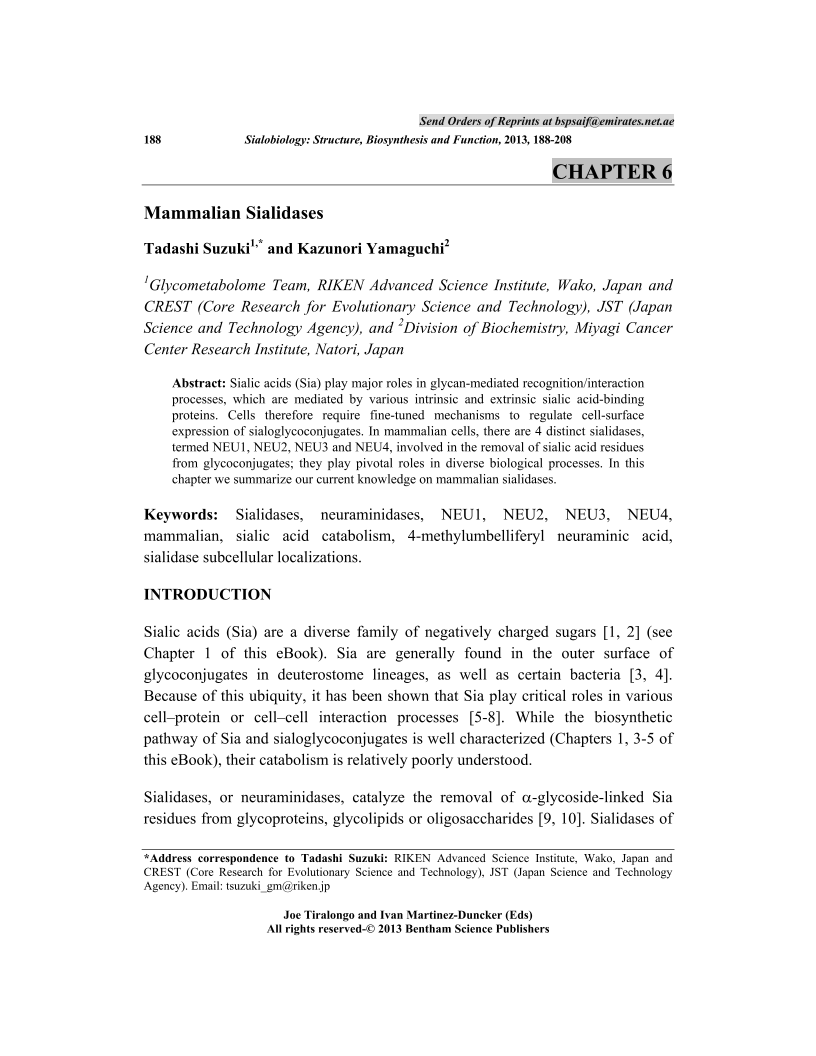
Sialic acids (Sia) play major roles in glycan-mediated recognition/interaction processes, which are mediated by various intrinsic and extrinsic sialic acid-binding proteins. Cells therefore require fine-tuned mechanisms to regulate cell-surface expression of sialoglycoconjugates. In mammalian cells, there are 4 distinct sialidases, termed NEU1, NEU2, NEU3 and NEU4, involved in the removal of sialic acid residues from glycoconjugates; they play pivotal roles in diverse biological processes. In this chapter we summarize our current knowledge on mammalian sialidases.
Hardbound ISBN:
9781608050673
Ebook ISBN:
9781608053865
-
From This Site
/content/books/9781608053865.chapter-6dcterms_subject,pub_keyword-contentType:Journal -contentType:Figure -contentType:Table -contentType:SupplementaryData105
/content/books/9781608053865.chapter-6
dcterms_subject,pub_keyword
-contentType:Journal -contentType:Figure -contentType:Table -contentType:SupplementaryData
10
5
Chapter
content/books/9781608053865
Book
false
en
