


Advances in Sialic Acid and Polysialic Acid Detection Methodologies

- By Sebastian P. Galuska1
-
View Affiliations Hide Affiliations1 Institute of Biochemistry, Faculty of Medicine, University of Giessen, Friedrichstrasse 24, D 35392 Giessen, Germany
- Source: Sialobiology: Structure, Biosynthesis and Function. Sialic Acid Glycoconjugates in Health and Disease , pp 448-475
- Publication Date: January 2013
- Language: English


Advances in Sialic Acid and Polysialic Acid Detection Methodologies, Page 1 of 1
< Previous page | Next page > /docserver/preview/fulltext/9781608053865/chapter-13-1.gif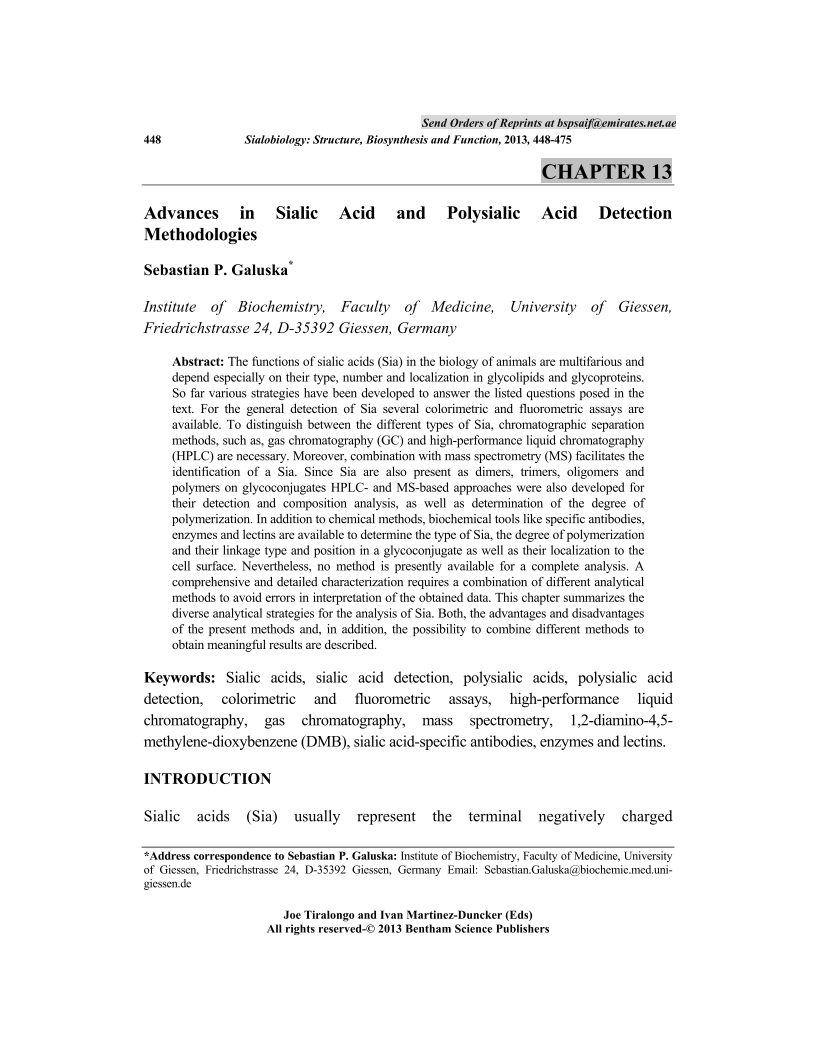
The functions of sialic acids (Sia) in the biology of animals are multifarious and depend especially on their type, number and localization in glycolipids and glycoproteins. So far various strategies have been developed to answer the listed questions posed in the text. For the general detection of Sia several colorimetric and fluorometric assays are available. To distinguish between the different types of Sia, chromatographic separation methods, such as, gas chromatography (GC) and high-performance liquid chromatography (HPLC) are necessary. Moreover, combination with mass spectrometry (MS) facilitates the identification of a Sia. Since Sia are also present as dimers, trimers, oligomers and polymers on glycoconjugates HPLC- and MS-based approaches were also developed for their detection and composition analysis, as well as determination of the degree of polymerization. In addition to chemical methods, biochemical tools like specific antibodies, enzymes and lectins are available to determine the type of Sia, the degree of polymerization and their linkage type and position in a glycoconjugate as well as their localization to the cell surface. Nevertheless, no method is presently available for a complete analysis. A comprehensive and detailed characterization requires a combination of different analytical methods to avoid errors in interpretation of the obtained data. This chapter summarizes the diverse analytical strategies for the analysis of Sia. Both, the advantages and disadvantages of the present methods and, in addition, the possibility to combine different methods to obtain meaningful results are described.
-
From This Site
/content/books/9781608053865.chapter-13dcterms_subject,pub_keyword-contentType:Journal -contentType:Figure -contentType:Table -contentType:SupplementaryData105
