


Quantitative Structure Activity Relationship: History, Development and Applications
- Authors: Medhat Ibrahim1, Noha A. Saleh2, Wael M. Elshemey3
-
View Affiliations Hide Affiliations1 Spectroscopy Department, National Research Centre, Dokki, Cairo, Egypt, Egypt 2 Biophysics Department, Faculty of Science, University of Cairo, Giza, Egypt 3 Biophysics Department, Faculty of Science, University of Cairo, Giza, Egypt
- Source: Recent Trends on QSAR in the Pharmaceutical Perceptions , pp 360-391
- Publication Date: June 2012
- Language: English


Quantitative Structure Activity Relationship: History, Development and Applications, Page 1 of 1
< Previous page | Next page > /docserver/preview/fulltext/9781608053797/chapter-12-1.gif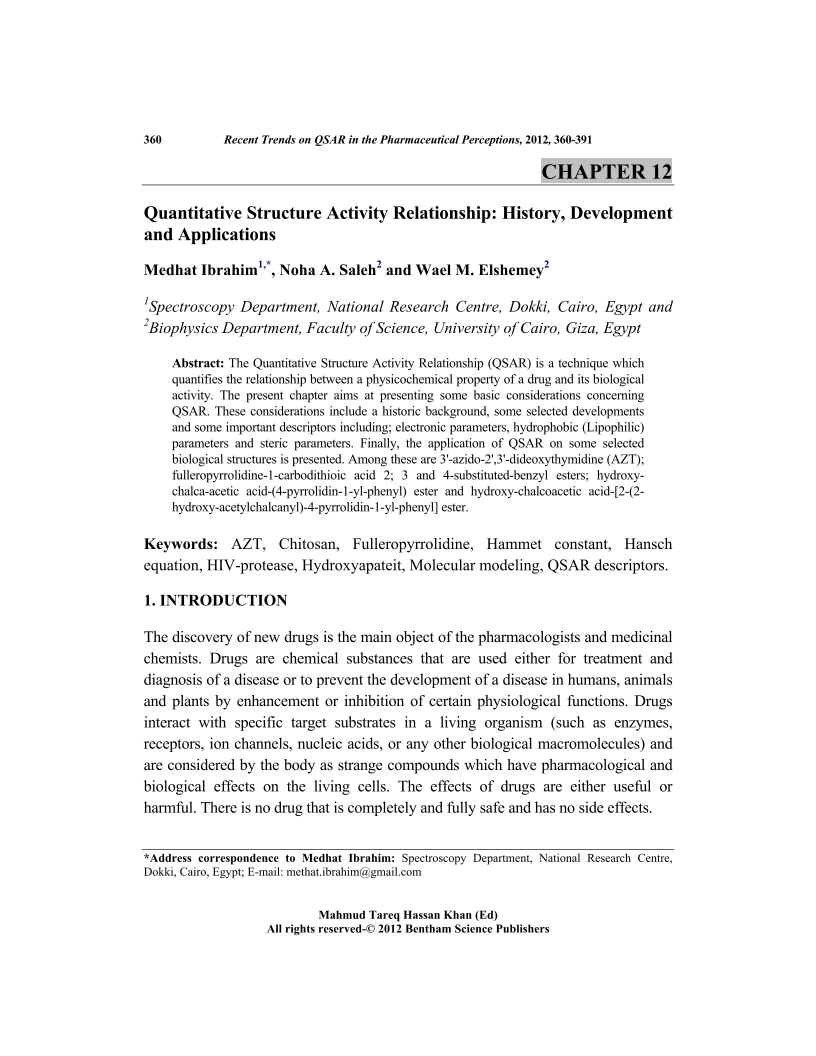
The Quantitative Structure Activity Relationship (QSAR) is a technique which quantifies the relationship between a physicochemical property of a drug and its biological activity. The present chapter aims at presenting some basic considerations concerning QSAR. These considerations include a historic background, some selected developments and some important descriptors including; electronic parameters, hydrophobic (Lipophilic) parameters and steric parameters. Finally, the application of QSAR on some selected biological structures is presented. Among these are 3'-azido-2',3'-dideoxythymidine (AZT); fulleropyrrolidine-1-carbodithioic acid 2; 3 and 4-substituted-benzyl esters; hydroxychalca- acetic acid-(4-pyrrolidin-1-yl-phenyl) ester and hydroxy-chalcoacetic acid-[2-(2- hydroxy-acetylchalcanyl)-4-pyrrolidin-1-yl-phenyl] ester.
-
From This Site
/content/books/9781608053797.chapter-12dcterms_subject,pub_keyword-contentType:Journal -contentType:Figure -contentType:Table -contentType:SupplementaryData105
