


QSAR and Bioinformatics for Rational Peptide Design: An Overview of the Development of New Anti-Infective Drugs and MHC Binding Peptides
- Authors: Olivier Taboureau1, Morten Nielsen, Claus Lundegaard, Ole Lund
-
View Affiliations Hide Affiliations1 Center for Biological Sequences Analysis, Department of Systems Biology,Technical University of Denmark, Building 208, DK-2800 Lyngby, Denmark
- Source: Recent Trends on QSAR in the Pharmaceutical Perceptions , pp 342-359
- Publication Date: June 2012
- Language: English


QSAR and Bioinformatics for Rational Peptide Design: An Overview of the Development of New Anti-Infective Drugs and MHC Binding Peptides, Page 1 of 1
< Previous page | Next page > /docserver/preview/fulltext/9781608053797/chapter-11-1.gif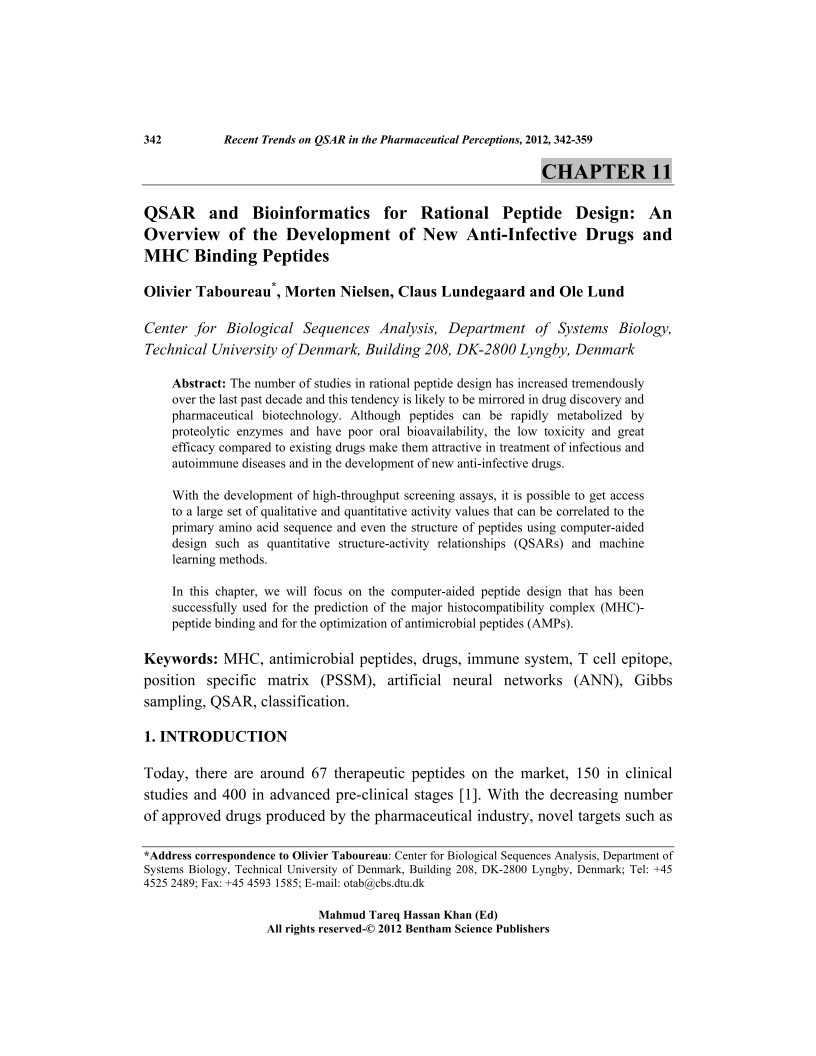
The number of studies in rational peptide design has increased tremendously over the last past decade and this tendency is likely to be mirrored in drug discovery and pharmaceutical biotechnology. Although peptides can be rapidly metabolized by proteolytic enzymes and have poor oral bioavailability, the low toxicity and great efficacy compared to existing drugs make them attractive in treatment of infectious and autoimmune diseases and in the development of new anti-infective drugs. With the development of high-throughput screening assays, it is possible to get access to a large set of qualitative and quantitative activity values that can be correlated to the primary amino acid sequence and even the structure of peptides using computer-aided design such as quantitative structure-activity relationships (QSARs) and machine learning methods. In this chapter, we will focus on the computer-aided peptide design that has been successfully used for the prediction of the major histocompatibility complex (MHC)- peptide binding and for the optimization of antimicrobial peptides (AMPs).
-
From This Site
/content/books/9781608053797.chapter-11dcterms_subject,pub_keyword-contentType:Journal -contentType:Figure -contentType:Table -contentType:SupplementaryData105
