


Zeolite Formation and Deposits
- Authors: Ioannis Marantos1, George E. Christidis2, Mihaela Ulmanu3
-
View Affiliations Hide Affiliations1 Institute of Geology and Mineral Exploration, Olympic Village, 136 77 Athens, Greece 2 Department of Mineral Resources Engineering, Technical University of Crete (TUC), 73100 Chania, Greece 3 National R&D Institute for Non- Ferrous and Rare Metals, IMNR, Bd. Biruintei 102, 77145 Pantelimon, Romania
- Source: Handbook of Natural Zeolites , pp 28-51
- Publication Date: July 2012
- Language: English


Zeolite Formation and Deposits, Page 1 of 1
< Previous page | Next page > /docserver/preview/fulltext/9781608052615/chapter-3-1.gif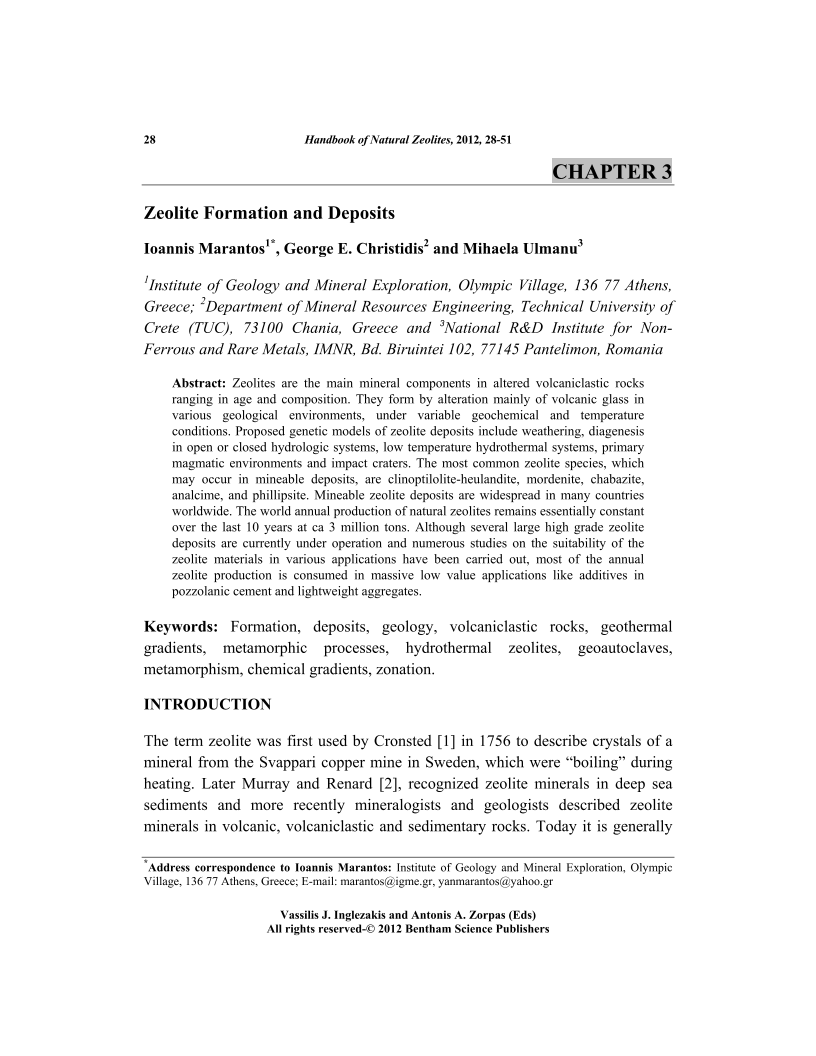
Zeolites are the main mineral components in altered volcaniclastic rocks ranging in age and composition. They form by alteration mainly of volcanic glass in various geological environments, under variable geochemical and temperature conditions. Proposed genetic models of zeolite deposits include weathering, diagenesis in open or closed hydrologic systems, low temperature hydrothermal systems, primary magmatic environments and impact craters. The most common zeolite species, which may occur in mineable deposits, are clinoptilolite-heulandite, mordenite, chabazite, analcime, and phillipsite. Mineable zeolite deposits are widespread in many countries worldwide. The world annual production of natural zeolites remains essentially constant over the last 10 years at ca 3 million tons. Although several large high grade zeolite deposits are currently under operation and numerous studies on the suitability of the zeolite materials in various applications have been carried out, most of the annual zeolite production is consumed in massive low value applications like additives in pozzolanic cement and lightweight aggregates.
-
From This Site
/content/books/9781608052615.chapter-3dcterms_subject,pub_keyword-contentType:Journal -contentType:Figure -contentType:Table -contentType:SupplementaryData105
