


Recent Advances in the Chemistry of Fluorine-Containing π-Allylmetal and Allenylmetal Complexes
- Authors: Tsutomu Konno1, Takashi Ishihara2
-
View Affiliations Hide Affiliations1 Department of Chemistry and Materials Technology, Kyoto Institute of Technology, Matsugasaki, Sakyo ku, Kyoto 606-8585, Japan. 2 Department of Chemistry and Materials Technology, Kyoto Institute of Technology, Matsugasaki, Sakyo ku, Kyoto 606-8585, Japan.
- Source: Advances in Organic Synthesis: Volume 2 , pp 491-522
- Publication Date: January 2006
- Language: English


Recent Advances in the Chemistry of Fluorine-Containing π-Allylmetal and Allenylmetal Complexes, Page 1 of 1
< Previous page | Next page > /docserver/preview/fulltext/9781608051984/chapter-15-1.gif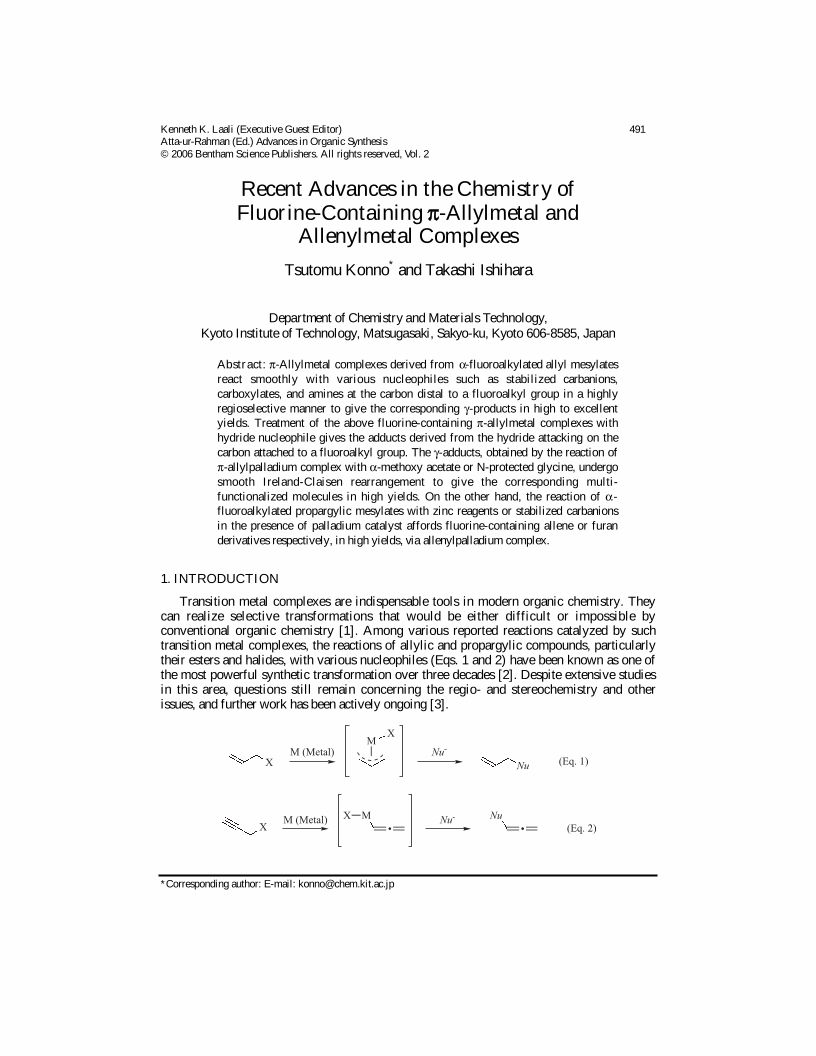
π-Allylmetal complexes derived from α-fluoroalkylated allyl mesylates react smoothly with various nucleophiles such as stabilized carbanions, carboxylates, and amines at the carbon distal to a fluoroalkyl group in a highly regioselective manner to give the corresponding γ-products in high to excellent yields. Treatment of the above fluorine-containing π-allylmetal complexes with hydride nucleophile gives the adducts derived from the hydride attacking on the carbon attached to a fluoroalkyl group. The γ-adducts, obtained by the reaction of π-allylpalladium complex with α-methoxy acetate or N-protected glycine, undergo smooth Ireland-Claisen rearrangement to give the corresponding multifunctionalized molecules in high yields. On the other hand, the reaction of α- fluoroalkylated propargylic mesylates with zinc reagents or stabilized carbanions in the presence of palladium catalyst affords fluorine-containing allene or furan derivatives respectively, in high yields, via allenylpalladium complex.
-
From This Site
/content/books/9781608051984.chapter-15dcterms_subject,pub_keyword-contentType:Journal -contentType:Figure -contentType:Table -contentType:SupplementaryData105
