


NMR Screening Methods in Fragment-Based Drug Discovery
- Authors: Consonni Roberto1, Veronesi Marina2
-
View Affiliations Hide Affiliations1 Institute for the Study of Macromolecules (ISMAC), NMR Laboratory, National Council of Research, Milan, Italy 2 Italian Institute of Technology, Genoa, Italy
- Source: Structure-Activity Relationship Studies in Drug Development by NMR Spectroscopy , pp 67-101
- Publication Date: June 2011
- Language: English


NMR Screening Methods in Fragment-Based Drug Discovery, Page 1 of 1
< Previous page | Next page > /docserver/preview/fulltext/9781608051649/chapter-3-1.gif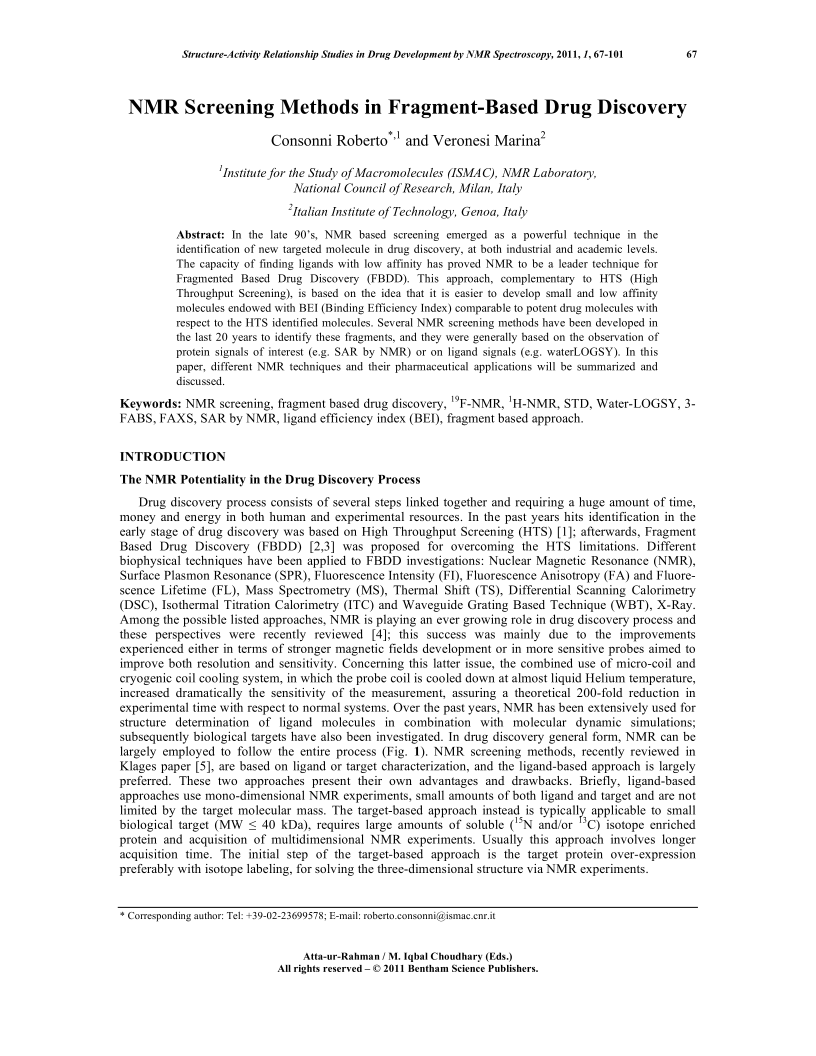
In the late 90's, NMR based screening emerged as a powerful technique in the identification of new targeted molecule in drug discovery, at both industrial and academic levels. The capacity of finding ligands with low affinity has proved NMR to be a leader technique for Fragmented Based Drug Discovery (FBDD). This approach, complementary to HTS (High Throughput Screening), is based on the idea that it is easier to develop small and low affinity molecules endowed with BEI (Binding Efficiency Index) comparable to potent drug molecules with respect to the HTS identified molecules. Several NMR screening methods have been developed in the last 20 years to identify these fragments, and they were generally based on the observation of protein signals of interest (e.g. SAR by NMR) or on ligand signals (e.g. waterLOGSY). In this paper, different NMR techniques and their pharmaceutical applications will be summarized and discussed.
-
From This Site
/content/books/9781608051649.chapter-3dcterms_subject,pub_keyword-contentType:Journal -contentType:Figure -contentType:Table -contentType:SupplementaryData105
