


Investigation of Drug Delivery Behaviors by NMR Spectroscopy
- Authors: Soo Jin Park1, Ki-Seok Kim2
-
View Affiliations Hide Affiliations1 Department of Chemistry, Inha University, 253 Yonghyun-dong, Nam-gu Incheon, 402-751, Korea 2 Department of Chemistry, Inha University, 253 Yonghyun-dong, Nam-gu Incheon, 402-751, Korea
- Source: Structure-Activity Relationship Studies in Drug Development by NMR Spectroscopy , pp 36-66
- Publication Date: June 2011
- Language: English


Investigation of Drug Delivery Behaviors by NMR Spectroscopy, Page 1 of 1
< Previous page | Next page > /docserver/preview/fulltext/9781608051649/chapter-2-1.gif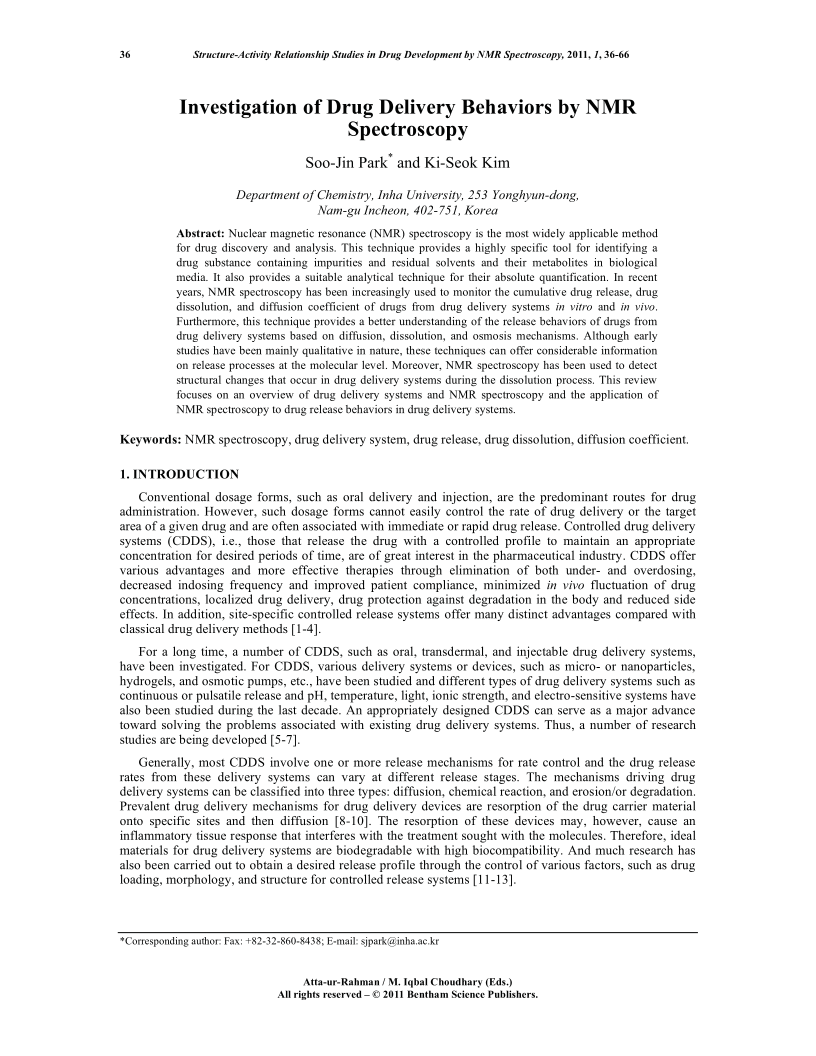
Nuclear magnetic resonance (NMR) spectroscopy is the most widely applicable method for drug discovery and analysis. This technique provides a highly specific tool for identifying a drug substance containing impurities and residual solvents and their metabolites in biological media. It also provides a suitable analytical technique for their absolute quantification. In recent years, NMR spectroscopy has been increasingly used to monitor the cumulative drug release, drug dissolution, and diffusion coefficient of drugs from drug delivery systems in vitro and in vivo. Furthermore, this technique provides a better understanding of the release behaviors of drugs from drug delivery systems based on diffusion, dissolution, and osmosis mechanisms. Although early studies have been mainly qualitative in nature, these techniques can offer considerable information on release processes at the molecular level. Moreover, NMR spectroscopy has been used to detect structural changes that occur in drug delivery systems during the dissolution process. This review focuses on an overview of drug delivery systems and NMR spectroscopy and the application of NMR spectroscopy to drug release behaviors in drug delivery systems.
-
From This Site
/content/books/9781608051649.chapter-2dcterms_subject,pub_keyword-contentType:Journal -contentType:Figure -contentType:Table -contentType:SupplementaryData105
