


Bentham Science Publishers
Bentham Science Publishers is a major publisher of more than 100 peer-reviewed science, technology and medical (STM) journals, along with a rapidly growing collection of eBooks. Since 1993, Bentham Science Publishers has been catering to the information needs of the pharmaceutical, engineering, biomedical and medical research community.1061 - 1080 of 1970 results
-
-

Implementing Hyper Automation: Strategies, Best Practices and Case Studies
More Less"Implementing Hyper Automation: Strategies, Best Practices, and Case Studies" offers insights into the powerful convergence of AI, Machine Learning, Robotic Process Automation, Natural Language Processing, and Advanced analytics. Rooted in modern digital transformation trends, the book demonstrates how intelligent automation reshapes organisational efficiency, enhances decision-making, and drives scalable growth across industries.
The book begins with foundational concepts, core principles, and architectural frameworks that guide the development of resilient and intelligent automation ecosystems. It then presents sector-specific case studies from banking, healthcare, manufacturing, and agriculture, showcasing real implementations, measurable impact, and lessons learned. Later chapters address data governance, security, operational risks, enabling technologies, and emerging trends, concluding with a strategic roadmap for sustaining automation-driven transformation.
Key Features
- Explains core principles and architectural foundations of hyper automation
- Demonstrates real-world case studies across major industries
- Provides actionable frameworks and implementation strategies
- Addresses governance, security, risks, and future trends
- Bridges academic insights with practical, enterprise-focused guidance
-
-
-

Improved Indirect Power Control (IDPC) of Wind Energy Conversion Systems (WECS)
More LessWind power capacity in the world has been increased by more than 30% over the last decade in countries which have prominent installations. Wind energy conversion systems (WECSs) based on the doubly-fed induction generator (DFIG) have dominated the wind power generation sector due to the outstanding advantages they provide, including small converter ratings (around 30% of the generator rating) and lower converter costs.
Due to the non-linearity of wind power systems, the DFIG power control setup presents a big challenge especially under conditions of high variance in wind-speed and parameter sensing. To overcome these major problems, an improved IDPC (Indirect Power Control) system based on PID (Proportional-Integral-Derivative) controller, has been proposed instead of the conventional power inverters.
This handbook covers information about IDPC based WECS. The book starts with a general introduction to wind power system basics. Subsequent chapters provide additional knowledge about robustness tests and adaptive / intelligent control systems employed in wind energy systems. The new concept of direct and quadrature current control (Ird & Irq) under MPPT (Maximum Power Point Tracking) strategy is also explained along with novel fuzzy logic type control systems. The authors have included detailed diagrams and an appendix of WECS parameters, making this handbook a useful primer for engineering students working towards completing licenses, Masters degrees and Post-graduation programs in advanced wind power energy systems.
-
-
-

In Memory of Ethics: A Dissection of Ethical and Social Issues in Pakistani Professional Healthcare Practice
More LessIn Memory of Ethics: A Dissection of Ethical and Social Issues in Pakistani Professional Healthcare Practice explores the ethical challenges faced within the healthcare sector with a focus on Pakistan. From workplace behaviors to medical procedures, COVID-19 era dilemmas, and broader social health concerns, the book explores the intricate intersection of ethics and healthcare in the region.
The book is divided into five sections. Section I covers topics such as workplace behaviors and ethical conducts while section II covers medical procedures, and patient-doctor relationships. Section III addresses the unique ethical challenges brought forth by the COVID-19 pandemic, including guidelines for therapists and the ethics of mandatory vaccinations. Section IV examines the impact of social media on healthcare, gender discrimination, and the ethical considerations surrounding prisoner rehabilitation. The final section offers insightful essays on ethical and social Issues, covering topics like body shaming, free healthcare, and patient privacy. The editors also explore controversial topics, including euthanasia, abortion, and assisted reproductive technology.
The key feature of this book is that it provides a comprehensive coverage of diverse ethical dilemmas in healthcare. Furthermore, it is an attempt to give a subjective understanding of healthcare ethics through thought-provoking essays shedding light on contemporary ethical issues in a Pakistani context. The contributors have incorporated real-world examples and case studies to illustrate ethical principles in action.
In Memory of Ethics: A Dissection of Ethical and Social Issues in Pakistani Professional Healthcare Practice book is essential reading for anyone interested in understanding complex ethical and social issues and promoting integrity in healthcare practices.
-
-
-
In Silico Lead Discovery
More LessComputer-aided drug design and in silico screening have contributed to the discovery of several compounds that have either reached the market or entered clinical trials. In silico Lead Discovery is a compilation of the efforts of several experts on bioinformatics and drug design in developing the latest advances of in silico approaches for lead discovery. It contains an overview of structure-based, ligand-based methods and current fragment-based methods as well as examples for successful applications of such methods in discovering new hit/lead molecules for important therapeutic targets. Treatment of receptor flexibility - which is one of the most important challenges for in silico screening today – has also been highlighted in the eBook. Biomedical scientists, biologists and chemists can find valuable information here that could help them to initiate or to complete chemical biology projects with the goal of designing new hit-to-lead molecules or chemical probes for chemogenomics projects.
-
-
-
In Vitro Propagation and Secondary Metabolite Production from Medicinal Plants: Current Trends (Part 1)
More LessThis book is a comprehensive review of secondary metabolite production from plant tissue culture. The editors have compiled 12 meticulously organized chapters that provide the relevant theoretical and practical frameworks in this subject using empirical research findings. The goal of the book is to explain the rationale behind in vitro production of secondary metabolites from some important medicinal plants. Biotechnological strategies like metabolic engineering and the biosynthesis, transport and modulation of important secondary metabolites are explained along with research studies on specific plants. In addition to the benefits of secondary metabolites, the book also aims to highlight the commercial value of medicinal plants for pharmaceutical and healthcare ventures. Topics covered in this part include: 1. Elicitation Strategies and Metabolic Engineering to boost metabolite production with case studies in metabolic engineering with examples of Scaevola Taccada and Catharanthus Roseus. 2. Stress response investigation and the role of glandular trichomes as bio-cell factories 3. Plant growth regulators and rapid regeneration techniques using swift plantlets regeneration and phytochemical characterization 4. Nutraceuticals, antimicrobials, and genomic applications of in vitro cultures with an example of Hassawi rice and its genomics 5. Sustainable approaches for saving endangered medicinal plants The book caters to a wide readership. It primarily prepares graduate students, researchers, biotechnologists, giving them a grasp of the key methodologies in the secondary metabolite production. It is a secondary reference for support executives, industry professionals, and policymakers at corporate and government levels to understand the importance of plant tissue culture and maximizing its impact in the herbal industry.
-
-
-

In Vitro Propagation and Secondary Metabolite Production from Medicinal Plants: Current Trends (Part 2)
More LessThis book is a comprehensive review of secondary metabolite production from plant tissue culture. The editors have compiled 12 meticulously organized chapters that provide the relevant theoretical and practical frameworks in this subject using empirical research findings. The goal of the book is to explain the rationale behind in vitro production of secondary metabolites from some important medicinal plants. Biotechnological strategies like metabolic engineering and the biosynthesis, transport and modulation of important secondary metabolites are explained along with research studies on specific plants. In addition to the benefits of secondary metabolites, the book also aims to highlight the commercial value of medicinal plants for pharmaceutical and healthcare ventures.
Topics covered in this part include:
1. In vitro propagation and tissue culture for several plants including Withania somnifera (L.) Dunal, Aloe vera, Oroxylum indicum (L) Kurz, Ocimum basilicum L, Rhubarb, Tea, and many others (including plants in Northern India).
2. Genetic Improvement of Pelargonium
3. Bioactive Components in Senna alata L. Roxb
4. Plant tissue culture techniques
The book caters to a wide readership. It primarily prepares graduate students, researchers, biotechnologists, giving them a grasp of the key methodologies in the secondary metabolite production. It is a secondary reference for support executives, industry professionals, and policymakers at corporate and government levels to understand the importance of plant tissue culture and maximizing its impact in the herbal industry.
-
-
-

In the Shadow of Neoliberalism: Thirty Years of Educational Reform in North America
Educating the Global Citizen: Volume 1
More LessGlobalization has emerged as one of the key social, political and economic forces of the twenty-first century, challenging national borders, long established institutions of governance and cultural norms and behaviors around the world. Yet how has it affected education? The series explores the complex and multivariate ways in which changing global paradigms have influenced education, democracy and citizenship from Latin America, Europe and Africa to Asia, the Middle East and North America. It seeks to unearth how these changes have manifest themselves in daily classroom experiences for teachers and administrators the world over and how recent events might influence future change.
-
-
-

In-Silico and In-Vitro Approaches to Screen the Antituberculosis Activity of Benzothiazole Analogs
More LessThis monograph presents information about the history and evolution of tuberculosis treatment, and the potential of the benzothiazole moiety for anti-tuberculosis (anti-TB) activity. The book introduces the reader to basic information about benzothiazole as a drug candidate before delving into the anti-tubercular properties of derivative compounds in subsequent chapters. The contributors explain quantitative structural-activity relationships of benzothiazole with anti-TB activity along with the importance of in-silico (computer aided) techniques in the drug design process. This is followed by a chapter which details Mycobacterium tuberculosis biology, strains as well as symptoms of tuberculosis infections. The book then explains in-vitro and in-vivo methods used to evaluate drug efficacy against tuberculosis along with the synthesis and anti-TB activity of the benzothiazole derivatives (benzothiazole diamide, benzothiazole guanidinyl derivatives and benzothiazole conjugated pyrazole derivatives).
This book, therefore, is a quick reference on TB diseases, methods of in-silico and in-vitro screening of anti-TB drugs and the importance of the benzothiazole in TB treatment regimens. The book is suitable for readers, researchers and post graduate students who are interested in general tuberculosis drug design, screening and discovery, as well as the application of benzothiazole as an anti-TB drug.
-
-
-

Indicator Displacement Assays (IDAs): An Innovative Molecular Sensing Approach
More LessThis book explores a revolutionary sensing technique called Indicator Displacement Assays (IDAs). It is designed to provide readers with a comprehensive understanding of the conceptual foundation and wide-ranging applications of IDAs. The book aims to fulfill a crucial gap in the existing references on the subject.
The content starts by explaining fundamental concepts, design strategies, and the scope of IDAs. Subsequent chapters elaborate on the intricate molecular recognition of various analytes, offering insights into sensing mechanisms for cationic, anionic, and neutral molecules. The design and construction of colorimetric, fluorescence, and metal complexing IDAs are also thoroughly explored in later chapters, followed by recent extensions of IDAs, including enantioselective indicator displacement assays, intramolecular indicator displacement assays, reaction-based indicator displacement assays, and more. Innovative applications of IDAs, such as sensory arrays and electrochemical sensors, are also discussed in detail, providing a comprehensive understanding of their conceptual foundations and practical implementations.
The book is a primer on IDAs for researchers who want to understand the fundamentals of the technique, as well as postgraduate students aiming to specialize in supramolecular and analytical chemistry.
-
-
-

Indopathy for Neuroprotection: Recent Advances
More LessDegenerative nerve diseases are age-related, progressive and cause irreversible neurological loss that may lead to death. Chronic diseases like amyotrophic lateral sclerosis, Huntington's disease, Alzheimer's disease, and Parkinson's disease are associated with insoluble protein depositions and pose serious health challenges that may intensify in the coming decades. Current therapies only help to alleviate some of the physical or mental symptoms associated with neurodegenerative diseases, although there is currently no remedy for slow disease progression. In recent years, attempts have been made to discover a mechanism for neurodegenerative diseases and prospective treatment that may help mitigate aging effects and prevent these diseases. Natural products have been a constant source of new approaches for the treatment of neurodegenerative diseases, in particular plant alkaloids and polyphenolic compounds.
Indopathy for Neuroprotection: Recent Advances highlights herbal treatments that are preferred over conventional treatments in some regions. Book chapters focus on the effects of various medicinal plants that have shown promise in reversing pathological symptoms of neurodegenerative disease and highlight the neuroprotective role of medicinal herbal phytochemicals and their mechanism of action. The book serves as a reference for pharmacology and herbal medicine scholars as well as healthcare workers interested in information about alternative and complementary therapies for neurological disorders.
-
-
-
Induction Motor Computer Models in Three-Phase Stator Reference Frames: A Technical Handbook
More LessThis book is a compilation of knowledge about computer models in the three-phase stator reference frame. Chapters explore several aspects of the topic and build upon research previously presented by contributors. The book aims to provide interesting solutions to problems encountered in the design of railway and analysis in railway motors. The modeling approaches proposed by the authors in this book may become an incentive for readers and researchers to develop their lifehacks to solve new problems in induction motor design and testing.
Key topics presented in the book:
- Approximate calculations of induction motor equivalent T-shaped circuit parameters with the use of catalogue data
- Simulations of different types of shaft load, including fluid coupling
- Receiving static characteristics of an electric machine during simulation by means of dynamic model
- Simulation of the electric drives specific applications with three-phase induction motors building
- Direct start of an induction motor as part of an auxiliary drive of an AC electric locomotive, containing a capacitor phase splitter, starting with different types of shaft loads (fan or compressor).
Special attention has been given to the description of the thermal model of an induction motor with a squirrel-cage rotor, which makes it possible to simulate operating modes when powered by an unbalanced voltage, as well as with squirrel cage defects. The thermal model is presented as a detailed superstructure to the model of electromechanical processes of an induction electric machine.
Other key features of the book include references for further reading, an appendix for the parameters of the equivalent thermal circuit of an NVA-55 induction motor.
The material presented in the book is of interest to railway motor engineers, specialists in electromechanics and electric drives who use SPICE-compatible CAD applications in their work.
-
-
-

Industrial Applications of Laser Remote Sensing
More LessThis e-book is an essential review of land-based laser sensing methods, such as differential absorption, Raman scattering, laser-induced fluorescence, Doppler effect methods, laser-induced breakdown spectroscopy, and laser ultrasonics, and their respective application to specific industrial needs, such as natural gas leak detection, hydrogen gas leak detection, pollutant detection, wind profiling for windmill sites, minor constituent monitoring and concrete structure health monitoring. Readers will gain an updated overview of laser remote sensing techniques and their applications to the industrial environment.
-
-
-
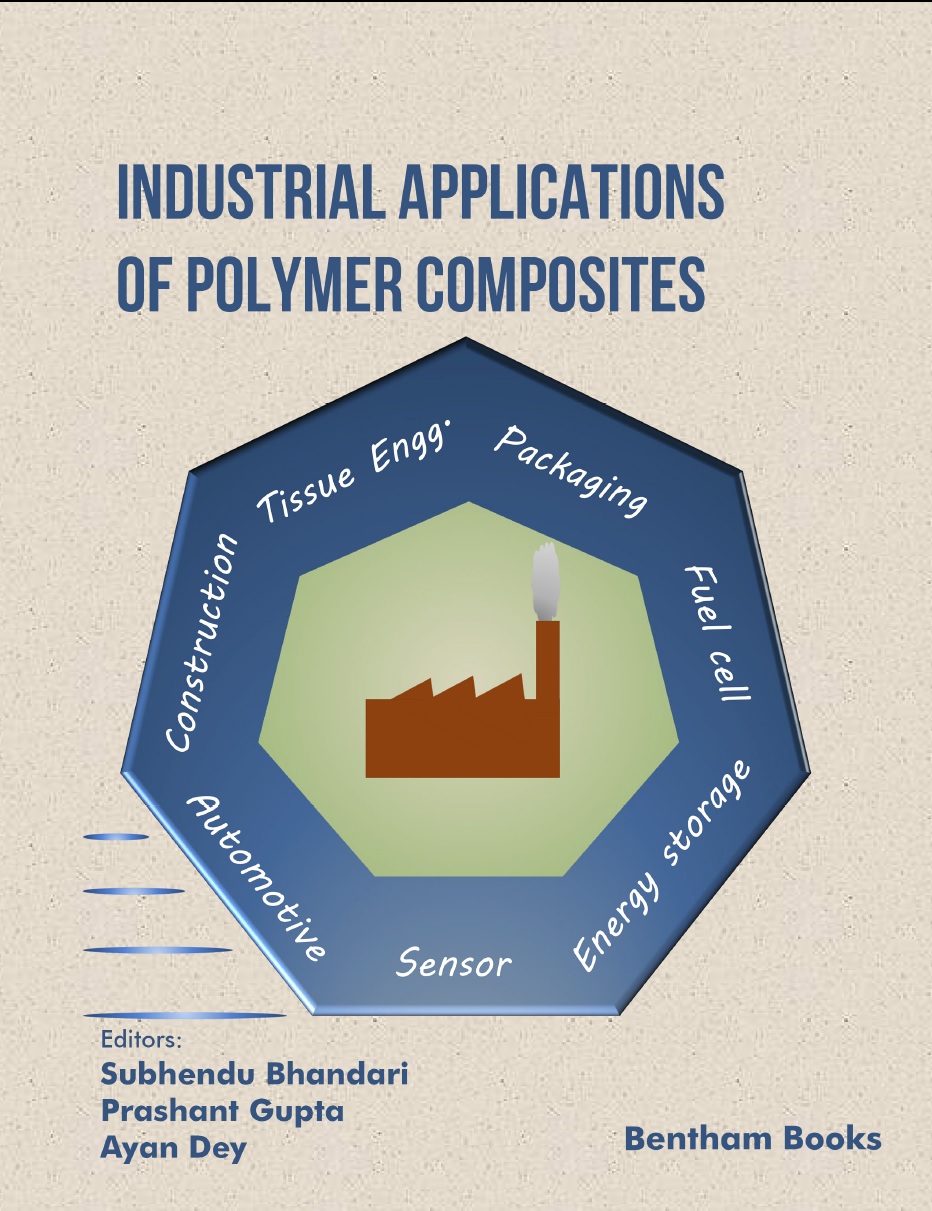
Industrial Applications of Polymer Composites
Frontiers in Polymer Science: Volume 1
More LessThis volume is a comprehensive guide to the industrial use of polymer composites. Edited contributions demonstrate the application of these materials for different industrial sectors. The book covers the benefits, future potential, and manufacturing techniques of different types of polymers. Contributors also address challenges in using nanopolymers in these industries. Readers will find valuable insights into the current demand and supply of polymer composites and future scope for research and development in this field of polymer science. The volume presents seven chapters, each exploring a different application of polymer composites. Chapter 1 discusses the use of polymer additives for improving classical concrete and the workability and durability of polymer composite concrete. Chapter 2 explores the use of polymer nanocomposites in packaging, including smart/intelligent packaging, modified atmosphere packaging, and vacuum packaging. Chapter 3 delves into the use of polymer composites in tissue engineering, including manufacturing techniques and various applications. Chapter 4 explores energy storage applications for polymer composites, while Chapter 5 discusses their use in microbial fuel cells. Chapter 6 explores the use of carbon nanotubes in polymer composite gas sensors. Finally, Chapter 7 discusses the use of polymer composites in automotive applications. This is an ideal reference for researchers, scientists, engineers, and professionals in the fields of materials science, polymer science, engineering, and nanotechnology. The content is also suitable for graduate and postgraduate students studying industrial manufacturing.
-
-
-
Industrial Applications of Soil Microbes: Volume 2
More LessThis volume is a compilation of reviews on the industrial usage of soil microorganisms. The contents include 16 brief reviews on different soil microbe assisted industrial processes. Readers will be updated about recent applications of soil bacteria, fungi and algae in sectors such as agriculture, biotechnology, environmental management.
The reviews also cover special topics like sustainable agriculture, biodiversity, ecology, and intellectual property rights of patented strains, giving a broad perspective on industrial applications of soil microbes.
Volume 2 includes reviews on destructive microbes like Macrophomina Phaseolina, eco-friendly microbes like Beauveria Bassiana, the identification of fungi in the rhizosphere, the industrial application of Trichoderma, and other topics. The text is easy to understand for readers of all levels, with references provided for the benefit of advanced readers.
-
-
-
Industrial Applications of Soil Microbes: Volume 1
More LessThis volume is a compilation of reviews on the industrial usage of soil microorganisms. The contents include 15 brief reviews on different soil microbe assisted industrial processes. Readers will be updated about recent applications of soil bacteria, fungi and algae in sectors such as agriculture, biotechnology, environmental management.
The reviews also cover special topics like sustainable agriculture, biodiversity, ecology, and intellectual property rights of patented strains, giving a broad perspective on industrial applications of soil microbes. The text is easy to understand for readers of all levels, with references provided for the benefit of advanced readers.
-
-
-
Industrial Applications of Soil Microbes: Volume 3
More LessThis volume is a compilation of reviews on the industrial usage of soil microorganisms. The contents include 16 brief reviews on different soil microbe assisted industrial processes. Readers will be updated about recent applications of soil bacteria, fungi and algae in sectors such as agriculture, biotechnology, environmental management.
The reviews also cover special topics like sustainable agriculture, biodiversity, ecology, and intellectual property rights of patented strains, giving a broad perspective on industrial applications of soil microbes.
Volume 3 emphasizes various soil microorganisms including cyanobacteria and mycorrhiza. The 16 chapters cover the ecological significance of mycorrhiza to and their role in sustainable agriculture, microbial interactions with nematodes, microbes as biocontrol agents, and the use of endophytes in agriculture, Chapters also shed light on industrial aspects and microbial biotransformation, providing a comprehensive view of sustainable agricultural practices. Special topics such as the microbial carotenoids are also included.
-
-
-
Industrial Applications of Soil Microbes: Volume 4
More LessIndustrial Applications of Soil Microbes is a compilation of reviews on the industrial usage of soil microorganisms. Readers will be updated about recent applications of soil bacteria, fungi and viruses in sectors such as agriculture, biotechnology, environmental management.
Volume 4 includes review on mycorrhizal fungi, endophytes and a range of microbial chemicals and processes beneficuall at industrial scale. The 19 chapters start with an overview of mycorrhizae as biofertilizers, their symbiosis with plants, and their applications in improving crop yield, stress management, and soil health. Case studies on Lycopersicon esculentum highlight practical benefits. Soil microbes, endophytes, and microbial proteases are discussed for their role in biocontrol, disease management, and crop improvement. The volume also explores eco-friendly nematicides, viruses in temperate fruit crops, mushrooms' nutritional value, and metagenomics for bioinoculants. Overall, the volume emphasizes sustainable practices and future prospects involving microbes and microbe-assisted processes.
-
-
-
Industrial Internet of Things: An Introduction
More LessIndustrial Internet of Things: An Introduction explores the convergence of IoT and machine learning technologies in transforming industries and advancing economic growth. This comprehensive guide examines foundational principles, innovative applications, and real-world case studies that showcase the power of IoT-enabled intelligent systems in enhancing efficiency, sustainability, and adaptability.
The book is structured into five parts. The first part introduces industrial IoT concepts, including algorithms, deep learning prediction models, and smart production techniques. The second section addresses machine learning and collaborative technologies, focusing on artificial neural networks, and AI`s role in healthcare and industrial IoT. Subsequent chapters explore real-world applications, such as IoT adoption in healthcare during COVID-19 and intelligent transportation systems. The final sections address advanced IIoT progressions and the role of IoT in energy production using byproducts.
Key Features:
- Foundational concepts and algorithms for industrial IoT.
- Integration of machine learning in IoT systems.
- Case studies on healthcare, transportation, and sustainability.
- Insights into energy production using IoT.
-
-
-
Industry 4.0 Convergence with AI, IoT, Big Data and Cloud Computing: Fundamentals, Challenges and Applications
IoT and Big Data Analytics: Volume 4
More LessThis volume showcases upcoming trends and applications that are set to redefine our technological landscape. Chapters comprise referenced reviews focused on the recent research that introduces new methods and techniques for using AI in Industry 4.0, and the integration of Internet of Things (IoT) to drive new industrial processes. The contributors have discussed challenges in industry 4.0 along with the applications and the way it is shaping different industries.
Key themes:
AI in Communication Media: Uncover the latest research, with insights into the challenges and adoption of AI in remote processes.
New AI Techniques for Industry 4.0: Learn about technologies such as blockchains and applications of machine learning, deep learning, and image processing.
IoT and AI for Smart Systems: Understand IoT with a special focus on enhancing smart systems, in different industries, including agriculture and transaction processing
Explorable AI: Gain a quick understanding of Explainable AI (XAI) and its role in improving the predictability and transparency of IoT applications.
Whether you're a tech enthusiast, researcher, or industry professional, this book offers a glimpse into the innovative world of Industry 4.0 and its intersection with AI, IoT, big data, and cloud computing.
-
-
-
Industry 5.0 for Society 5.0: Advancing Medical IoT and Smart Healthcare (Part 1)
More LessThis timely and comprehensive volume explores the evolving concept of Society 5.0 a forward-looking, human-centered society where cutting-edge technologies such as the Internet of Things (IoT), Artificial Intelligence (AI), robotics, and augmented reality seamlessly integrate into daily life, healthcare, industry, and public services to enhance quality of life and social well-being. Industry 5.0, as a vital enabler of this vision, emphasizes collaborative interactions between humans and smart systems, driving innovations in personalized healthcare, sustainable industries, and connected communities.
This first part of a multi-volume set provides readers with foundational insights into the principles, enabling technologies, and strategic opportunities shaping Industry 5.0 and Society 5.0. Edited contributions from subject matter experts offer a roadmap for harnessing Medical IoT (Internet of Medical Things) applications within this new societal framework. The book covers essential topics such as high-performance computing in healthcare decision support, AI-driven diagnostic solutions, cybersecurity in digital health systems, and ethical data practices in patient care. It also highlights emerging use cases, including IoT-enabled wearable devices for women's security and smart diagnostic tools for early disease detection.
Key features:
Presents a detailed overview of Industry 5.0 and Society 5.0, their fundamentals, enabling technologies, and future prospects.
Examines the role of Industry 5.0 in transforming medical and healthcare services through the integration of IoT and AI-driven solutions.
Explores innovative applications such as AI-based diabetic retinopathy detection, IoT applications in digital healthcare, and patient-centric data ethics frameworks.
Discusses advances in smart farming and sustainable industrial practices within the Industry 5.0 paradigm.
Highlights opportunities for bridging research gaps in high-performance computing for holistic healthcare decision support.
Provides use case studies on IoT-enabled healthcare security solutions and digital health systems.
-