


Bentham Science Publishers
Bentham Science Publishers is a major publisher of more than 100 peer-reviewed science, technology and medical (STM) journals, along with a rapidly growing collection of eBooks. Since 1993, Bentham Science Publishers has been catering to the information needs of the pharmaceutical, engineering, biomedical and medical research community.321 - 340 of 1975 results
-
-
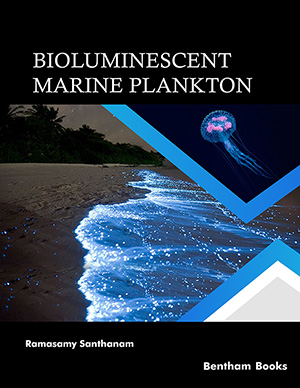
Bioluminescent Marine Plankton
More LessBioluminescence, the cold living light or the cold fire of the sea is extremely common in all oceans at all depths. However, this phenomenon is nearly absent in freshwater, with the exception of a freshwater limpet. More than 75% of deep-sea creatures have been reported to produce their own light. The luminescent marine plankton such as dinoflagellate, radiolarians, jellyfish, comb jellies, annelids, copepods, ostracods, mysids, amphipods, euphausiids, and tunicates form an important component in the marine food chain. Research on luminescent marine plankton is gaining momentum owing to its importance in life science research and medicine. The glowing Green Fluorescent Protein (GFP) extracted from the North Pacific jellyfish, Aqueorea victoria (for which the Japanese biologist, Osamu Shimonmura won the Nobel Prize in Chemistry in 2008) has helped shed light on key processes such as the spread of cancer, the development of brain cells, the growth of bacteria, damage to cells by Alzheimer's disease, and the development of insulin-producing cells in the pancreas. Therefore, it is difficult to underscore the importance of bioluminescence and the organisms associated with this phenomenon.
Bioluminescent Marine Plankton is a unique reference that attempts to provide answers to questions about bioluminescence. The first of its kind, this book attempts to answer questions on the subject with a focus on planktonic organisms. 12 chapters provide information about the chemistry of bioluminescence, types of bioluminescent displays, distribution of bioluminescence among marine plankton, ecological functions and utility of planktonic bioluminescence. Chapters are dedicated to the biology and ecology of specific groups of plankton that span about 200 luminescent marine species.
The detailed book is an essential compendium on marine plankton for a broad range of readers who want to learn about bioluminescent plankton. A list of detailed references is also provided for the benefit of teachers, students, researchers and enthusiasts interested in marine biology, aquaculture, and environmental sciences.
-
-
-

Biomarkers in Medicine
More LessBiomarkers in Medicine is a comprehensive guide to understanding the current and future status of biomarkers. The book features 27 chapters focusing on disease biomarkers for diseases such as cancer, neurodegenerative diseases, cardiac diseases, metabolic conditions and much more.
This book supplies readers with the unique insight of experts in multiple specialties in medicine and life sciences who have extensive experience in diagnostics and clinical laboratories. The book includes case studies and practical examples from different classes of biomarkers on different platforms, including new data for biomarkers in different therapeutic indications. In addition to presenting biomarker information, each chapter covers the relevant pathology and also emphasizes on preclinical and clinical manifestation of the disease process.
Clinicians managing patients or clinical trials, clinical researchers, clinical laboratories, diagnostic companies, regulatory agencies, medical school graduate students, academic students, and the general public involved in healthcare delivery will all benefit from information presented in this book.
-
-
-

Biomaterial Fabrication Techniques
More LessThis reference is a guide to biomaterial fabrication techniques. The book comprises ten chapters introducing the reader to a range of biomaterial synthesis while highlighting biomedical applications. Each chapter presents a review of the topic followed by updated information about relevant core and applied concepts in an easy to understand format. The first two chapters present vital information about biomaterial components, such as polymer nanocomposites and scaffolds, and the strategies used for their fabrication. The proceeding chapters explain the principles of the most widely used fabrication techniques, and their application in detail. These include freeze drying, electrospinning, 3D printing, multiphoton lithography, particulate leaching, supramolecular self assembly, solvent casting and melt molding. The book is an essential primer on biomaterial synthesis for students and early career researchers in the field of biomedical engineering, applied chemistry and tissue engineering.
-
-
-
Biomaterials for Tissue Engineering
Frontiers in Biomaterials: Volume 4
More LessThis volume reviews the published knowledge about bioactive composites, protein scaffolds and hydrogels. Chapters also detail the production parameters and clarify the evaluation protocol for analysis or testing and scaffolding biomaterials. The volume concludes with a summary of applications of porous scaffold in medicine. Each chapter links basic scientific and engineering concepts to practical applications for the benefit of the reader.
The text offers a wealth of information that will be of use to all students, bioengineers, materials scientists, chemists, physicians and surgeons concerned with the properties, performance, and the application of tissue engineering scaffolds in clinical settings.
-
-
-
Biomedical Applications of Perovskites: The Era of Bio-Piezoelectric Systems
More LessBiomedical Applications of Perovskites: The Era of Bio-Piezoelectric Systems focuses on recent developments in the area of piezoelectric systems and their biomedical applications. A compilation of 19 edited chapters covers different piezoelectric materials, device designs, and their use cases. Readers will be familiarized with the many perovskite materials being used in research and development as well as the role they play in designing novel medical devices and biomaterials.
Key Features
- systematically explains the piezoelectric perovskite materials starting from their introduction, their structure and synthesis techniques
- explains the key materials used in devices such as pacemakers and nanogenerators
- highlights a range of applications including bone regeneration and growth, bone replacement, tissue engineering, dental science, neurotrauma and neurodegenerative disease treatment and bionic prosthesis
- discusses future challenges and the roadmap for piezoelectric perovskite materials
- Presents scientific references for advanced reading
-
-
-
Bionanotechnology: Next-Generation Therapeutic Tools
More LessNanoscale technologies are crucial for the characterization and fabrication of biomaterials that are useful in targeted drug delivery systems. New materials enable the delivery of therapeutic agents to specific tissues and cells in order to treat a range of diseases.
Bionanotechnology: Next-Generation Therapeutic Tools provides a quick overview of the use of nanomaterials in modern drug delivery and targeted drug therapy systems. The book starts with an overview of nanomaterial toxicity with subsequent chapters detailing their applications in nanomedicine. Concepts such as immunotherapy, cancer theranostics, molecular imaging, aptamers and viral nanoparticles are highlighted in specific chapters. The simplified presentation along with scientific references makes this book ideal for pharmacology and biomedical engineering scholars and life science readers.
-
-
-
Biophysics and Diving Decompression Phenomenology
More LessThe biophysics of diving and decompression in the human body are complex. The average individual experiences atmospheric pressure swings of 3% at sea level and over 20% at altitudes greater than a mile. Divers and their equipment can experience compressions and decompressions in orders of greater magnitude than pressures outside water, all within considerably shorter time spans. The understanding of the mechanics behind diving is based on absolute pressure and pressure changes. While these mechanics are readily quantified in physics, chemistry, and engineering applications, the physiological and medical aspects of pressure changes in living systems need to be understood clearly to assess the safety of routine divers.
This monograph is a compilation of a body of knowledge on biophysics, gas transport, bubble studies and physiological models used for diving and hyperbaric applications. Information in the monograph is divided into three parts that cover biophysics and models, data correlation and validation approaches and practical applications, respectively. The book is a useful resource for researchers and maritime professionals who wish to understand the biophysics behind underwater diving and decompression for the purpose of maritime operations as well as diving simulation applications.
-
-
-
Biopolymers In Drug Delivery: Recent Advances and Challenges
More LessThis Ebook describes the applicability of diverse natural and synthetic biopolymers and their blends in drugs, vaccines and gene delivery. It would serve as a concise body of information on biopolymers for researchers, industries and students of pharmaceutical, chemical, engineering and biomedical sciences. Practical and theoretical concepts are presented in depth. Examples of yet untapped indigenous African polymers with drug delivery potentials are highlighted. Many natural biopolymers with excellent drug delivery properties have not been appropriately exploited because there is very concise body of information that would demonstrate their potential. This Ebook should prove to be an important resource to researchers in the field.
-
-
-
Biopolymers Towards Green and Sustainable Development
More LessBio-based polymers are materials that are produced from renewable resources. Their biodegradable properties are the driver of worldwide interest among researchers and manufacturers in recent years due to the demand and need for alternatives to fossil fuel based polymers. The use of biodegradable polymers creates a sustainable industry. In contrast, the raw materials for synthetic polymers derived from petrochemicals will eventually deplete and most of them are non-biodegradable. Despite these advantages, bio-based polymers account for only a tiny fraction of the total global plastic market.
Non-biodegradability issues of synthetic pharmaceutical inactive ingredients strongly emphasized innovators towards the development of biopolymers. Recently natural biodegradable excipients gained significant attention due to their sustainability and engineered applications. Innovative technologies to transform these materials into value-added chemicals via novel graft-polymerization or co-processing techniques for the production of high-performance multifunctional and low-cost polymers with tunable structures are key parts of its sustainable development.
Biopolymers Towards Green and Sustainable Development elaborates on important issues that surround bio-based polymers. It gives the reader an overview of biopolymers, the impact of non-biodegradable polymers on the environment and health, emerging sources of biodegradable polymers, structural and morphological characterization techniques, thermomechanical properties, biodegradable plastics from biopolymers, pharmaceutical, biomedical, and textile applications, and pharmacokinetics and pharmacodynamics. with a brief on bibliometric. Moreover, a brief bibliometric meta-analysis on bio-based pharmaceutical excipients provides an update about teams involved in the development of polymeric research that may be of interest to anyone who wants to work on sustainable biopolymer projects.
Key Features
- provides an updated summary on recently discovered natural polymeric materials
- gives a thorough breakdown of the vast range of biopolymer applications including fabrication of conventional and novel drug delivery, polymeric scaffolds, composites, microneedles, and green synthesis of metallic nanoparticles,
-summarizes pharmacology and pharmacokinetics of the inactive pharmaceutical ingredient and excipients
- presents a bibliometric meta-analysis indicating potential collaboration between country, organization, institution, and authors with a view on recent ongoing trends with biopolymers.
-
-
-
Biopolymers as Therapeutic Adjuvants: Innovations and Advancements
More LessA comprehensive exploration of the role of natural and synthetic biopolymers in modern therapeutics. Bridging fundamental science with applied biomedical research, the book highlights how biopolymers function as drug carriers, vaccine adjuvants, bioactive agents, and innovative tools for next-generation treatment strategies.
The volume covers specialized discussions on nano-based biopolymer systems, enzyme-triggered delivery platforms and AI-driven biopolymer design. The volume also examines the sources, chemistry, and properties of biopolymers while showcasing their applications in drug delivery, wound healing, cancer therapy, tissue engineering, and immunomodulation alongwith regulatory considerations,offering both foundational insights and forward-looking perspectives.
Key Features:
- Explores biological sources, chemistry, and synthetic pathways of biopolymers.
- Examines applications in drug delivery, cancer therapy, and tissue engineering.
- Highlights nano-biopolymers, stimuli-responsive systems, and immunomodulatory roles.
- Showcases AI-powered innovations and emerging therapeutic strategies.
- Bridges laboratory science with clinical and industrial translation.
-
-
-
Bioremediation for Environmental Pollutants
Sustainable Materials: Volume 1
More LessIncreased industrial and agricultural activity has led to the contamination of the earth's soil and groundwater resources with hazardous chemicals. The presence of heavy metals, dyes, fluorides, dissolved solids, and many other pollutants used in industry and agriculture are responsible for hazardous levels of water pollution. The removal of these pollutants in water resources is challenging. Bioremediation is a new technique that employs living organisms, usually bacteria and fungi, to remove pollutants from soil and water, preferably in situ. This approach is more cost-effective than traditional techniques, such as incineration of soils and carbon filtration of water. It requires understanding how organisms consume and transform polluting chemicals, survive in polluted environments, and how they should be employed in the field.
Bioremediation for Environmental Pollutants discusses the latest research in green chemistry and practices and principles involved in quality improvement of water by remediation. It covers different aspects of environmental problems and their remedies with up-to-date developments in the field of bioremediation of industrial/environmental pollutants. Volume 1 focuses on the bioremediation of heavy metals, pesticides, textile dyes removal, petroleum hydrocarbon, microplastics and plastics.
-
-
-

Bioremediation for Environmental Pollutants
Sustainable Materials: Volume 2
More LessIncreased industrial and agricultural activity has led to the contamination of the earth's soil and groundwater resources with hazardous chemicals. The presence of heavy metals, dyes, fluorides, dissolved solids, and many other pollutants used in industry and agriculture are responsible for hazardous levels of water pollution. The removal of these pollutants in water resources is challenging. Bioremediation is a new technique that employs living organisms, usually bacteria and fungi, to remove pollutants from soil and water, preferably in situ. This approach is more cost-effective than traditional techniques, such as the incineration of soils and carbon filtration of water. It requires understanding how organisms consume and transform polluting chemicals, survive in polluted environments, and how they should be employed in the field.
Bioremediation for Environmental Pollutants discusses the latest research in green chemistry and practices and principles involved in the quality improvement of water by remediation. It covers different aspects of environmental problems and their remedies with up-to-date developments in the field of bioremediation of industrial/environmental pollutants. Volume 2 explains the methods used to control the remediation processes making it cost-effectively and feasible. It elaborates on the application of microbial enzymes, microalgae, and genetically engineered microorganisms in the bioremediation of significant pollutants, food wastes, distillery wastewater, and pharmaceutical wastes.
-
-
-
Bioremediation: Challenges and Advancements
More LessWaste management is one of the major challenges for environmental and public health organizations for maintaining safety standards in any area. Population growth and urbanization increase the difficulty in maintaining a sustainable waste management system. Bioremediation refers to the use of living organisms in processes designed to remove toxic chemicals present in waste material. Bioremediation represents a sustainable way to remove a range of environmental pollutants.
Bioremediation: Challenges and Advancements covers the subject of bioremediation in eight chapters that focus on a broad range of waste sources, their adverse impacts on the ecosystem, and the advanced strategies for their remediation. Each chapter also highlights the problems encountered in bioremediation processes.
Key features:
- Comprehensive coverage of bioremediation in 8 reader-friendly chapters
- Highlights methods and challenges of bioremediation in one volume.
- Introduces the reader to bioremediation
- Explains recent biotechnological methods for removing heavy metals and xenobiotic compounds
- Describes strategies including physical, chemical, and biological methods to mitigate radioactive waste from contaminated sites and water bodies
- Details the use of microbial-aided remediation techniques for the management of biomedical and electronic wastes, and its impact on the ecosystem
- Describes bioremediation technologies for decontamination of solid waste pollutants
- Showcases the application of Omics approaches such as genomics, transcriptomics, proteomics, and metabolomics to improve bioremediation processes.
- Covers bioremediation of agro-wastes
- Includes detailed references
This book is an informative reference for scholars (researchers, undergraduate and graduate students of environmental sciences, microbiology and biotechnology) professionals (environmental engineers) and researchers, giving each a good understanding of the significance of bioremediation in solid waste management and the restoration of contaminated sites.
-
-
-
Biosurfactants: A Boon to Healthcare, Agriculture & Environmental Sustainability
More LessBiosurfactants, derived from microbes and plants, exhibit diverse properties that help in emulsifying and foaming processes. With applications in pharmaceuticals, cosmetics, and agriculture, they also show antimicrobial and environmental benefits, such as oil removal in polluted areas. Biosurfactants show promise for pollution control and improving agriculture.
This reference covers the basic science and major applications of biosurfactants. The book brings together contributions from experts in microbiology, cancer biology, pharmaceutical science, nanotechnology, plant biotechnology, and environmental sciences into a single volume.
Key Features
- Explains the basics of biosurfactants
- Discusses novel applications of biosurfactants in the fields of medicine, agriculture, and environmental sustainability.
- Includes special chapters that review the role of biosurfactants in environmental remediation and omics research
- Includes detailed references in each chapter
Biosurfactants: A Boon to Healthcare, Agriculture & Environmental Sustainability is an essential resource for learners and professional trainees who require knowledge about biosurfactants. It also provides information for anyone who is working on environmental sustainability projects.
-
-
-
Biotechnological Production Of Natural Ingredients For Food Industry
More LessIncreasing public health concern about healthy lifestyles has sparked a greater demand among consumers for healthy foods. Natural ingredients and environmental friendly food production and processing chains are more aligned to meeting the demand for healthy food. There is a wide array of food additives and chemicals that have nutritional value. The biotechnological food production processes, therefore, vary for different types of food chemicals and ingredients accordingly.
Biotechnological Production of Natural Ingredients for Food Industry explains the main aspects of the production of food ingredients from biotechnological sources. The book features 12 chapters which cover the processes for producing and adding a broad variety of food additives and natural products, such as sweeteners, amino acids, nucleotides, organic acids, vitamins, nutraceuticals, aromatic (pleasant smelling) compounds, colorants, edible oils, hydrocolloids, antimicrobial compounds, biosurfactants and food enzymes.
Biotechnological Production of Natural Ingredients for Food Industry is a definitive reference for students, scientists, researchers and professionals seeking to understand the biotechnology of food additives and functional food products, particularly those involved in courses or activities in the fields of food science and technology, food chemistry, food biotechnology, food engineering, bioprocess engineering, biotechnology, applied microbiology and nutrition.
-
-
-

Biotechnological Production of Plant Secondary Metabolites
More LessModern techniques have been developed to overcome problems associated with the extraction of natural products from plants. These techniques include production of secondary metabolites by biotechnological methods such as plant tissue culture and microbial biotransformation of natural substances. Such methods have led to an increased yield of secondary metabolite amount, the discovery of new biochemical derivatives and agricultural development. For instance, use of these techniques in agricultural area have led to some beneficial traits such as formation of new varieties of known plant species, better crop quality, higher yield, better nutritive properties, more resistant species to insects and pests. Microbial biotransformation is beneficial in plant secondary metabolite production and derivatization (chemical modification of any compound made by a microorganism) and is chiefly applicable to several varieties of terpenes and steroids. This E-book demonstrates recent developments in this field. It will be of particular interest to the professionals in pharmaceutical and biotechnological industries, as well as natural product chemists, medicinal chemists, plant biochemists, and molecular biologists.
-
-
-
Biotechnology and Drug Development for Targeting Human Diseases
Recent Advances in Biotechnology: Volume 9
More LessBiotechnology and Drug Development for Targeting Human Diseases is an insightful compendium on drug development technologies for professionals and students in biotechnology and pharmacology. This book meticulously explores the intersection of biotechnology with drug development, emphasizing its crucial role in creating new therapies for human disease.
Central to the book is the innovative use of biotechnology in understanding and treating diseases. It begins with an exploration of multi-omics profiles, shedding light on disease mechanisms and drug development. Subsequent chapters explain in silico methods for drug design, the role of natural products in antimicrobial applications and wound healing, and the use of viruses as carriers in biotechnology.
Key features of this reference include a blend of theoretical knowledge and practical insights, detailed analyses of molecular docking in drug discovery, the repurposing of drugs for various diseases, and the emerging field of omics technologies in drug interaction studies. Each chapter is comprehensive, offering current information backed by extensive references, making the book both a foundational and advanced resource.
-
-
-

Bipolar Transistor and MOSFET Device Models
More LessContinuous efforts to develop new semiconductor devices enable device manufacturers to make significant improvements in the information technology sector. Bipolar transistors and MOSFETS are two special electronic device components that are used to construct very large scale integrated (VLSI) circuits, allowing engineers to create powerful machines that are power efficient. VLSI device characterization depends largely on semiconductor device modeling which is based on physical and electronic principles. Bipolar transistor and MOSFET device models is a textbook that describes basic functions and characterization models of these two types of transistors. Readers will learn about the processes employed to derive these models which will help them understand the modeling process. Chapters in this text cover the fundamentals of semiconductor devices, the pn junction, high and low injection region models for bipolar transistors, and different MOSFET models such as channel doping models and gated SOI models. Key features of this book include:
- step by step, easy to understand presentation of model information on innovative semiconductor devices
- an overview of model derivation, assumptions, approximations and limitations
- novel experimental information on semiconductor parameters such as gate fringe capacitance, silicided source/drain resistance, and threshold voltage shift
Bipolar transistor and MOSFET device models is an essential learning resource for advanced students and professional engineers involved in semiconductor device modeling and fabrication divisions.
-
-
-
Blockchain Applications for Secure IoT Frameworks: Technologies Shaping the Future
Advances in Computing Communications and Informatics: Volume 1
More LessThis reference presents information about different facets of IoT and blockchain systems that have been recently proposed for practical situations. Chapters provide knowledge about how these technologies are applied in functions related to trust management, identity management, security threats, access control and privacy.
Key Features:
- Introduces the reader to fundamental concepts of IoT and blockchain technology
- reports advances in the field of IoT, ubiquitous computing and blockchain computing
- includes the applications of different frameworks
- explains the role of blockchains in improving IT security
- provides examples of smart grids, data transmission models, digital business platforms, agronomics and big data solutions
- Includes references for further reading
Blockchain Applications for Secure IoT Frameworks: Technologies Shaping the Future is a handy reference for information technology professionals and students who want updated information about applications of IoT and blockchains in secure operational and business processes.
-
-
-

Blockchain Applications in Cybersecurity Solutions
More LessApplications of Blockchain in Cybersecurity Solutions is a comprehensive guide to blockchain applications in computer security. it presents the concepts and practical techniques that are useful in creating and designing decentralized cybersecurity software through 9 carefully edited chapters. Topics covered in the book include - An introduction to the use of blockchain technology in cybersecurity - Attack surfaces in blockchains - Anti-counterfeit solutions in blockchains - blockchain based access control systems - Multi-chain security deployment over smart contracts - Cybersecurity as a decentralized service The book is an essential primer for computer science students and researchers, and a quick reference for IT professionals on blockchain based cybersecurity.
-