


Pulmonary Vaccination: Inhalable Solutions for Respiratory Diseases
- Authors: Akhil Sharma1, Shaweta Sharma2, Mobeen Shaik3, Hrithik Dey4, Pankaj Agrawal5
-
View Affiliations Hide Affiliations1 R. J. College of Pharmacy, 2HVJ+567, Raipur, Gharbara, Tappal, Khair, Uttar Pradesh 202165, India 2 School of Medical and Allied Sciences, Galgotias University, Yamuna Expressway, Gautam Buddha Nagar, Uttar Pradesh 201310, India 3 KL College of Pharmacy, Koneru Lakshmaiah Education Foundation (Deemed to be University), Andhra Pardesh, India 4 Lloyd Institute of Management & Technology, Plot No.-11, Knowledge Park-II, Greater Noida, Uttar Pradesh-201306, India 5 Guru Gobind Singh Indraprastha University, Govt of NCT of Delhi, Dwarka, New Delhi, India
- Source: Mucosal Vaccine Delivery Systems: The Future of Immunization (Part 1) , pp 106-138
- Publication Date: July 2025
- Language: English


Pulmonary Vaccination: Inhalable Solutions for Respiratory Diseases, Page 1 of 1
< Previous page | Next page > /docserver/preview/fulltext/9789815324570/chapter-4-1.gif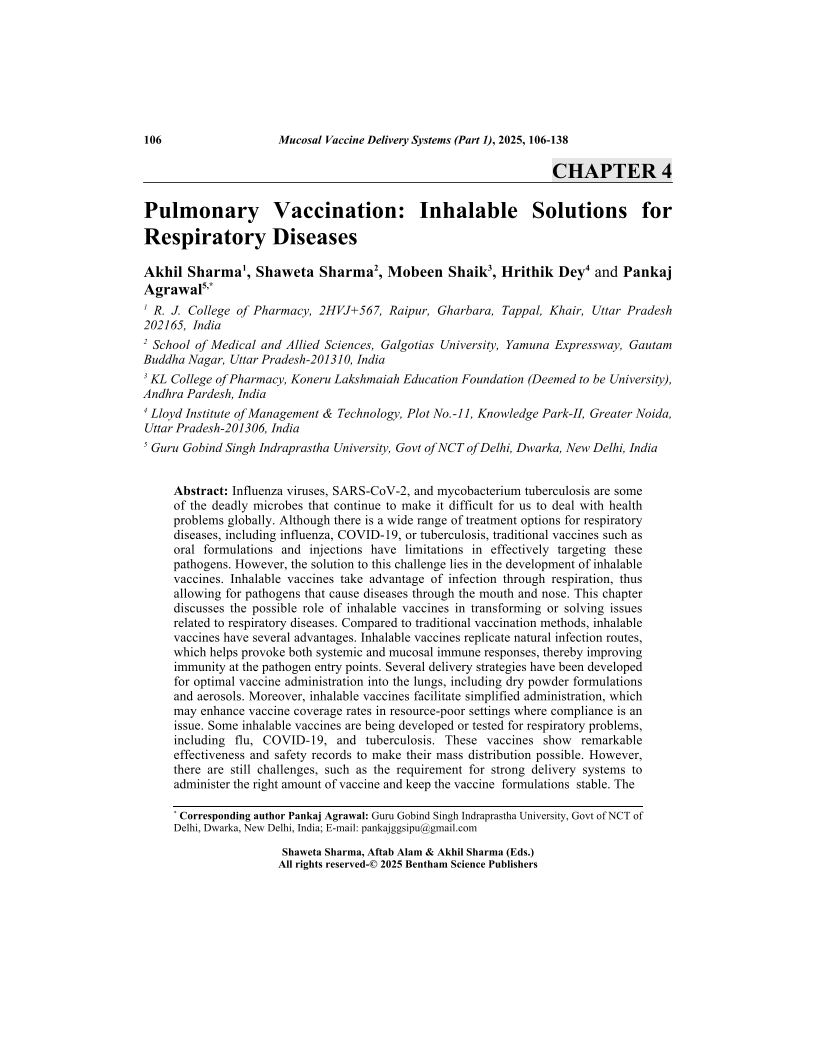
Influenza viruses, SARS-CoV-2, and mycobacterium tuberculosis are some of the deadly microbes that continue to make it difficult for us to deal with health problems globally. Although there is a wide range of treatment options for respiratory diseases, including influenza, COVID-19, or tuberculosis, traditional vaccines such as oral formulations and injections have limitations in effectively targeting these pathogens. However, the solution to this challenge lies in the development of inhalable vaccines. Inhalable vaccines take advantage of infection through respiration, thus allowing for pathogens that cause diseases through the mouth and nose. This chapter discusses the possible role of inhalable vaccines in transforming or solving issues related to respiratory diseases. Compared to traditional vaccination methods, inhalable vaccines have several advantages. Inhalable vaccines replicate natural infection routes, which helps provoke both systemic and mucosal immune responses, thereby improving immunity at the pathogen entry points. Several delivery strategies have been developed for optimal vaccine administration into the lungs, including dry powder formulations and aerosols. Moreover, inhalable vaccines facilitate simplified administration, which may enhance vaccine coverage rates in resource-poor settings where compliance is an issue. Some inhalable vaccines are being developed or tested for respiratory problems, including flu, COVID-19, and tuberculosis. These vaccines show remarkable effectiveness and safety records to make their mass distribution possible. However, there are still challenges, such as the requirement for strong delivery systems to administer the right amount of vaccine and keep the vaccine formulations stable. The approval and distribution of inhalable vaccines depend on various factors, including safety issues related to their administration via the pulmonary route and regulatory requirements. In the future, this new type of vaccine can revolutionize respiratory disease control. More research and developments are needed to make inhalable vaccines more efficient, safer, and accessible. Thus, if we take advantage of the potential of vaccination through the lungs, we can start moving towards a world where respiratory diseases are prevented globally.
-
From This Site
/content/books/9789815324570.chapter-4dcterms_subject,pub_keyword-contentType:Journal -contentType:Figure -contentType:Table -contentType:SupplementaryData105
