


Protocols for the Use of DBA/2J Mice for Pigmentary Glaucoma Research

- Authors: Abdelrahman Anter1, Betsy Benitez2, Sanjoy K. Bhattacharya3
-
View Affiliations Hide Affiliations1 Bascom Palmer Eye Institute, University of Miami Miller School of Medicine, Miami, FL 33136, USA 2 Miami Integrative Metabolomics Research Center, Miami, FL 33136, USA 3 University of Miami Miller School of Medicine, 1638 NW 10th Avenue, Suite 707Am Miami, FL 33136, USA
- Source: Research Protocols for Ophthalmic Disease Mechanisms and Therapeutics: Glaucoma - Ocular Hypertension , pp 406-417
- Publication Date: August 2025
- Language: English


Protocols for the Use of DBA/2J Mice for Pigmentary Glaucoma Research, Page 1 of 1
< Previous page | Next page > /docserver/preview/fulltext/9789815324334/chapter-37-1.gif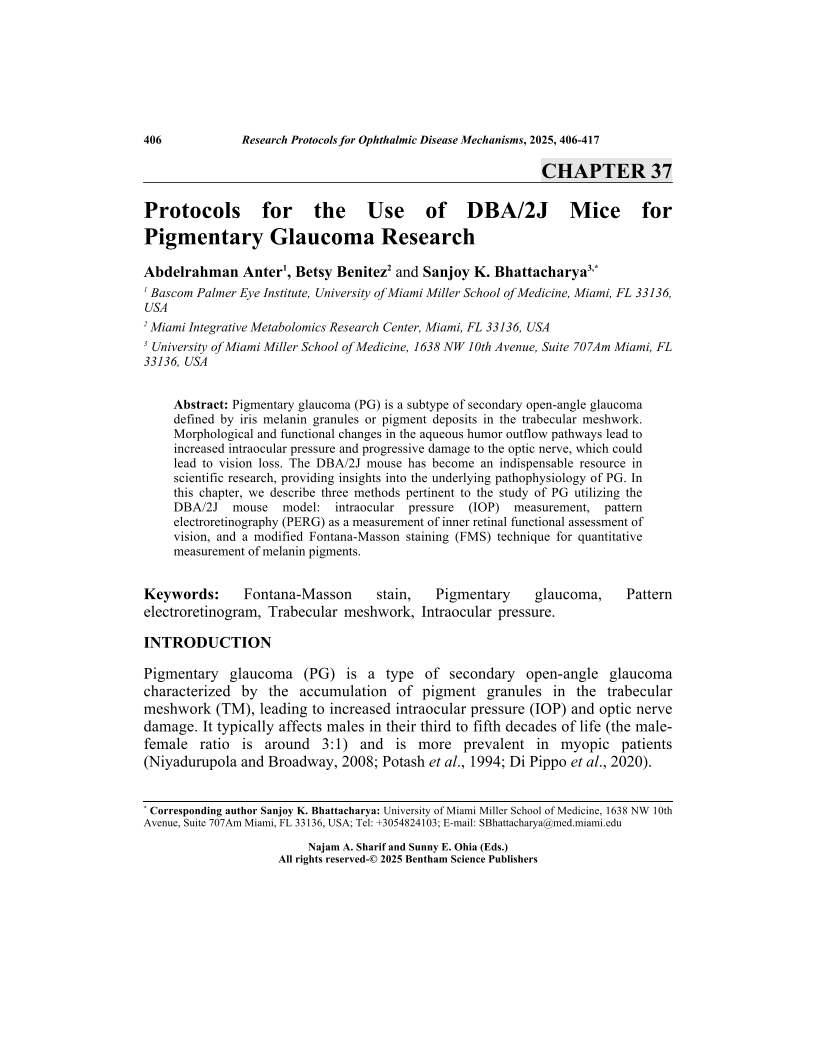
Pigmentary glaucoma (PG) is a subtype of secondary open-angle glaucoma defined by iris melanin granules or pigment deposits in the trabecular meshwork. Morphological and functional changes in the aqueous humor outflow pathways lead to increased intraocular pressure and progressive damage to the optic nerve, which could lead to vision loss. The DBA/2J mouse has become an indispensable resource in scientific research, providing insights into the underlying pathophysiology of PG. In this chapter, we describe three methods pertinent to the study of PG utilizing the DBA/2J mouse model: intraocular pressure (IOP) measurement, pattern electroretinography (PERG) as a measurement of inner retinal functional assessment of vision, and a modified Fontana-Masson staining (FMS) technique for quantitative measurement of melanin pigments.
-
From This Site
/content/books/9789815324334.chapter-37dcterms_subject,pub_keyword-contentType:Journal -contentType:Figure -contentType:Table -contentType:SupplementaryData105
