


Protocol for Studying Ocular Cell Relaxation / Contraction by Cell Impedance

- Authors: Thomas R. Vollmer1, Amy Chen2, Ganesh Prasanna3, Christopher W. Wilson4
-
View Affiliations Hide Affiliations1 Department of Ophthalmology, Novartis Institute of Biomedical Research, 22 Windsor St. Cambridge, MA 02452, USA 2 Department of Ophthalmology, Novartis Institute of Biomedical Research, 22 Windsor St. Cambridge, MA-02452, USA 3 Department of Ophthalmology, Novartis Institute of Biomedical Research, 22 Windsor St. Cambridge, MA-02452, USA 4 Department of Ophthalmology, Novartis Institute of Biomedical Research, 22 Windsor St. Cambridge, MA-02452, USA
- Source: Research Protocols for Ophthalmic Disease Mechanisms and Therapeutics: Glaucoma - Ocular Hypertension , pp 177-194
- Publication Date: August 2025
- Language: English


Protocol for Studying Ocular Cell Relaxation / Contraction by Cell Impedance, Page 1 of 1
< Previous page | Next page > /docserver/preview/fulltext/9789815324334/chapter-15-1.gif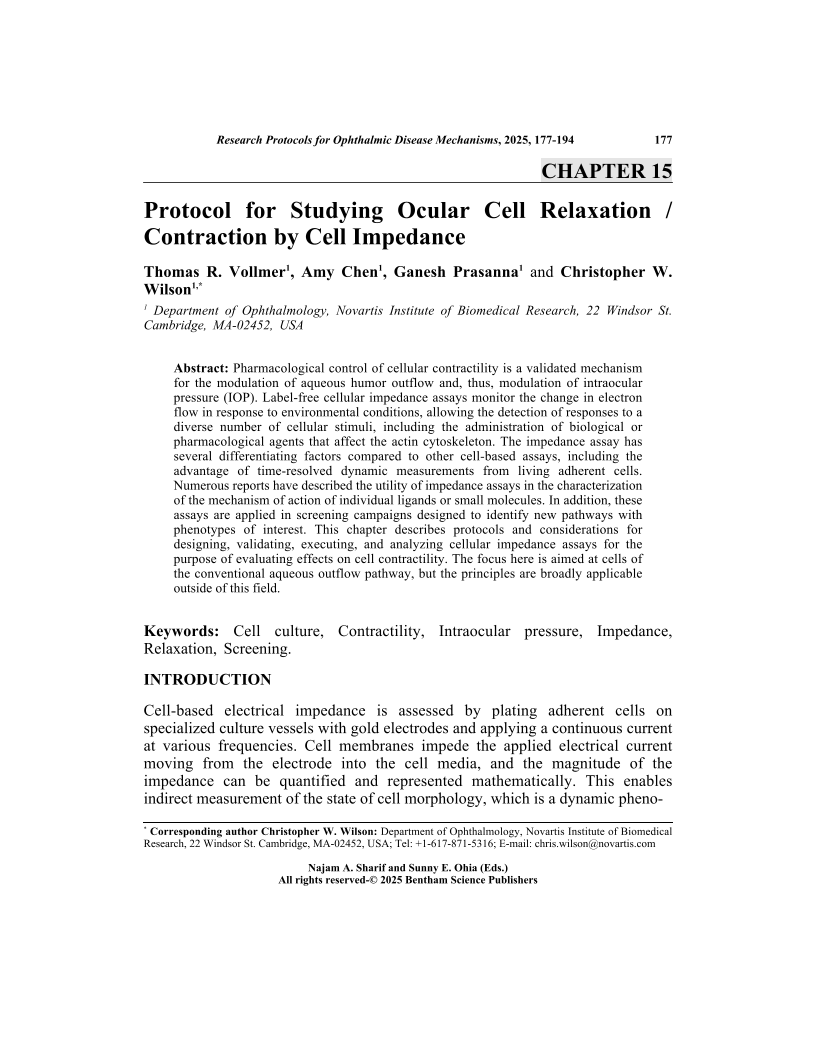
Pharmacological control of cellular contractility is a validated mechanism for the modulation of aqueous humor outflow and, thus, modulation of intraocular pressure (IOP). Label-free cellular impedance assays monitor the change in electron flow in response to environmental conditions, allowing the detection of responses to a diverse number of cellular stimuli, including the administration of biological or pharmacological agents that affect the actin cytoskeleton. The impedance assay has several differentiating factors compared to other cell-based assays, including the advantage of time-resolved dynamic measurements from living adherent cells. Numerous reports have described the utility of impedance assays in the characterization of the mechanism of action of individual ligands or small molecules. In addition, these assays are applied in screening campaigns designed to identify new pathways with phenotypes of interest. This chapter describes protocols and considerations for designing, validating, executing, and analyzing cellular impedance assays for the purpose of evaluating effects on cell contractility. The focus here is aimed at cells of the conventional aqueous outflow pathway, but the principles are broadly applicable outside of this field.
-
From This Site
/content/books/9789815324334.chapter-15dcterms_subject,pub_keyword-contentType:Journal -contentType:Figure -contentType:Table -contentType:SupplementaryData105
