


Environmental Factors Influencing Phytochemical Production for Enhanced Phytochemical Defense
- Authors: Ishfaq Majeed Malik1, Aashaq Hussain Bhat2, Danish Majeed3, Naveed Nabi4
-
View Affiliations Hide Affiliations1 Department of Zoology, University of Kashmir, Hazratbal 190006, Srinagar, Jammu and Kashmir, India 2 Department of Biosciences, University Centre for Research and Development, Chandigarh University, Gharuan, Mohali 140413, Punjab, India 3 Department of Botany, University of Kashmir, Hazratbal 190006, Srinagar, Jammu and Kashmir, India 4 Department of Biosciences, University Centre for Research and Development, Chandigarh University, Gharuan, Mohali 140413, Punjab, India
- Source: Phytochemical Arsenal: Understanding Plant Defense Mechanisms Against Nematodes , pp 118-150
- Publication Date: September 2025
- Language: English


Environmental Factors Influencing Phytochemical Production for Enhanced Phytochemical Defense, Page 1 of 1
< Previous page | Next page > /docserver/preview/fulltext/9789815322675/chapter-6-1.gif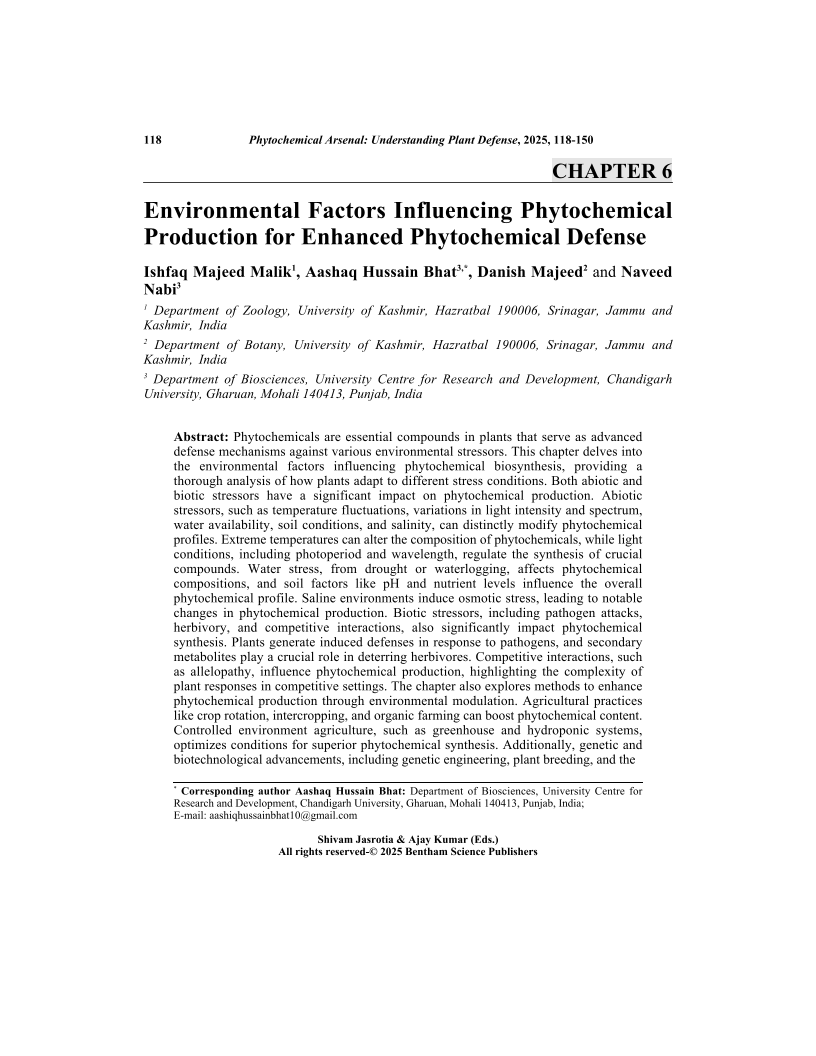
Phytochemicals are essential compounds in plants that serve as advanced defense mechanisms against various environmental stressors. This chapter delves into the environmental factors influencing phytochemical biosynthesis, providing a thorough analysis of how plants adapt to different stress conditions. Both abiotic and biotic stressors have a significant impact on phytochemical production. Abiotic stressors, such as temperature fluctuations, variations in light intensity and spectrum, water availability, soil conditions, and salinity, can distinctly modify phytochemical profiles. Extreme temperatures can alter the composition of phytochemicals, while light conditions, including photoperiod and wavelength, regulate the synthesis of crucial compounds. Water stress, from drought or waterlogging, affects phytochemical compositions, and soil factors like pH and nutrient levels influence the overall phytochemical profile. Saline environments induce osmotic stress, leading to notable changes in phytochemical production. Biotic stressors, including pathogen attacks, herbivory, and competitive interactions, also significantly impact phytochemical synthesis. Plants generate induced defenses in response to pathogens, and secondary metabolites play a crucial role in deterring herbivores. Competitive interactions, such as allelopathy, influence phytochemical production, highlighting the complexity of plant responses in competitive settings. The chapter also explores methods to enhance phytochemical production through environmental modulation. Agricultural practices like crop rotation, intercropping, and organic farming can boost phytochemical content. Controlled environment agriculture, such as greenhouse and hydroponic systems, optimizes conditions for superior phytochemical synthesis. Additionally, genetic and biotechnological advancements, including genetic engineering, plant breeding, and the use of elicitors and biostimulants, offer promising avenues for increasing phytochemical yields. Future research should focus on refining agricultural practices, optimizing controlled environments, and leveraging genetic and biotechnological innovations to enhance phytochemical production, promoting sustainable agriculture and strengthening plant resilience.
-
From This Site
/content/books/9789815322675.chapter-6dcterms_subject,pub_keyword-contentType:Journal -contentType:Figure -contentType:Table -contentType:SupplementaryData105
