


Catalytic Transformation of Biomass Conversion in Ionic Liquids
- Authors: Debarati Chakraborty1, Siddhartha Sankar Dhar2
-
View Affiliations Hide Affiliations1 National Institute of Technology, Silchar, Cachar, Assam, 788010, India 2 National Institute of Technology, Silchar, Cachar, Assam, 788010, India
- Source: Ionic Liquids for Organic Synthesis , pp 94-135
- Publication Date: April 2025
- Language: English


Catalytic Transformation of Biomass Conversion in Ionic Liquids, Page 1 of 1
< Previous page | Next page > /docserver/preview/fulltext/9789815313413/chapter-5-1.gif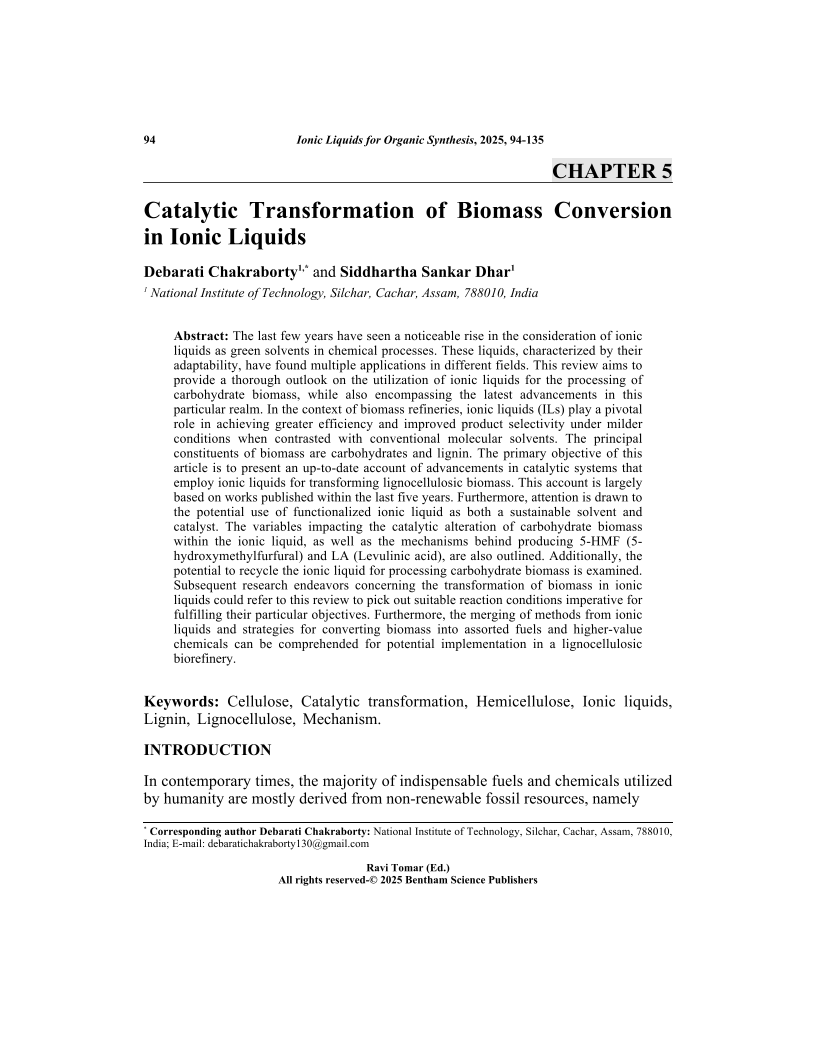
The last few years have seen a noticeable rise in the consideration of ionic liquids as green solvents in chemical processes. These liquids, characterized by their adaptability, have found multiple applications in different fields. This review aims to provide a thorough outlook on the utilization of ionic liquids for the processing of carbohydrate biomass, while also encompassing the latest advancements in this particular realm. In the context of biomass refineries, ionic liquids (ILs) play a pivotal role in achieving greater efficiency and improved product selectivity under milder conditions when contrasted with conventional molecular solvents. The principal constituents of biomass are carbohydrates and lignin. The primary objective of this article is to present an up-to-date account of advancements in catalytic systems that employ ionic liquids for transforming lignocellulosic biomass. This account is largely based on works published within the last five years. Furthermore, attention is drawn to the potential use of functionalized ionic liquid as both a sustainable solvent and catalyst. The variables impacting the catalytic alteration of carbohydrate biomass within the ionic liquid, as well as the mechanisms behind producing 5-HMF (5- hydroxymethylfurfural) and LA (Levulinic acid), are also outlined. Additionally, the potential to recycle the ionic liquid for processing carbohydrate biomass is examined. Subsequent research endeavors concerning the transformation of biomass in ionic liquids could refer to this review to pick out suitable reaction conditions imperative for fulfilling their particular objectives. Furthermore, the merging of methods from ionic liquids and strategies for converting biomass into assorted fuels and higher-value chemicals can be comprehended for potential implementation in a lignocellulosic biorefinery.
-
From This Site
/content/books/9789815313413.chapter-5dcterms_subject,pub_keyword-contentType:Journal -contentType:Figure -contentType:Table -contentType:SupplementaryData105
