


FAT16 File System Disk
- Authors: Vishnu Mittal1, Abhinav Singhal2, Shushank Mahajan3
-
View Affiliations Hide Affiliations1 Guru Gobind Singh College of Pharmacy, Yamuna Nagar, Haryana, India 2 Guru Gobind Singh College of Pharmacy, Yamuna Nagar, Haryana, India 3 Chitkara College of Pharmacy, Chitkara University, Rajpura, Punjab, India
- Source: Data Recovery Techniques for Computer Forensics , pp 175-190
- Publication Date: April 2025
- Language: English


FAT16 File System Disk, Page 1 of 1
< Previous page | Next page > /docserver/preview/fulltext/9789815274677/chapter-7-1.gif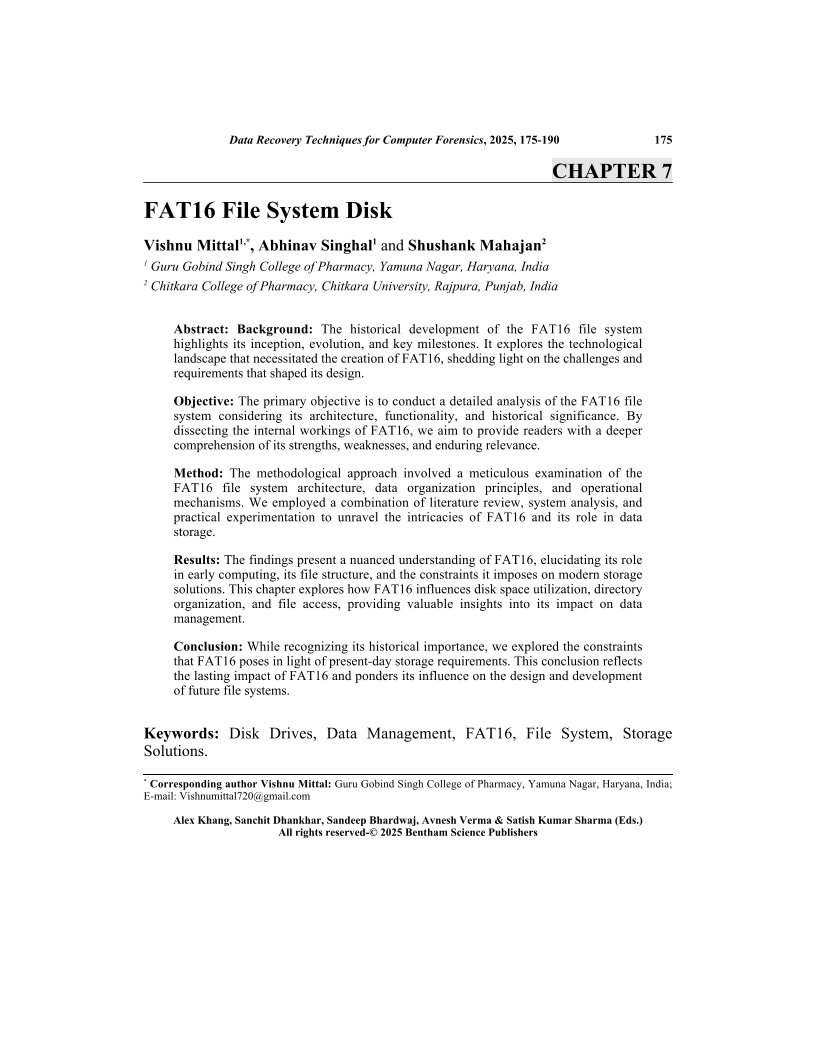
Background: The historical development of the FAT16 file system highlights its inception, evolution, and key milestones. It explores the technological landscape that necessitated the creation of FAT16, shedding light on the challenges and requirements that shaped its design.Objective: The primary objective is to conduct a detailed analysis of the FAT16 file system considering its architecture, functionality, and historical significance. By dissecting the internal workings of FAT16, we aim to provide readers with a deeper comprehension of its strengths, weaknesses, and enduring relevance. Method: The methodological approach involved a meticulous examination of the FAT16 file system architecture, data organization principles, and operational mechanisms. We employed a combination of literature review, system analysis, and practical experimentation to unravel the intricacies of FAT16 and its role in data storage. Results: The findings present a nuanced understanding of FAT16, elucidating its role in early computing, its file structure, and the constraints it imposes on modern storage solutions. This chapter explores how FAT16 influences disk space utilization, directory organization, and file access, providing valuable insights into its impact on data management. Conclusion: While recognizing its historical importance, we explored the constraints that FAT16 poses in light of present-day storage requirements. This conclusion reflects the lasting impact of FAT16 and ponders its influence on the design and development of future file systems.
-
From This Site
/content/books/9789815274677.chapter-7dcterms_subject,pub_keyword-contentType:Journal -contentType:Figure -contentType:Table -contentType:SupplementaryData105
