


Herbal Potentials of Ocimum sanctum (Indian Tulsi): A Wonderful Herb
- Authors: Mohd. Aamish Khan1, Mohd. Baqar Ali2, Mohammad Saquib3, Mohammad Faheem Khan4
-
View Affiliations Hide Affiliations1 Department of Biotechnology, Era's Lucknow Medical College and Hospital, Era University, Sarfarazganj, Lucknow 226003, Uttar Pradesh, India 2 Department of Biotechnology, Era's Lucknow Medical College and Hospital, Era University, Sarfarazganj, Lucknow-226003, Uttar Pradesh, India 3 Department of Chemistry, University of Allahabad, Prayagraj-211002, UP, India, Uttar Pradesh, India 4 Department of Biotechnology, Era's Lucknow Medical College and Hospital, Era University, Sarfarazganj, Lucknow-226003, Uttar Pradesh, India
- Source: Metabolites of Medicinal Plants: Insightful Approaches , pp 67-81
- Publication Date: December 2024
- Language: English


Herbal Potentials of Ocimum sanctum (Indian Tulsi): A Wonderful Herb, Page 1 of 1
< Previous page | Next page > /docserver/preview/fulltext/9789815274103/chapter-5-1.gif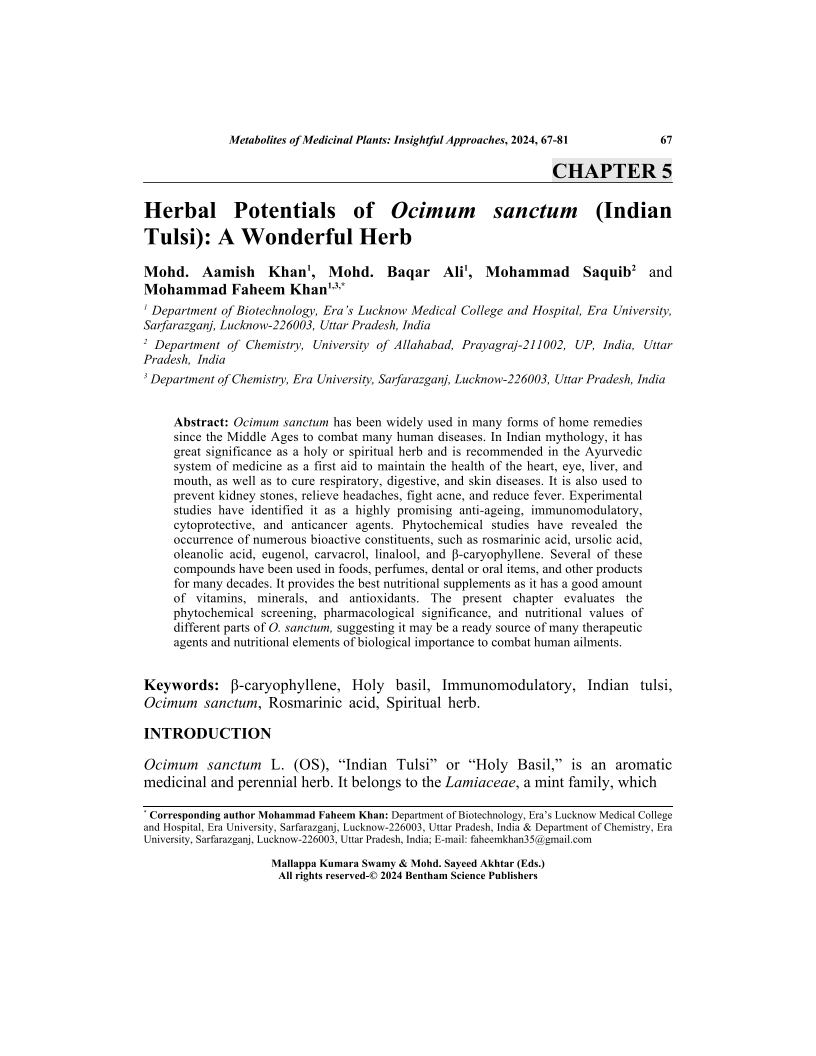
Ocimum sanctum has been widely used in many forms of home remedies since the Middle Ages to combat many human diseases. In Indian mythology, it has great significance as a holy or spiritual herb and is recommended in the Ayurvedic system of medicine as a first aid to maintain the health of the heart, eye, liver, and mouth, as well as to cure respiratory, digestive, and skin diseases. It is also used to prevent kidney stones, relieve headaches, fight acne, and reduce fever. Experimental studies have identified it as a highly promising anti-ageing, immunomodulatory, cytoprotective, and anticancer agents. Phytochemical studies have revealed the occurrence of numerous bioactive constituents, such as rosmarinic acid, ursolic acid, oleanolic acid, eugenol, carvacrol, linalool, and β-caryophyllene. Several of these compounds have been used in foods, perfumes, dental or oral items, and other products for many decades. It provides the best nutritional supplements as it has a good amount of vitamins, minerals, and antioxidants. The present chapter evaluates the phytochemical screening, pharmacological significance, and nutritional values of different parts of O. sanctum, suggesting it may be a ready source of many therapeutic agents and nutritional elements of biological importance to combat human ailments.
-
From This Site
/content/books/9789815274103.chapter-5dcterms_subject,pub_keyword-contentType:Journal -contentType:Figure -contentType:Table -contentType:SupplementaryData105
