


DNA Polymorphisms and Genetic Fingerprint

- By Itrat Fatima Toor1
-
View Affiliations Hide Affiliations1 National Institute of Food Science and Technology, University of Agriculture, Faisalabad, Pakistan
- Source: Fundamentals of Cellular and Molecular Biology , pp 97-110
- Publication Date: May 2024
- Language: English


DNA Polymorphisms and Genetic Fingerprint, Page 1 of 1
< Previous page | Next page > /docserver/preview/fulltext/9789815238037/chapter-8-1.gif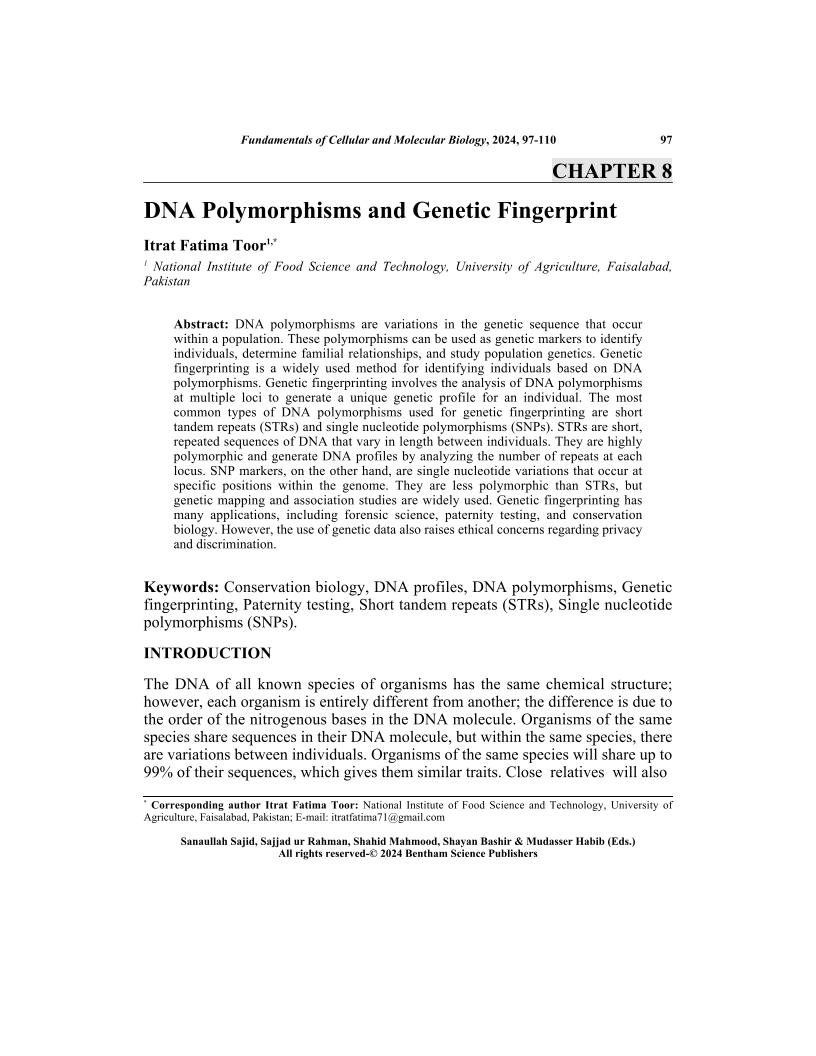
DNA polymorphisms are variations in the genetic sequence that occur within a population. These polymorphisms can be used as genetic markers to identify individuals, determine familial relationships, and study population genetics. Genetic fingerprinting is a widely used method for identifying individuals based on DNA polymorphisms. Genetic fingerprinting involves the analysis of DNA polymorphisms at multiple loci to generate a unique genetic profile for an individual. The most common types of DNA polymorphisms used for genetic fingerprinting are short tandem repeats (STRs) and single nucleotide polymorphisms (SNPs). STRs are short, repeated sequences of DNA that vary in length between individuals. They are highly polymorphic and generate DNA profiles by analyzing the number of repeats at each locus. SNP markers, on the other hand, are single nucleotide variations that occur at specific positions within the genome. They are less polymorphic than STRs, but genetic mapping and association studies are widely used. Genetic fingerprinting has many applications, including forensic science, paternity testing, and conservation biology. However, the use of genetic data also raises ethical concerns regarding privacy and discrimination.
-
From This Site
/content/books/9789815238037.chapter-8dcterms_subject,pub_keyword-contentType:Journal -contentType:Figure -contentType:Table -contentType:SupplementaryData105
