


Synthesis and Applications of Bacterial Cellulose Composites
- Authors: Juhi Singh1, Anindya Basu2, Sierin Lim3
-
View Affiliations Hide Affiliations1 School of Chemistry, Chemical Engineering and Biotechnology, Nanyang Technological University, Nanyang Ave, Singapore 2 School of Pharmaceutical Sciences, School of Biomolecular Engineering and Biotechnology, Rajiv Gandhi Technological University, Bhopal, India 3 School of Chemistry, Chemical Engineering and Biotechnology, Nanyang Technological University, Nanyang Ave, Singapore
- Source: Bioderived Materials: Harnessing Nature for Advanced Biochemical Handiwork: Volume 1 , pp 121-169
- Publication Date: March 2024
- Language: English


Synthesis and Applications of Bacterial Cellulose Composites, Page 1 of 1
< Previous page | Next page > /docserver/preview/fulltext/9789815136869/chapter-5-1.gif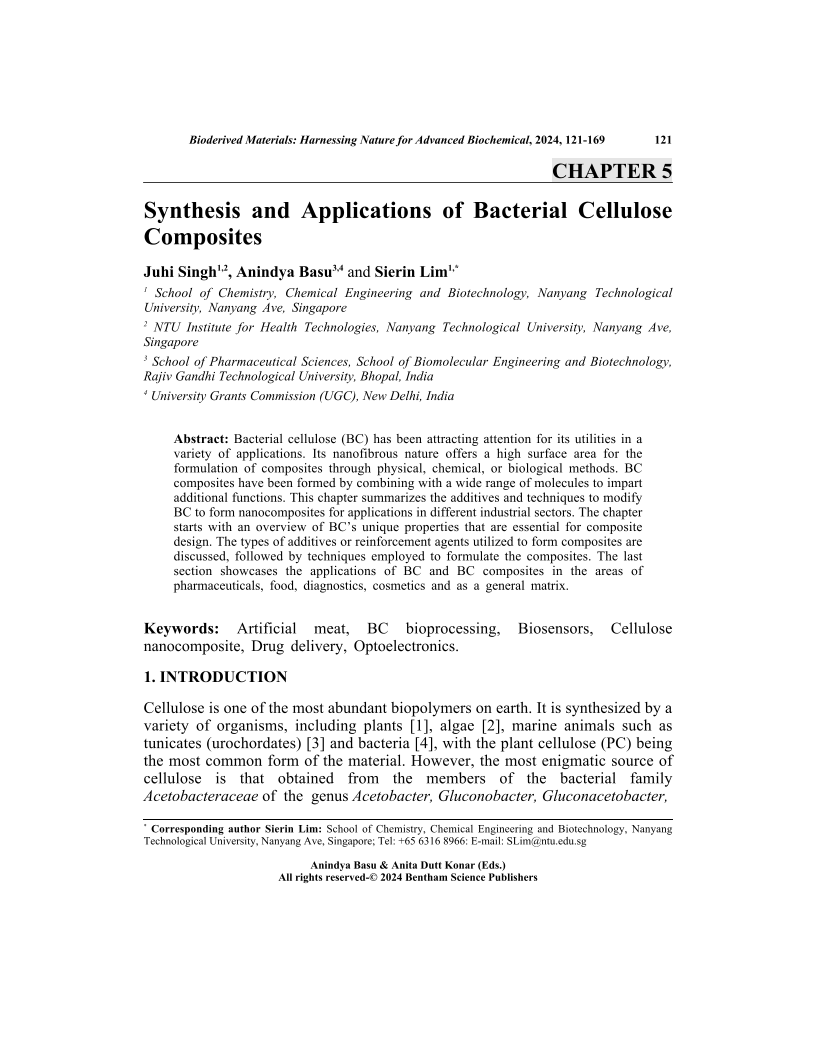
Bacterial cellulose (BC) has been attracting attention for its utilities in a variety of applications. Its nanofibrous nature offers a high surface area for the formulation of composites through physical, chemical, or biological methods. BC composites have been formed by combining with a wide range of molecules to impart additional functions. This chapter summarizes the additives and techniques to modify BC to form nanocomposites for applications in different industrial sectors. The chapter starts with an overview of BCs unique properties that are essential for composite design. The types of additives or reinforcement agents utilized to form composites are discussed, followed by techniques employed to formulate the composites. The last section showcases the applications of BC and BC composites in the areas of pharmaceuticals, food, diagnostics, cosmetics and as a general matrix.<br>
-
From This Site
/content/books/9789815136869.chapter-5dcterms_subject,pub_keyword-contentType:Journal -contentType:Figure -contentType:Table -contentType:SupplementaryData105
