


Peptidomimetics a Versatile Synthon for Biomaterials: Design Principles and Solutions
- Authors: Ankita Sharma1, Naureen Khan2, Vaibhav Shivhare3, Rishabh Ahuja4, Anita Dutt Konar5
-
View Affiliations Hide Affiliations1 Department of Applied Chemistry, Rajiv Gandhi Technological University, Bhopal: 462033, Madhya Pradesh, India 2 Department of Applied Chemistry, Rajiv Gandhi Technological University, Bhopal: 462033, Madhya Pradesh, India 3 Department of Applied Chemistry, Rajiv Gandhi Technological University, Bhopal: 462033, Madhya Pradesh, India 4 Department of Applied Chemistry, Rajiv Gandhi Technological University, Bhopal: 462033, Madhya Pradesh, India 5 Department of Applied Chemistry, School of Pharmaceutical Sciences, Rajiv Gandhi Technological University, Bhopal, India
- Source: Bioderived Materials: Harnessing Nature for Advanced Biochemical Handiwork: Volume 1 , pp 1-38
- Publication Date: March 2024
- Language: English


Peptidomimetics a Versatile Synthon for Biomaterials: Design Principles and Solutions, Page 1 of 1
< Previous page | Next page > /docserver/preview/fulltext/9789815136869/chapter-1-1.gif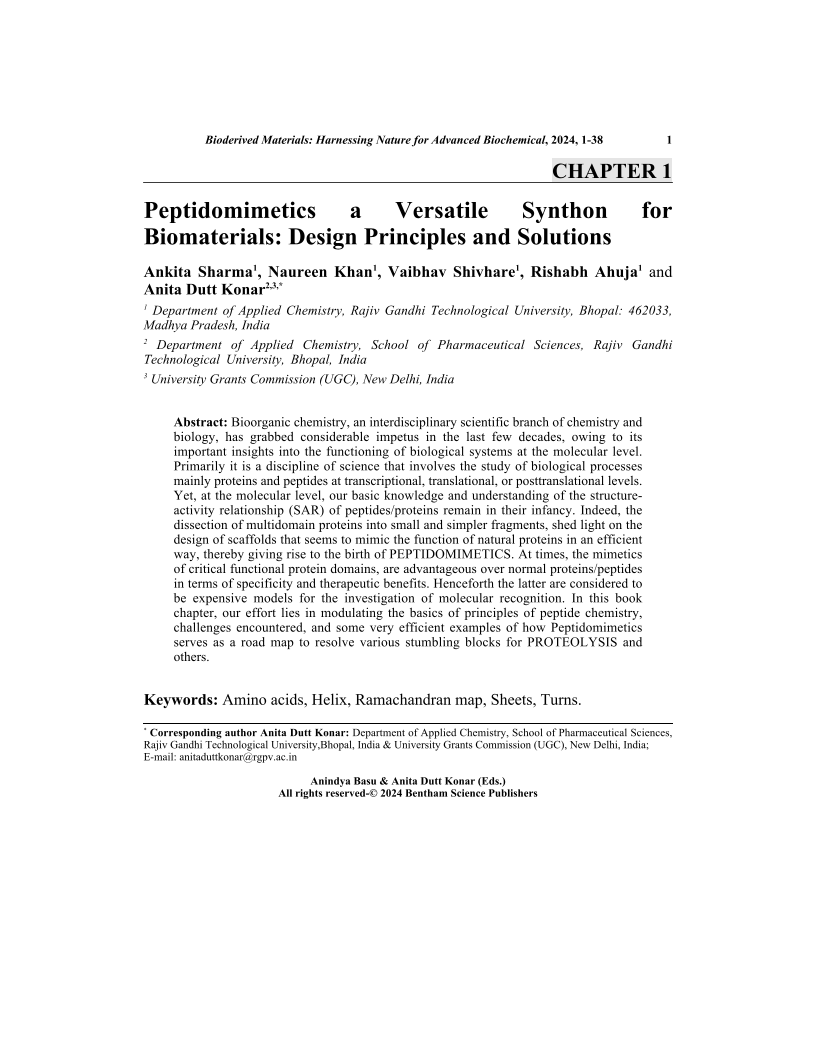
Bioorganic chemistry, an interdisciplinary scientific branch of chemistry and biology, has grabbed considerable impetus in the last few decades, owing to its important insights into the functioning of biological systems at the molecular level. Primarily it is a discipline of science that involves the study of biological processes mainly proteins and peptides at transcriptional, translational, or posttranslational levels. Yet, at the molecular level, our basic knowledge and understanding of the structureactivity relationship (SAR) of peptides/proteins remain in their infancy. Indeed, the dissection of multidomain proteins into small and simpler fragments, shed light on the design of scaffolds that seems to mimic the function of natural proteins in an efficient way, thereby giving rise to the birth of PEPTIDOMIMETICS. At times, the mimetics of critical functional protein domains, are advantageous over normal proteins/peptides in terms of specificity and therapeutic benefits. Henceforth the latter are considered to be expensive models for the investigation of molecular recognition. In this book chapter, our effort lies in modulating the basics of principles of peptide chemistry, challenges encountered, and some very efficient examples of how Peptidomimetics serves as a road map to resolve various stumbling blocks for PROTEOLYSIS and others. <br>
-
From This Site
/content/books/9789815136869.chapter-1dcterms_subject,pub_keyword-contentType:Journal -contentType:Figure -contentType:Table -contentType:SupplementaryData105
