


Himalayan Herbs: A Promising Medication Source for Neurodegenerative Diseases

- Authors: Sippy Singh1, Durgesh Singh2
-
View Affiliations Hide Affiliations1 Department of Zoology, S.S. Khanna Girls' Degree College (A Constituent College of Universityof Allahabad), Prayagraj, U.P., 211003, India 2 Department of Zoology, S.S. Khanna Girls' Degree College (A Constituent College of Universityof Allahabad), Prayagraj, U.P., 211003, India
- Source: Bioactive Phytochemicals from Himalayas: A Phytotherapeutic Approach , pp 26-38
- Publication Date: January 2023
- Language: English


Himalayan Herbs: A Promising Medication Source for Neurodegenerative Diseases, Page 1 of 1
< Previous page | Next page > /docserver/preview/fulltext/9789815123289/chap3-1.gif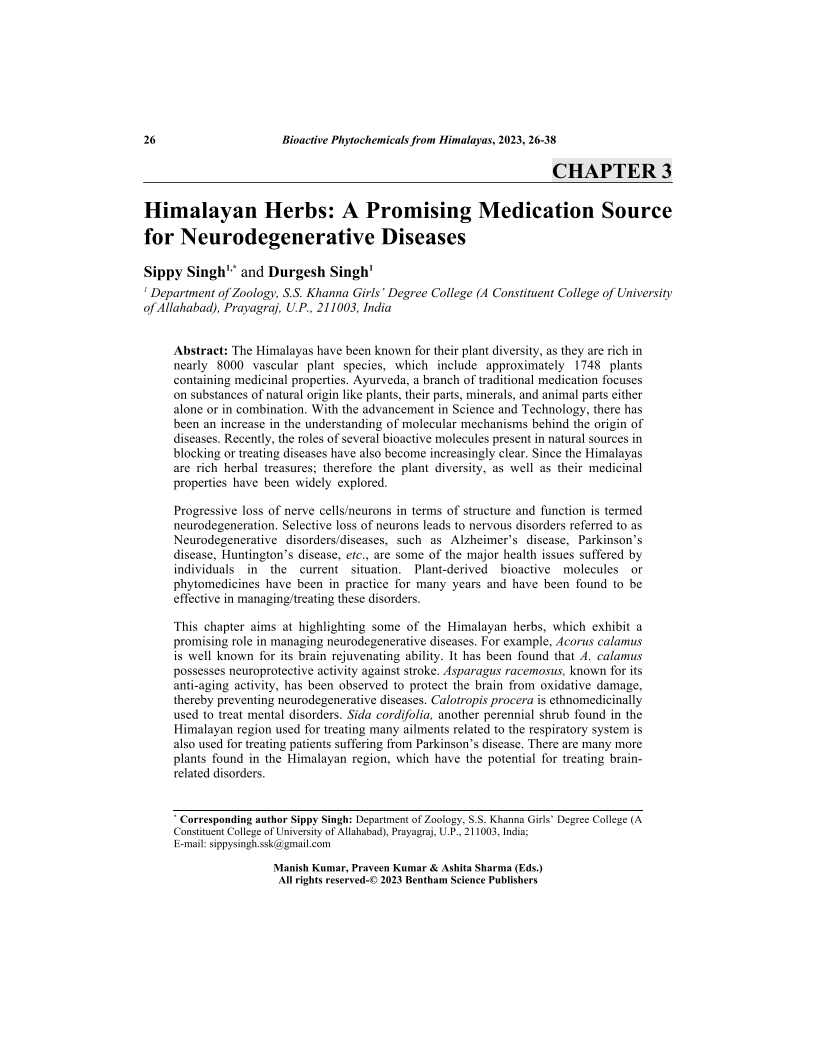
The Himalayas have been known for their plant diversity, as they are rich in nearly 8000 vascular plant species, which include approximately 1748 plants containing medicinal properties. Ayurveda, a branch of traditional medication focuses on substances of natural origin like plants, their parts, minerals, and animal parts either alone or in combination. With the advancement in Science and Technology, there has been an increase in the understanding of molecular mechanisms behind the origin of diseases. Recently, the roles of several bioactive molecules present in natural sources in blocking or treating diseases have also become increasingly clear. Since the Himalayas are rich herbal treasures; therefore the plant diversity, as well as their medicinal properties have been widely explored.Progressive loss of nerve cells/neurons in terms of structure and function is termed neurodegeneration. Selective loss of neurons leads to nervous disorders referred to as Neurodegenerative disorders/diseases, such as Alzheimer's disease, Parkinson's disease, Huntington's disease, etc., are some of the major health issues suffered by individuals in the current situation. Plant-derived bioactive molecules or phytomedicines have been in practice for many years and have been found to be effective in managing/treating these disorders.This chapter aims at highlighting some of the Himalayan herbs, which exhibit a promising role in managing neurodegenerative diseases. For example, Acorus calamus is well known for its brain rejuvenating ability. It has been found that A. calamus possesses neuroprotective activity against stroke. Asparagus racemosus, known for its anti-aging activity, has been observed to protect the brain from oxidative damage, thereby preventing neurodegenerative diseases. Calotropis procera is ethnomedicinally used to treat mental disorders. Sida cordifolia, another perennial shrub found in the Himalayan region used for treating many ailments related to the respiratory system is also used for treating patients suffering from Parkinson's disease. There are many more plants found in the Himalayan region, which have the potential for treating brainrelated disorders.The rising cases of neurodegenerative disorders need a better understanding of plants rich in neuroprotective phytochemicals. Plants are one of the promising medication sources with the least side effects, which will help in providing an ethnopharmacological aspect and managing/treating neurodegenerative disorders.
-
From This Site
/content/books/9789815123289.chap3dcterms_subject,pub_keyword-contentType:Journal -contentType:Figure -contentType:Table -contentType:SupplementaryData105
