


A Sustainable Approach to Solid Waste Management. A Review
- Authors: Mukesh Kumar1, S.K. Singh2
-
View Affiliations Hide Affiliations1 Department of Physics, SSNC, University of Delhi, Alipur, Delhi, India 2 Department of Environmental Engineering, Delhi Technological University, Delhi, India
- Source: Futuristic Projects in Energy and Automation Sectors: A Brief Review of New Technologies Driving Sustainable Development , pp 107-127
- Publication Date: May 2023
- Language: English


A Sustainable Approach to Solid Waste Management. A Review, Page 1 of 1
< Previous page | Next page > /docserver/preview/fulltext/9789815080537/chapter-7-1.gif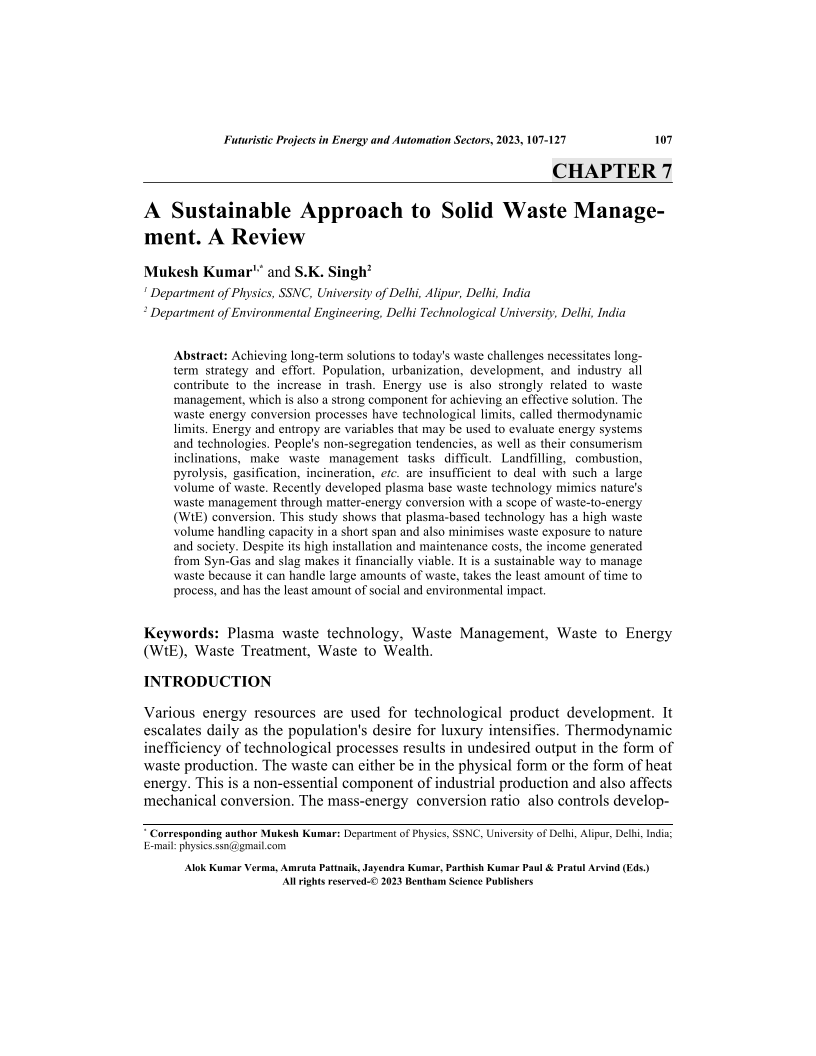
Achieving long-term solutions to today's waste challenges necessitates longterm strategy and effort. Population, urbanization, development, and industry all contribute to the increase in trash. Energy use is also strongly related to waste management, which is also a strong component for achieving an effective solution. The waste energy conversion processes have technological limits, called thermodynamic limits. Energy and entropy are variables that may be used to evaluate energy systems and technologies. People's non-segregation tendencies, as well as their consumerism inclinations, make waste management tasks difficult. Landfilling, combustion, pyrolysis, gasification, incineration, etc. are insufficient to deal with such a large volume of waste. Recently developed plasma base waste technology mimics nature's waste management through matter-energy conversion with a scope of waste-to-energy (WtE) conversion. This study shows that plasma-based technology has a high waste volume handling capacity in a short span and also minimises waste exposure to nature and society. Despite its high installation and maintenance costs, the income generated from Syn-Gas and slag makes it financially viable. It is a sustainable way to manage waste because it can handle large amounts of waste, takes the least amount of time to process, and has the least amount of social and environmental impact.
-
From This Site
/content/books/9789815080537.chapter-7dcterms_subject,pub_keyword-contentType:Journal -contentType:Figure -contentType:Table -contentType:SupplementaryData105
