


Malware Analysis and Malicious Activity Detection using Machine Learning

- Authors: Muhammad Jawed Chowdhury1, Julia Juremi2, Maryam Var Naseri3
-
View Affiliations Hide Affiliations1 School of Computing & Technology, Asia Pacific University of Technology and Innovation, Kuala Lumpur, Malaysia 2 Forensic and Cyber Security Research Center, Asia Pacific University of Technology and Innovation, Kuala Lumpur, Malaysia 3 School of Computing & Technology, Asia Pacific University of Technology and Innovation, Kuala Lumpur, Malaysia
- Source: Digital Innovation Adoption: Architectural Recommendations and Security Solutions , pp 28-39
- Publication Date: June 2024
- Language: English


Malware Analysis and Malicious Activity Detection using Machine Learning, Page 1 of 1
< Previous page | Next page > /docserver/preview/fulltext/9789815079661/chapter-3-1.gif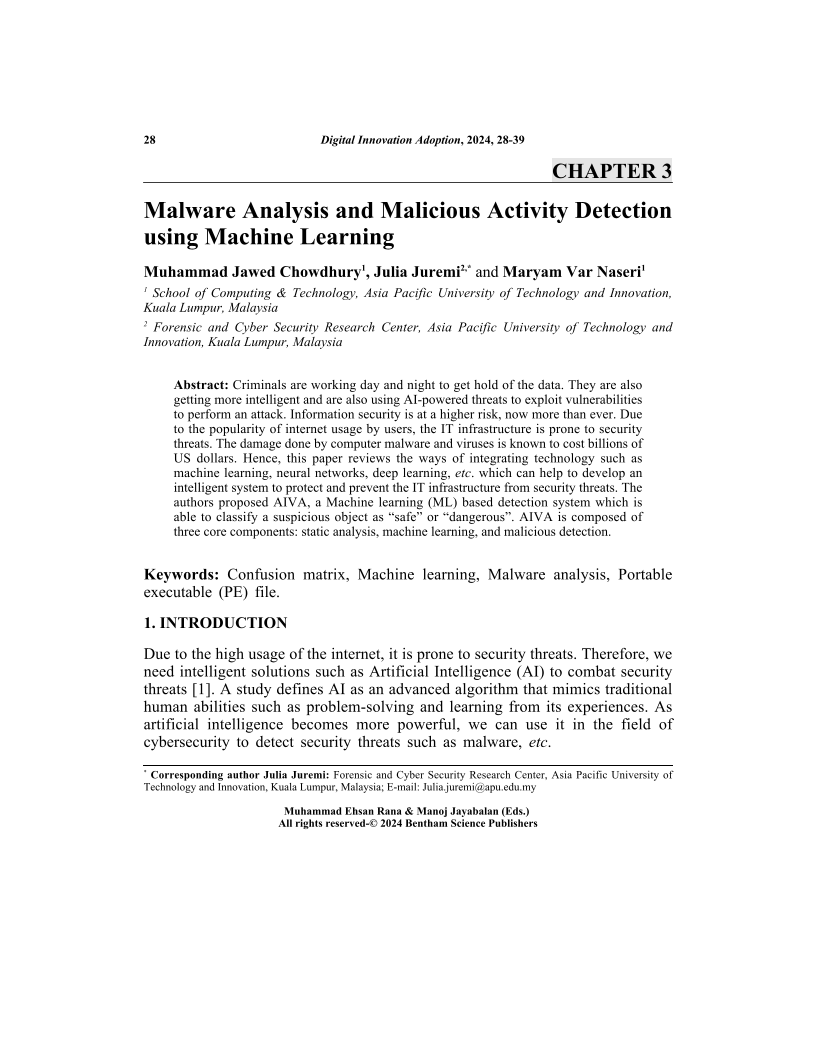
Criminals are working day and night to get hold of the data. They are also getting more intelligent and are also using AI-powered threats to exploit vulnerabilities to perform an attack. Information security is at a higher risk, now more than ever. Due to the popularity of internet usage by users, the IT infrastructure is prone to security threats. The damage done by computer malware and viruses is known to cost billions of US dollars. Hence, this paper reviews the ways of integrating technology such as machine learning, neural networks, deep learning, etc. which can help to develop an intelligent system to protect and prevent the IT infrastructure from security threats. The authors proposed AIVA, a Machine learning (ML) based detection system which is able to classify a suspicious object as "safe" or "dangerous". AIVA is composed of three core components: static analysis, machine learning, and malicious detection.
-
From This Site
/content/books/9789815079661.chapter-3dcterms_subject,pub_keyword-contentType:Journal -contentType:Figure -contentType:Table -contentType:SupplementaryData105
