


Natural Flavonoid and Chalcone Scaffolds as Leads for Synthetic Antitubercular Agents
- Authors: Federico Appetecchia1, Mariangela Biava2, Giovanna Poce3
-
View Affiliations Hide Affiliations1 Department of Chemistry and Technologies of Drug, Sapienza University of Rome, piazzale A. Moro 5, 00185 Rome, Italy 2 Department of Chemistry and Technologies of Drug, Sapienza University of Rome, piazzale A. Moro 5, 00185 Rome, Italy 3 Department of Chemistry and Technologies of Drug, Sapienza University of Rome, piazzale A. Moro 5, 00185 Rome, Italy
- Source: Flavonoids and Phenolics , pp 145-172
- Publication Date: November 2022
- Language: English


Natural Flavonoid and Chalcone Scaffolds as Leads for Synthetic Antitubercular Agents, Page 1 of 1
< Previous page | Next page > /docserver/preview/fulltext/9789815079098/chapter-5-1.gif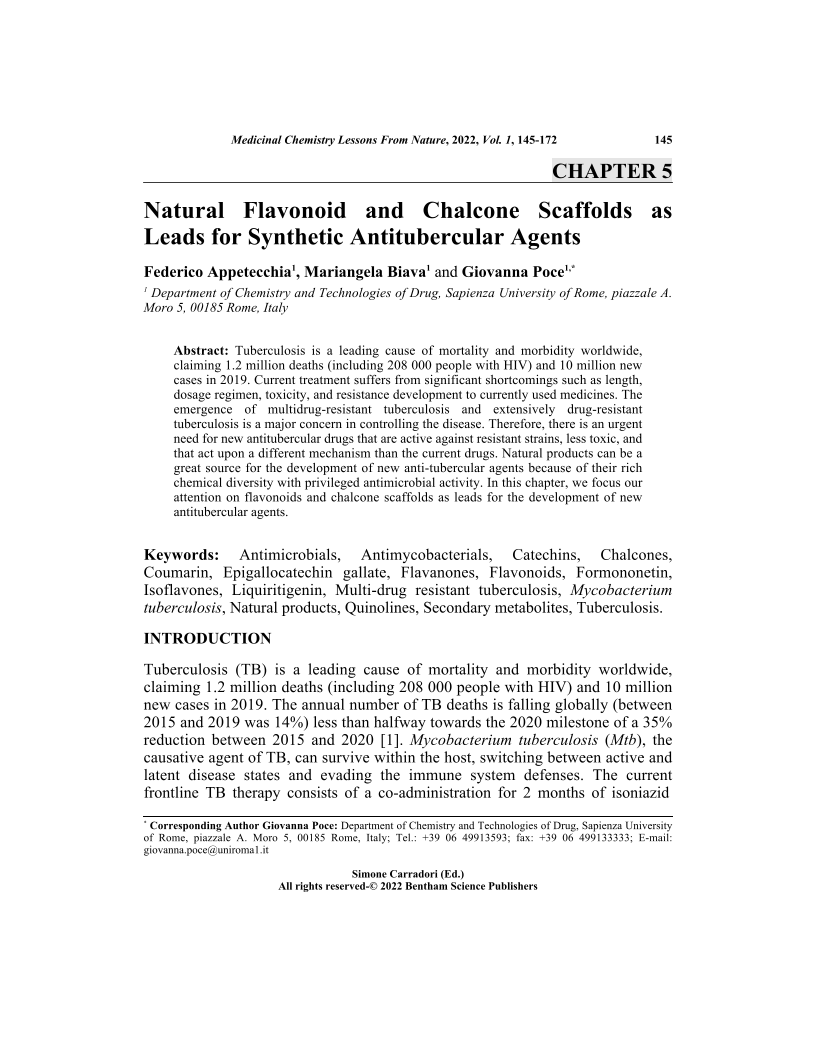
Tuberculosis is a leading cause of mortality and morbidity worldwide, claiming 1.2 million deaths (including 208 000 people with HIV) and 10 million new cases in 2019. Current treatment suffers from significant shortcomings such as length, dosage regimen, toxicity, and resistance development to currently used medicines. The emergence of multidrug-resistant tuberculosis and extensively drug-resistant tuberculosis is a major concern in controlling the disease. Therefore, there is an urgent need for new antitubercular drugs that are active against resistant strains, less toxic, and that act upon a different mechanism than the current drugs. Natural products can be a great source for the development of new anti-tubercular agents because of their rich chemical diversity with privileged antimicrobial activity. In this chapter, we focus our attention on flavonoids and chalcone scaffolds as leads for the development of new antitubercular agents.
-
From This Site
/content/books/9789815079098.chapter-5dcterms_subject,pub_keyword-contentType:Journal -contentType:Figure -contentType:Table -contentType:SupplementaryData105
