


The Multifaceted Interface Between the Host Immune Cell and Mycobacterium Tuberculosis - Mitochondria at the Crux of the Matter
- Authors: Dilvani Oliveira Santos1,2, Paulo Renato Zuquim Antas3,4
-
View Affiliations Hide Affiliations1 Postgraduate Program in Applied Microbiology and Parasitology (PPGMPA)/Biomedical Institute, Federal Fluminense University (UFF), Niterói, Rio de Janeiro 2 Postgraduate Program in Science and Biotechnology (PPBI)/Institute of Biology; Federal Fluminense University (UFF), Niterói, Rio de Janeiro, Brazil 3 Clinical Immunology Laboratory, Oswaldo Cruz Foundation, Manguinhos, RJ, Brazil 4 Postgraduate Program in Tropical Medicine, Oswaldo Cruz Foundation, Manguinhos, RJ, Brazil
- Source: Mitochondrial DNA and the Immuno-inflammatory Response: New Frontiers to Control Specific Microbial Diseases , pp 54-70
- Publication Date: August 2022
- Language: English


The Multifaceted Interface Between the Host Immune Cell and Mycobacterium Tuberculosis - Mitochondria at the Crux of the Matter, Page 1 of 1
< Previous page | Next page > /docserver/preview/fulltext/9789815051698/chap3-1.gif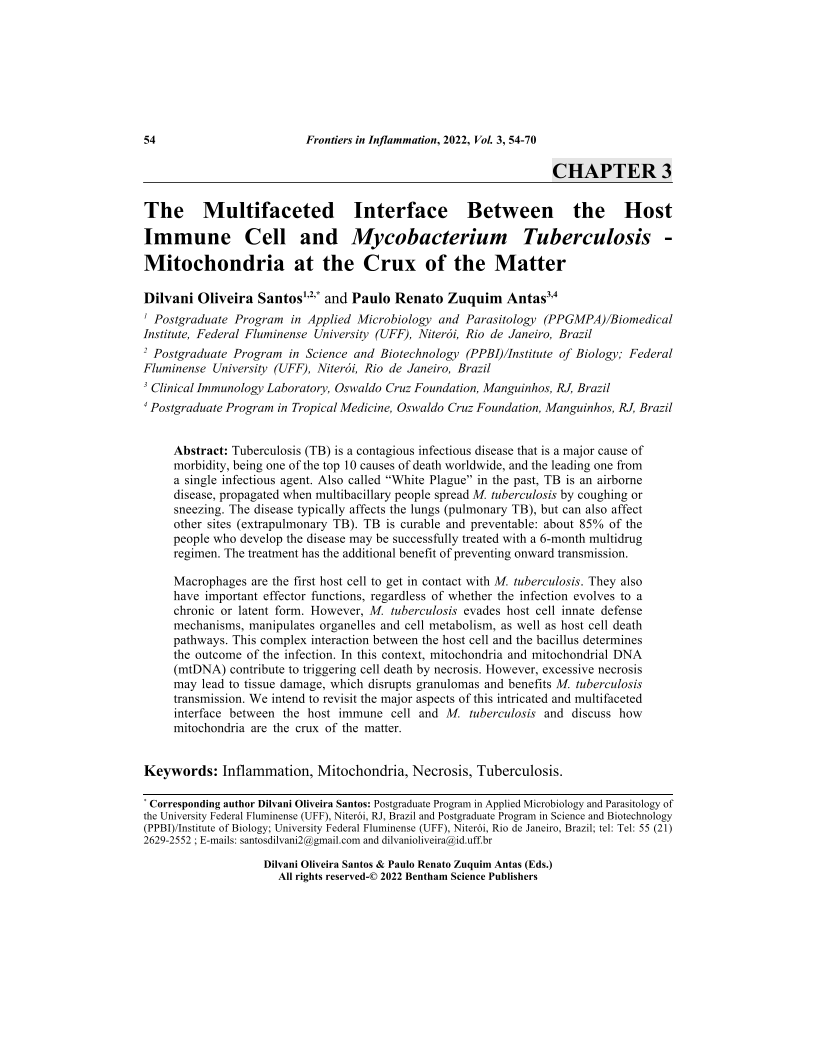
Tuberculosis (TB) is a contagious infectious disease that is a major cause of morbidity, being one of the top 10 causes of death worldwide, and the leading one from a single infectious agent. Also called "White Plague" in the past, TB is an airborne disease, propagated when multibacillary people spread M. tuberculosis by coughing or sneezing. The disease typically affects the lungs (pulmonary TB), but can also affect other sites (extrapulmonary TB). TB is curable and preventable: about 85% of the people who develop the disease may be successfully treated with a 6-month multidrug regimen. The treatment has the additional benefit of preventing onward transmission. Macrophages are the first host cell to get in contact with M. tuberculosis. They also have important effector functions, regardless of whether the infection evolves to a chronic or latent form. However, M. tuberculosis evades host cell innate defense mechanisms, manipulates organelles and cell metabolism, as well as host cell death pathways. This complex interaction between the host cell and the bacillus determines the outcome of the infection. In this context, mitochondria and mitochondrial DNA (mtDNA) contribute to triggering cell death by necrosis. However, excessive necrosis may lead to tissue damage, which disrupts granulomas and benefits M. tuberculosis transmission. We intend to revisit the major aspects of this intricated and multifaceted interface between the host immune cell and M. tuberculosis and discuss how mitochondria are the crux of the matter.
-
From This Site
/content/books/9789815051698.chap3dcterms_subject,pub_keyword-contentType:Journal -contentType:Figure -contentType:Table -contentType:SupplementaryData105
