


LC-HR-MS Based Approach to Identify Triterpenes in Astragalus Species
- Authors: Nilufar Z. Mamadalieva1,2, Hidayat Hussain3
-
View Affiliations Hide Affiliations1 Institute of the Chemistry of Plant Substances, Academy Sciences of Uzbekistan, Tashkent, Uzbekistan 2 Department of Bioorganic Chemistry, Leibniz Institute of Plant Biochemistry, Halle (Saale), Germany 3 Department of Bioorganic Chemistry, Leibniz Institute of Plant Biochemistry, Halle (Saale), Germany
- Source: New Findings from Natural Substances , pp 116-132
- Publication Date: August 2022
- Language: English


LC-HR-MS Based Approach to Identify Triterpenes in Astragalus Species, Page 1 of 1
< Previous page | Next page > /docserver/preview/fulltext/9789815051421/chap5-1.gif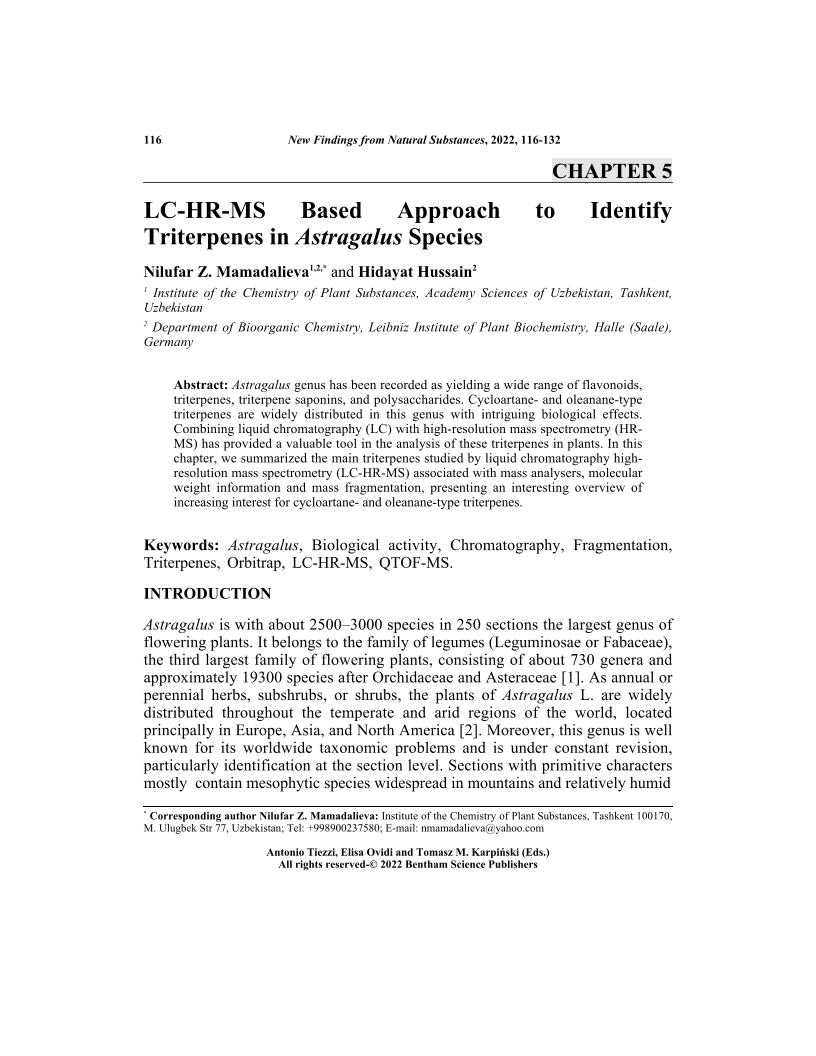
Astragalus genus has been recorded as yielding a wide range of flavonoids, triterpenes, triterpene saponins, and polysaccharides. Cycloartane- and oleanane-type triterpenes are widely distributed in this genus with intriguing biological effects. Combining liquid chromatography (LC) with high-resolution mass spectrometry (HRMS) has provided a valuable tool in the analysis of these triterpenes in plants. In this chapter, we summarized the main triterpenes studied by liquid chromatography highresolution mass spectrometry (LC-HR-MS) associated with mass analysers, molecular weight information and mass fragmentation, presenting an interesting overview of increasing interest for cycloartane- and oleanane-type triterpenes.
-
From This Site
/content/books/9789815051421.chap5dcterms_subject,pub_keyword-contentType:Journal -contentType:Figure -contentType:Table -contentType:SupplementaryData105
