


Potential of Solar Distillation Plant in India

- Authors: Rajkumar Malviya1, Veeresh Vishwakarma2, Prashant V. Baredar3, Anil Kumar4
-
View Affiliations Hide Affiliations1 Energy Centre, Maulana Azad National Institute of Technology, Bhopal 462003, M.P., India 2 Energy Centre, Maulana Azad National Institute of Technology, Bhopal - 462003, M.P., India 3 Energy Centre, Maulana Azad National Institute of Technology, Bhopal - 462003, M.P., India 4 Depratment of Mechanical Engineering, Delhi Technological University, Delhi 110042, India ⋅ Centre for Energy and Environment, Delhi Technological University, Delhi 110042, India
- Source: Solar Thermal Systems: Thermal Analysis and its Application , pp 169-190
- Publication Date: August 2022
- Language: English


Potential of Solar Distillation Plant in India, Page 1 of 1
< Previous page | Next page > /docserver/preview/fulltext/9789815050950/chap6-1.gif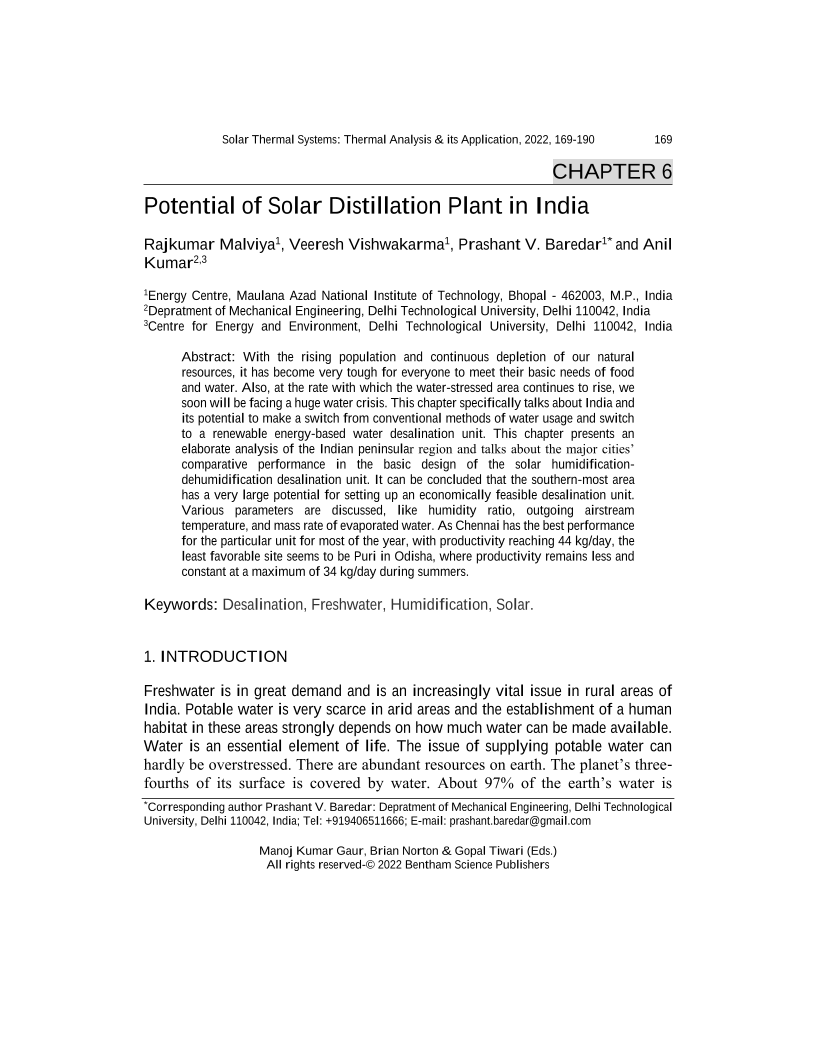
With the rising population and continuous depletion of our natural resources, it has become very tough for everyone to meet their basic needs of food and water. Also, at the rate with which the water-stressed area continues to rise, we soon will be facing a huge water crisis. This chapter specifically talks about India and its potential to make a switch from conventional methods of water usage and switch to a renewable energy-based water desalination unit. This chapter presents an elaborate analysis of the Indian peninsular region and talks about the major cities' comparative performance in the basic design of the solar humidificationdehumidification desalination unit. It can be concluded that the southern-most area has a very large potential for setting up an economically feasible desalination unit. Various parameters are discussed, like humidity ratio, outgoing airstream temperature, and mass rate of evaporated water. As Chennai has the best performance for the particular unit for most of the year, with productivity reaching 44 kg/day, the least favorable site seems to be Puri in Odisha, where productivity remains less and constant at a maximum of 34 kg/day during summers.
-
From This Site
/content/books/9789815050950.chap6dcterms_subject,pub_keyword-contentType:Journal -contentType:Figure -contentType:Table -contentType:SupplementaryData105
