


Artificial Intelligence as a Putative Tool for Newer Drug Development Approach in Cancer Nanomedicine
- Authors: Pooja Jain1, Sradhanjali Mohapatra2, Nazia Hassan3, Manvi Singh4, Uzma Farooq5, Mohd. Aamir Mirza6, Zeenat Iqbal7
-
View Affiliations Hide Affiliations1 Department of Pharmaceutics, School of Pharmaceutical Education and Research, (SPER), Jamia Hamdard, New Delhi 110060, India 2 Department of Pharmaceutics, School of Pharmaceutical Education and Research (SPER), Jamia Hamdard, New Delhi-110060, India 3 Department of Pharmaceutics, School of Pharmaceutical Education and Research (SPER), Jamia Hamdard, New Delhi-110060, India 4 Department of Pharmaceutics, SGT College of Pharmacy, SGT University, Gurugram-122001, India 5 Department of Pharmaceutics, School of Pharmaceutical Education and Research (SPER), Jamia Hamdard, New Delhi-110060, India 6 Department of Pharmaceutics, School of Pharmaceutical Education and Research (SPER), Jamia Hamdard, New Delhi-110060, India 7 Department of Pharmaceutics, School of Pharmaceutical Education and Research (SPER), Jamia Hamdard, New Delhi-110060, India
- Source: Artificial Intelligence Based Cancer Nanomedicine: Diagnostics, Therapeutics and Bioethics , pp 53-68
- Publication Date: May 2022
- Language: English


Artificial Intelligence as a Putative Tool for Newer Drug Development Approach in Cancer Nanomedicine, Page 1 of 1
< Previous page | Next page > /docserver/preview/fulltext/9789815050561/chapter-6-1.gif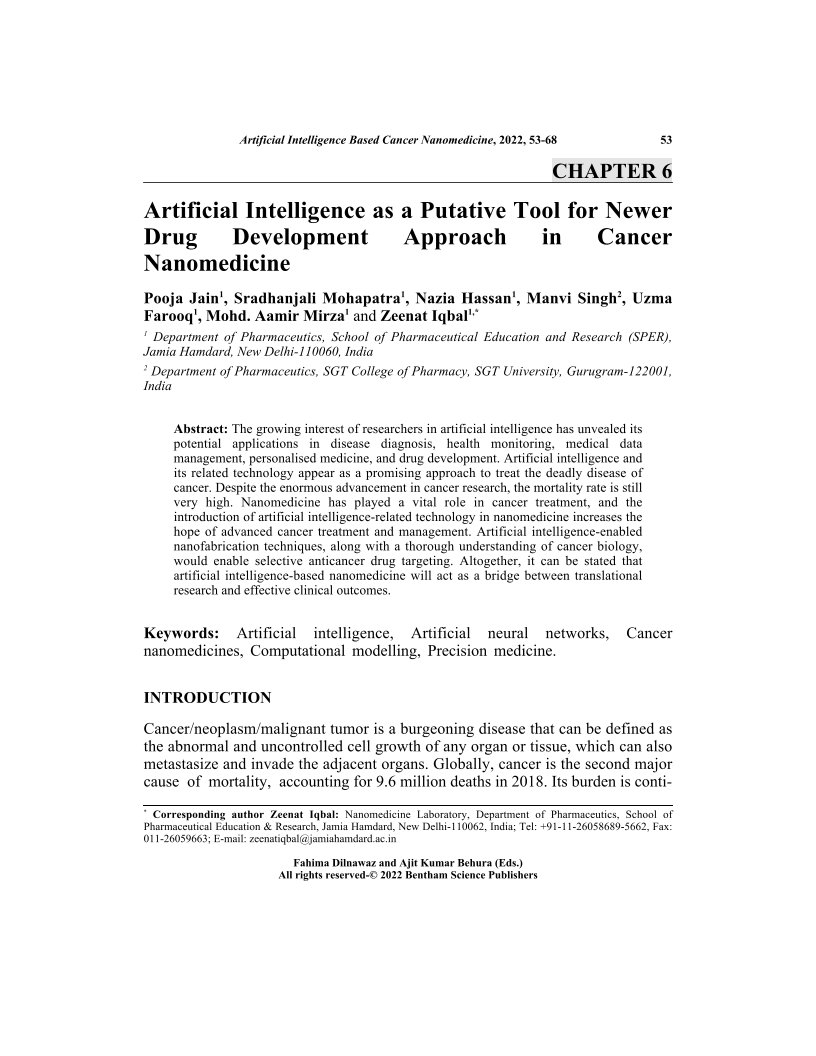
The growing interest of researchers in artificial intelligence has unvealed its potential applications in disease diagnosis, health monitoring, medical data management, personalised medicine, and drug development. Artificial intelligence and its related technology appear as a promising approach to treat the deadly disease of cancer. Despite the enormous advancement in cancer research, the mortality rate is still very high. Nanomedicine has played a vital role in cancer treatment, and the introduction of artificial intelligence-related technology in nanomedicine increases the hope of advanced cancer treatment and management. Artificial intelligence-enabled nanofabrication techniques, along with a thorough understanding of cancer biology, would enable selective anticancer drug targeting. Altogether, it can be stated that artificial intelligence-based nanomedicine will act as a bridge between translational research and effective clinical outcomes.<br>
-
From This Site
/content/books/9789815050561.chapter-6dcterms_subject,pub_keyword-contentType:Journal -contentType:Figure -contentType:Table -contentType:SupplementaryData105
