


Lung Recruitability in COVID-19
- Authors: K. Priadharsini1, D. Manikandan2, Sajeer Koolath3, G.Rajasekhar Reddy4, S.U. Mohammed Riyaz5
-
View Affiliations Hide Affiliations1 CAS in Botany, University of Madras, Guindy Campus, Chennai 600 025, India 2 Small Molecule Drug Discovery Group, Anticancer Bioscience, Tianfu International Biotown, Chengdu, 610000, China 3 Small Molecule Drug Discovery Group, Anticancer Bioscience, Tianfu International Biotown, Chengdu, 610000, China 4 NACL Industries Limited, R&D Centre, NANDIGAON, Ranga Reddy District 509228, Telangana, India 5 Department of Biotechnology, Islamiah College (Autonomous), Vaniyambadi - 635752, Tamilnadu, India
- Source: An Epidemiological Update on COVID -19 , pp 49-54
- Publication Date: June 2022
- Language: English


Lung Recruitability in COVID-19, Page 1 of 1
< Previous page | Next page > /docserver/preview/fulltext/9789815050325/chap6-1.gif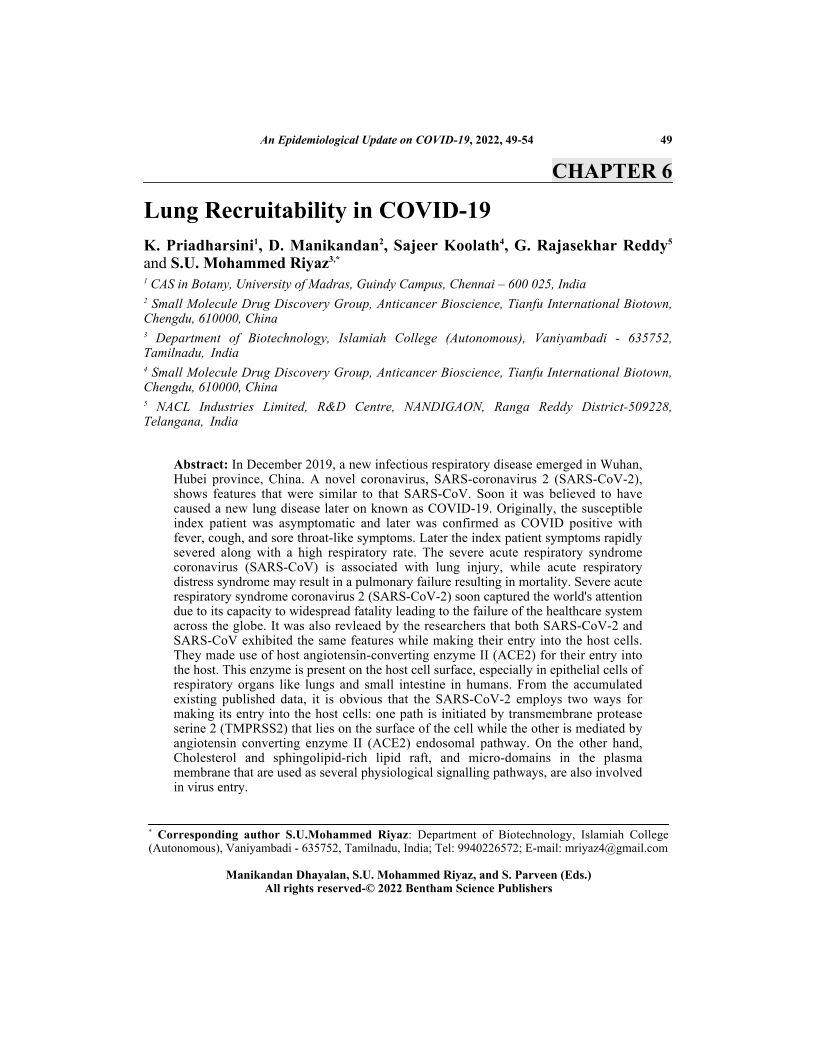
In December 2019, a new infectious respiratory disease emerged in Wuhan, Hubei province, China. A novel coronavirus, SARS-coronavirus 2 (SARS-CoV-2), shows features that were similar to that SARS-CoV. Soon it was believed to have caused a new lung disease later on known as COVID-19. Originally, the susceptible index patient was asymptomatic and later was confirmed as COVID positive with fever, cough, and sore throat-like symptoms. Later the index patient symptoms rapidly severed along with a high respiratory rate. The severe acute respiratory syndrome coronavirus (SARS-CoV) is associated with lung injury, while acute respiratory distress syndrome may result in a pulmonary failure resulting in mortality. Severe acute respiratory syndrome coronavirus 2 (SARS-CoV-2) soon captured the world's attention due to its capacity to widespread fatality leading to the failure of the healthcare system across the globe. It was also revleaed by the researchers that both SARS-CoV-2 and SARS-CoV exhibited the same features while making their entry into the host cells. They made use of host angiotensin-converting enzyme II (ACE2) for their entry into the host. This enzyme is present on the host cell surface, especially in epithelial cells of respiratory organs like lungs and small intestine in humans. From the accumulated existing published data, it is obvious that the SARS-CoV-2 employs two ways for making its entry into the host cells: one path is initiated by transmembrane protease serine 2 (TMPRSS2) that lies on the surface of the cell while the other is mediated by angiotensin converting enzyme II (ACE2) endosomal pathway. On the other hand, Cholesterol and sphingolipid-rich lipid raft, and micro-domains in the plasma membrane that are used as several physiological signalling pathways, are also involved in virus entry.This chapter aims at briefly evaluating the pathogenesis of SARS-CoV and new anti viral drugs against the disease.
-
From This Site
/content/books/9789815050325.chap6dcterms_subject,pub_keyword-contentType:Journal -contentType:Figure -contentType:Table -contentType:SupplementaryData105
