


Progress in the Research of Naturally Occurring Biflavonoids: A Look Through
- Authors: Dilip Gorai1, Shyamal K. Jash2, Debasish Kundu3
-
View Affiliations Hide Affiliations1 Department of Chemistry, Bolpur College, Bolpur, Birbhum 731204, West Bengal, India 2 Department of Chemistry, Krishna Chandra College, Hetampur, Birbhum - 731124, WestBengal, India 3 Department of Chemistry, Govt. Degree College, Mangalkote, Burdwan - 713132, West Bengal, India
- Source: Frontiers in Natural Product Chemistry: Volume 10 , pp 73-153
- Publication Date: May 2022
- Language: English


Progress in the Research of Naturally Occurring Biflavonoids: A Look Through, Page 1 of 1
< Previous page | Next page > /docserver/preview/fulltext/9789815040760/chapter-3-1.gif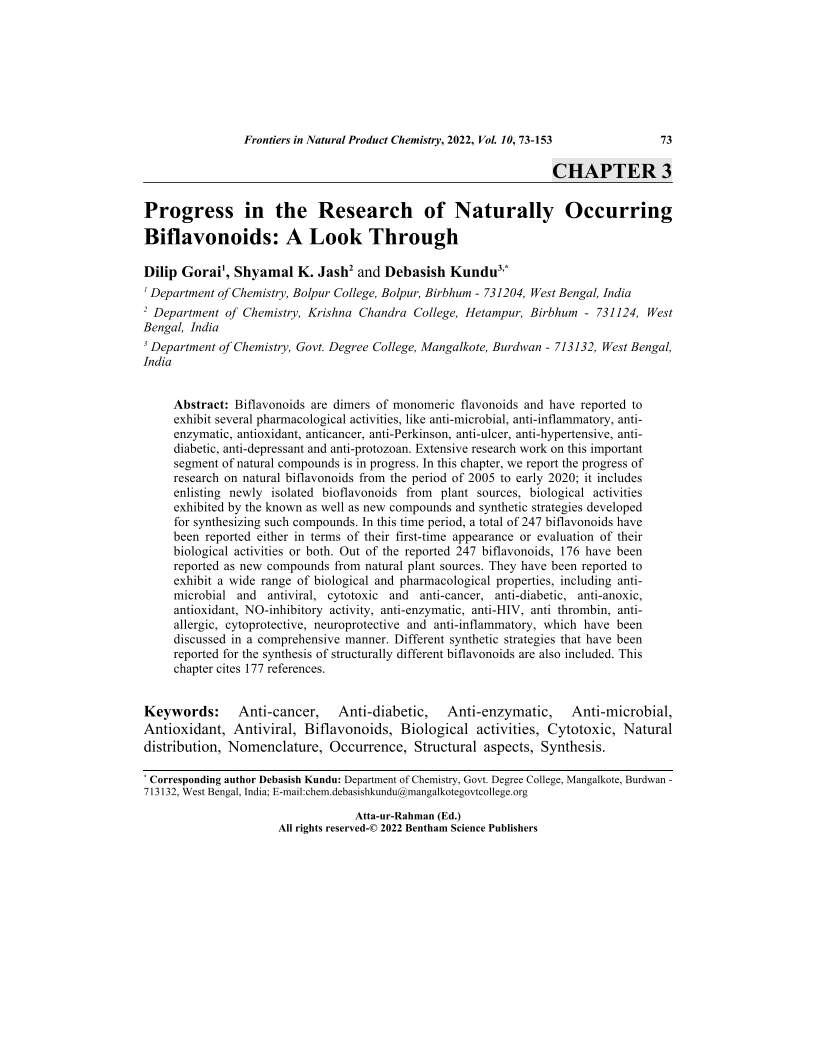
Biflavonoids are dimers of monomeric flavonoids and have reported to exhibit several pharmacological activities, like anti-microbial, anti-inflammatory, anti enzymatic, antioxidant, anticancer, anti-Perkinson, anti-ulcer, anti-hypertensive, anti diabetic, anti-depressant and anti-protozoan. Extensive research work on this important segment of natural compounds is in progress. In this chapter, we report the progress of research on natural biflavonoids from the period of 2005 to early 2020; it includes enlisting newly isolated bioflavonoids from plant sources, biological activities exhibited by the known as well as new compounds and synthetic strategies developed for synthesizing such compounds. In this time period, a total of 247 biflavonoids have been reported either in terms of their first-time appearance or evaluation of their biological activities or both. Out of the reported 247 biflavonoids, 176 have been reported as new compounds from natural plant sources. They have been reported to exhibit a wide range of biological and pharmacological properties, including anti microbial and antiviral, cytotoxic and anti-cancer, anti-diabetic, anti-anoxic, antioxidant, NO-inhibitory activity, anti-enzymatic, anti-HIV, anti thrombin, anti allergic, cytoprotective, neuroprotective and anti-inflammatory, which have been discussed in a comprehensive manner. Different synthetic strategies that have been reported for the synthesis of structurally different biflavonoids are also included. This chapter cites 177 references.
-
From This Site
/content/books/9789815040760.chapter-3dcterms_subject,pub_keyword-contentType:Journal -contentType:Figure -contentType:Table -contentType:SupplementaryData105
