


Experimental and Clinical Studies on the Effects of Nigella Sativa and its Constituents on Allergic and Immunological Disorders
- Authors: Mohammad Hossein Boskabady1, Saeideh Saadat2, Vahideh Ghorani3
-
View Affiliations Hide Affiliations1 Applied Biomedical Research Center, Mashhad University of Medical Sciences, Mashhad 9177948564, Iran ⋅ Department of Physiology, Faculty of Medicine, Mashhad University of Medical Sciences, Mashhad, Iran 2 Applied Biomedical Research Center, Mashhad University of Medical Sciences, Mashhad-9177948564, Iran ⋅ Department of Physiology, School of Medicine, Zahedan University of Medical Sciences, Zahedan, Iran 3 Applied Biomedical Research Center, Mashhad University of Medical Sciences, Mashhad-9177948564, Iran ⋅ Clinical Research Unit, Faculty of Medicine, Mashhad University of Medical Sciences, Mashhad, Iran
- Source: Frontiers in Clinical Drug Research - Anti Allergy Agents: Volume 5 , pp 121-146
- Publication Date: April 2022
- Language: English


Experimental and Clinical Studies on the Effects of Nigella Sativa and its Constituents on Allergic and Immunological Disorders, Page 1 of 1
< Previous page | Next page > /docserver/preview/fulltext/9789815040616/chap4-1.gif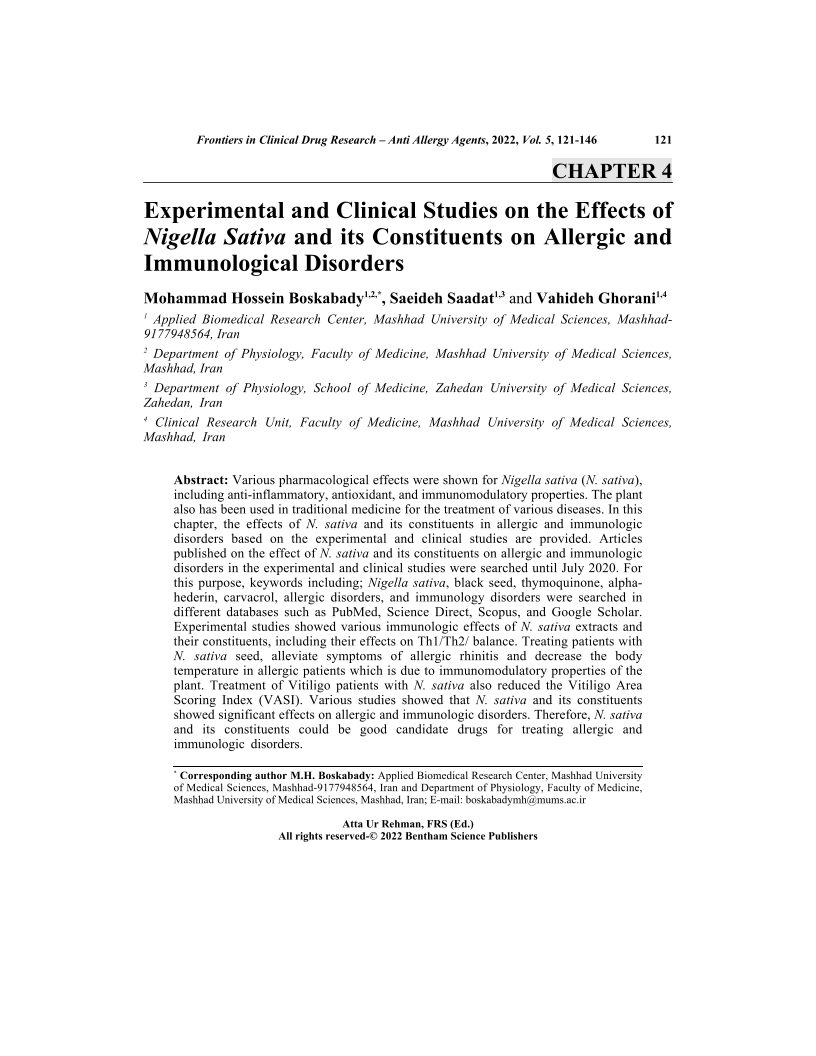
Various pharmacological effects were shown for Nigella sativa (N. sativa), including anti-inflammatory, antioxidant, and immunomodulatory properties. The plant also has been used in traditional medicine for the treatment of various diseases. In this chapter, the effects of N. sativa and its constituents in allergic and immunologic disorders based on the experimental and clinical studies are provided. Articles published on the effect of N. sativa and its constituents on allergic and immunologic disorders in the experimental and clinical studies were searched until July 2020. For this purpose, keywords including; Nigella sativa, black seed, thymoquinone, alphahederin, carvacrol, allergic disorders, and immunology disorders were searched in different databases such as PubMed, Science Direct, Scopus, and Google Scholar. Experimental studies showed various immunologic effects of N. sativa extracts and their constituents, including their effects on Th1/Th2/ balance. Treating patients with N. sativa seed, alleviate symptoms of allergic rhinitis and decrease the body temperature in allergic patients which is due to immunomodulatory properties of the plant. Treatment of Vitiligo patients with N. sativa also reduced the Vitiligo Area Scoring Index (VASI). Various studies showed that N. sativa and its constituents showed significant effects on allergic and immunologic disorders. Therefore, N. sativa and its constituents could be good candidate drugs for treating allergic and immunologic disorders.
-
From This Site
/content/books/9789815040616.chap4dcterms_subject,pub_keyword-contentType:Journal -contentType:Figure -contentType:Table -contentType:SupplementaryData105
