


Propolis and its Key Chemical Constituents: A Promising Natural Product in Therapeutic Applications
- Authors: Harshad S. Kapare1, Sadhana S. Raut2, L. Sathiyanarayanan3
-
View Affiliations Hide Affiliations1 Dr. D. Y. Patil Institute of Pharmaceutical Sciences and Research, Pimpri, Pune, Maharashtra, India 2 Sinhgad College of Pharmacy, S. No. 44/1, Vadgaon (BK), Off Sinhgad Road, Pune, Maharashtra, India 3 Poona College of Pharmacy, Bharti Vidyapeeth Deemed to be University, Erandwane, Pune, Maharashtra, India
- Source: Frontiers in Natural Product Chemistry: Volume 9 , pp 1-27
- Publication Date: March 2022
- Language: English


Propolis and its Key Chemical Constituents: A Promising Natural Product in Therapeutic Applications, Page 1 of 1
< Previous page | Next page > /docserver/preview/fulltext/9789815040586/chapter-1-1.gif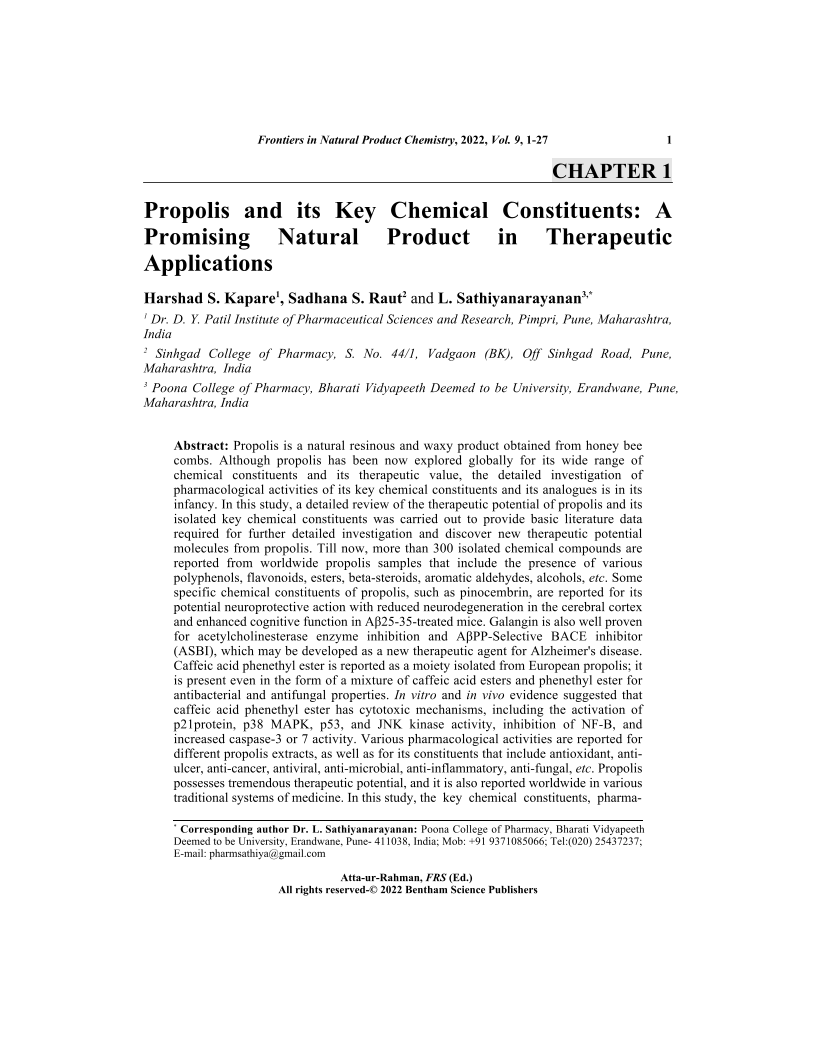
Propolis is a natural resinous and waxy product obtained from honey bee combs. Although propolis has been now explored globally for its wide range of chemical constituents and its therapeutic value, the detailed investigation of pharmacological activities of its key chemical constituents and its analogues is in its infancy. In this study, a detailed review of the therapeutic potential of propolis and its isolated key chemical constituents was carried out to provide basic literature data required for further detailed investigation and discover new therapeutic potential molecules from propolis. Till now, more than 300 isolated chemical compounds are reported from worldwide propolis samples that include the presence of various polyphenols, flavonoids, esters, beta-steroids, aromatic aldehydes, alcohols, etc. Some specific chemical constituents of propolis, such as pinocembrin, are reported for its potential neuroprotective action with reduced neurodegeneration in the cerebral cortex and enhanced cognitive function in Aβ25-35-treated mice. Galangin is also well proven for acetylcholinesterase enzyme inhibition and AβPP-Selective BACE inhibitor (ASBI), which may be developed as a new therapeutic agent for Alzheimer's disease. Caffeic acid phenethyl ester is reported as a moiety isolated from European propolis; it is present even in the form of a mixture of caffeic acid esters and phenethyl ester for antibacterial and antifungal properties. In vitro and in vivo evidence suggested that caffeic acid phenethyl ester has cytotoxic mechanisms, including the activation of p21protein, p38 MAPK, p53, and JNK kinase activity, inhibition of NF-B, and increased caspase-3 or 7 activity. Various pharmacological activities are reported for different propolis extracts, as well as for its constituents that include antioxidant, antiulcer, anti-cancer, antiviral, anti-microbial, anti-inflammatory, anti-fungal, etc. Propolis possesses tremendous therapeutic potential, and it is also reported worldwide in various traditional systems of medicine. In this study, the key chemical constituents, pharmacological activities, various critical issues in its application in drug delivery, and detailed investigation on approaches for formulation development to enhance biopharmaceutical aspects of propolis have been reviewed.
-
From This Site
/content/books/9789815040586.chapter-1dcterms_subject,pub_keyword-contentType:Journal -contentType:Figure -contentType:Table -contentType:SupplementaryData105
