


Biomarkers for Preterm Delivery
- Authors: Ismail BIYIK1, Mustafa ALBAYRAK2
-
View Affiliations Hide Affiliations1 Department of Obstetrics and Gynecology, Kutahya Health Sciences University, Kutahya, Turkey 2 Department of Gynecologic Oncology, Istanbul Faculty of Medicine, Istanbul University,Istanbul, Turkey
- Source: Biomarkers in Medicine , pp 581-599
- Publication Date: August 2022
- Language: English


Biomarkers for Preterm Delivery, Page 1 of 1
< Previous page | Next page > /docserver/preview/fulltext/9789815040463/chap23-1.gif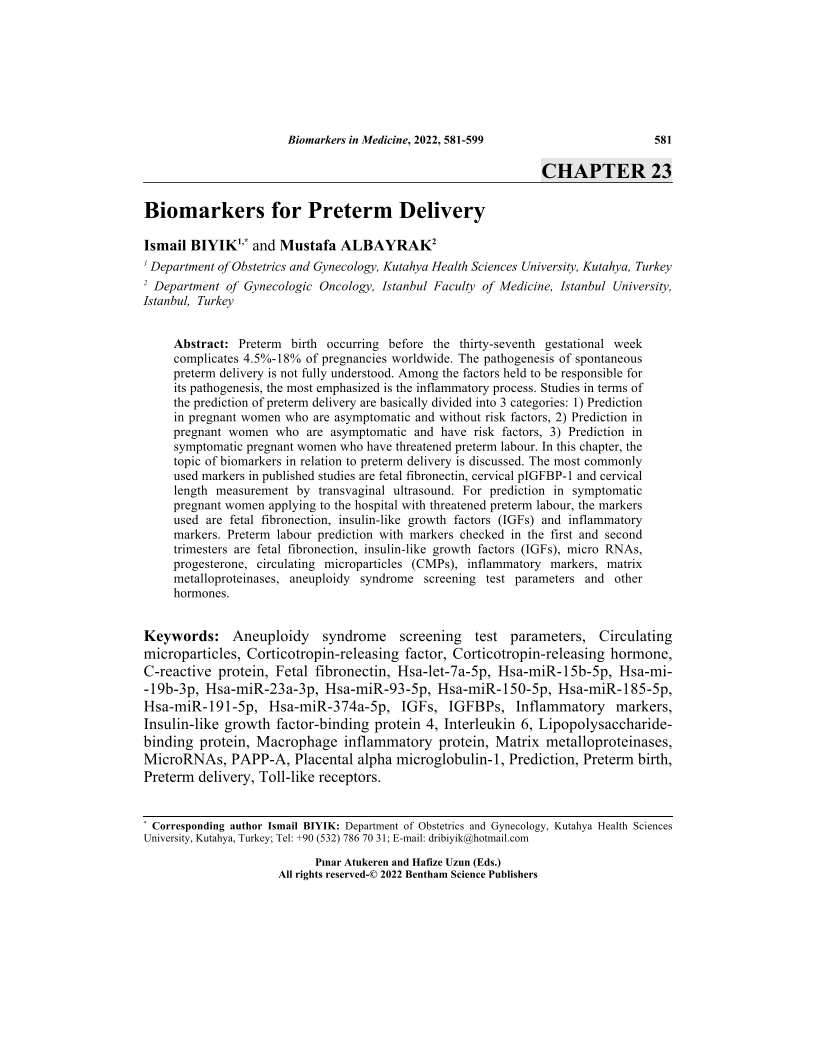
Preterm birth occurring before the thirty-seventh gestational week complicates 4.5%-18% of pregnancies worldwide. The pathogenesis of spontaneous preterm delivery is not fully understood. Among the factors held to be responsible for its pathogenesis, the most emphasized is the inflammatory process. Studies in terms of the prediction of preterm delivery are basically divided into 3 categories: 1) Prediction in pregnant women who are asymptomatic and without risk factors, 2) Prediction in pregnant women who are asymptomatic and have risk factors, 3) Prediction in symptomatic pregnant women who have threatened preterm labour. In this chapter, the topic of biomarkers in relation to preterm delivery is discussed. The most commonly used markers in published studies are fetal fibronectin, cervical pIGFBP-1 and cervical length measurement by transvaginal ultrasound. For prediction in symptomatic pregnant women applying to the hospital with threatened preterm labour, the markers used are fetal fibronection, insulin-like growth factors (IGFs) and inflammatory markers. Preterm labour prediction with markers checked in the first and second trimesters are fetal fibronection, insulin-like growth factors (IGFs), micro RNAs, progesterone, circulating microparticles (CMPs), inflammatory markers, matrix metalloproteinases, aneuploidy syndrome screening test parameters and other hormones.
-
From This Site
/content/books/9789815040463.chap23dcterms_subject,pub_keyword-contentType:Journal -contentType:Figure -contentType:Table -contentType:SupplementaryData105
