


New Biomarkers and Immunotherapy Decision

- Authors: Abdurrahman Yigit1, Berkay Kuscu2, Ali Kirik3, Ruhsen Ozcaglayan4, Cigdem Usul Afsar5
-
View Affiliations Hide Affiliations1 Department of Internal Medicine and Medical Oncology, Canakkale 18 Mart University MedicalFaculty, Canakkale, Turkey 2 Department of Internal Medicine, Balikesir University Medical Faculty, Balkesir, Turkey 3 Department of Internal Medicine, Balikesir University Medical Faculty, Balkesir, Turkey 4 Department of Internal Medicine, Balikesir University Medical Faculty, Balkesir, Turkey 5 Department of Internal Medicine and Medical Oncology, Istinye University Medical Faculty,stinye niversitesi Topkap Kamps, Maltepe Mah., Teyyareci Sami Sk., No.3 Zeytinburnu,Istanbul 34010, Turkey
- Source: Biomarkers in Medicine , pp 1-15
- Publication Date: August 2022
- Language: English


New Biomarkers and Immunotherapy Decision, Page 1 of 1
< Previous page | Next page > /docserver/preview/fulltext/9789815040463/chap1-1.gif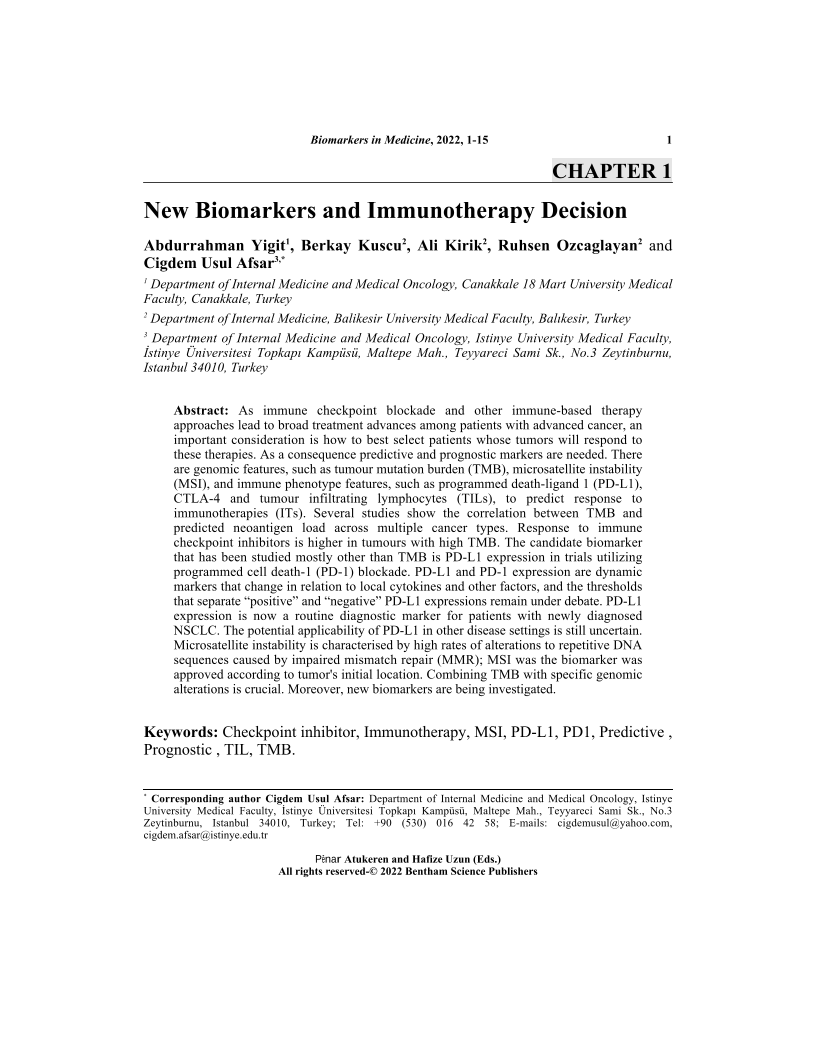
As immune checkpoint blockade and other immune-based therapy approaches lead to broad treatment advances among patients with advanced cancer, an important consideration is how to best select patients whose tumors will respond to these therapies. As a consequence predictive and prognostic markers are needed. There are genomic features, such as tumour mutation burden (TMB), microsatellite instability (MSI), and immune phenotype features, such as programmed death-ligand 1 (PD-L1), CTLA-4 and tumour infiltrating lymphocytes (TILs), to predict response to immunotherapies (ITs). Several studies show the correlation between TMB and predicted neoantigen load across multiple cancer types. Response to immune checkpoint inhibitors is higher in tumours with high TMB. The candidate biomarker that has been studied mostly other than TMB is PD-L1 expression in trials utilizing programmed cell death-1 (PD-1) blockade. PD-L1 and PD-1 expression are dynamic markers that change in relation to local cytokines and other factors, and the thresholds that separate “positive” and “negative” PD-L1 expressions remain under debate. PD-L1 expression is now a routine diagnostic marker for patients with newly diagnosed NSCLC. The potential applicability of PD-L1 in other disease settings is still uncertain. Microsatellite instability is characterised by high rates of alterations to repetitive DNA sequences caused by impaired mismatch repair (MMR); MSI was the biomarker was approved according to tumor's initial location. Combining TMB with specific genomic alterations is crucial. Moreover, new biomarkers are being investigated.
-
From This Site
/content/books/9789815040463.chap1dcterms_subject,pub_keyword-contentType:Journal -contentType:Figure -contentType:Table -contentType:SupplementaryData105
