


Structure-Activity-Relationship (SAR) Studies of Novel Hybrid Quinoline and Quinolone Derivatives as Anticancer Agents
- Authors: Pravati Panda1, Subhendu Chakroborty2, M.V. B. Unnamatla3
-
View Affiliations Hide Affiliations1 Department of Chemistry, Ravenshaw University, Cuttack, Odisha753 003, India 2 Department of Basic Sciences, IITM, IES University, Bhopal, India 3 Universidad autonoma del estado de Mexico, Toluca de Lerdo, Mexico
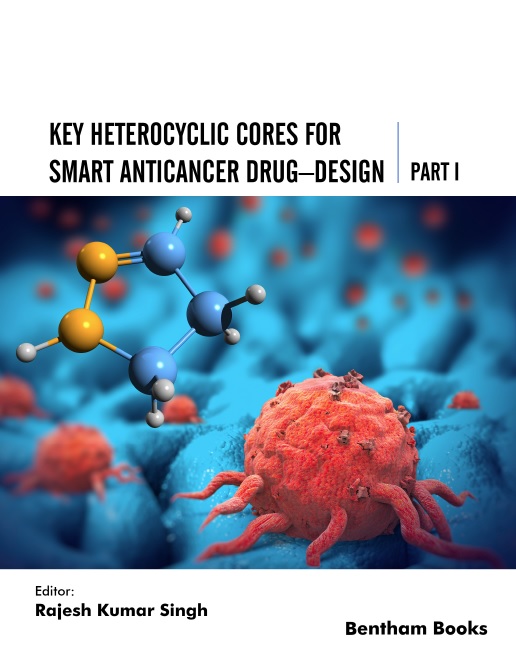
- Source: Key Heterocyclic Cores for Smart Anticancer Drug–Design Part I , pp 167-204
- Publication Date: July 2022
- Language: English


Structure-Activity-Relationship (SAR) Studies of Novel Hybrid Quinoline and Quinolone Derivatives as Anticancer Agents, Page 1 of 1
< Previous page | Next page > /docserver/preview/fulltext/9789815040074/chap3-1.gif
Cancer, caused by uncontrolled cell growth in any part of the body, is a significant life-threatening burden for the growing civilization. Though cancer research has reached a high level, considering the high cost of the available therapies to treat various cancers, the morbidity and mortality rates are still high. Organ toxicity, lack of cell specificity, drug resistance, and short half-life with adverse side effects are the major hurdles associated with currently used therapeutics. Therefore, there is a high need to search for new anticancer agents with minimal side effects and toxicity. In this connection, nature always acts as a treasury for scientists by offering its natural sources to fight the war against various life-harvesting diseases. Nowadays, hybrid molecule drug designs attract much attention among organic and medicinal chemists. What is more interesting about the hybrid molecule is that, depending upon the target disease creating protein, scientists are designing and optimising the target molecule by considering their structure-activity relationship studies (SARs). Among the different natural sources, quinoline, quinolone, and their hybrid derivatives are the most privileged ones. They are found as the central core of many bioactive natural products as well as drug molecules (camptothecin, bosutinib, cabozantinib, pelitinib, lenvatinib, levofloxacin, voreloxin, ciprofloxacin, garenofloxacin, etc.) acting as anticancer agents. Literature is enriched with the excellent achievements of hybrid quinoline and quinolone derivatives which function as anticancer agents through various mechanisms such as Bcl-2 inhibition, ALDH inhibition, kinase inhibition, topo-II, and EGFR-TK inhibition, etc. Given the excellent performance of quinoline and quinolone hybrid derivatives, it will be worthwhile to continue researching them. nbsp;
-
From This Site
/content/books/9789815040074.chap3dcterms_subject,pub_keyword-contentType:Journal -contentType:Figure -contentType:Table -contentType:SupplementaryData105
