


Soil Microbes: Role in Agriculture Sustainability
- Authors: Kishor Chand Kumhar1, Ramesh Nath Gupta2
-
View Affiliations Hide Affiliations1 Deen Dayal Upadhyay Centre of Excellence for Organic Farming, CCS HAU, Hisar 125004, India 2 Department of Plant Pathology, Bihar Agricultural University, Sabour 813210, India
- Source: Industrial Applications of Soil Microbes: Volume 1 , pp 77-89
- Publication Date: August 2022
- Language: English


Soil Microbes: Role in Agriculture Sustainability, Page 1 of 1
< Previous page | Next page > /docserver/preview/fulltext/9789815039955/chapter-4-1.gif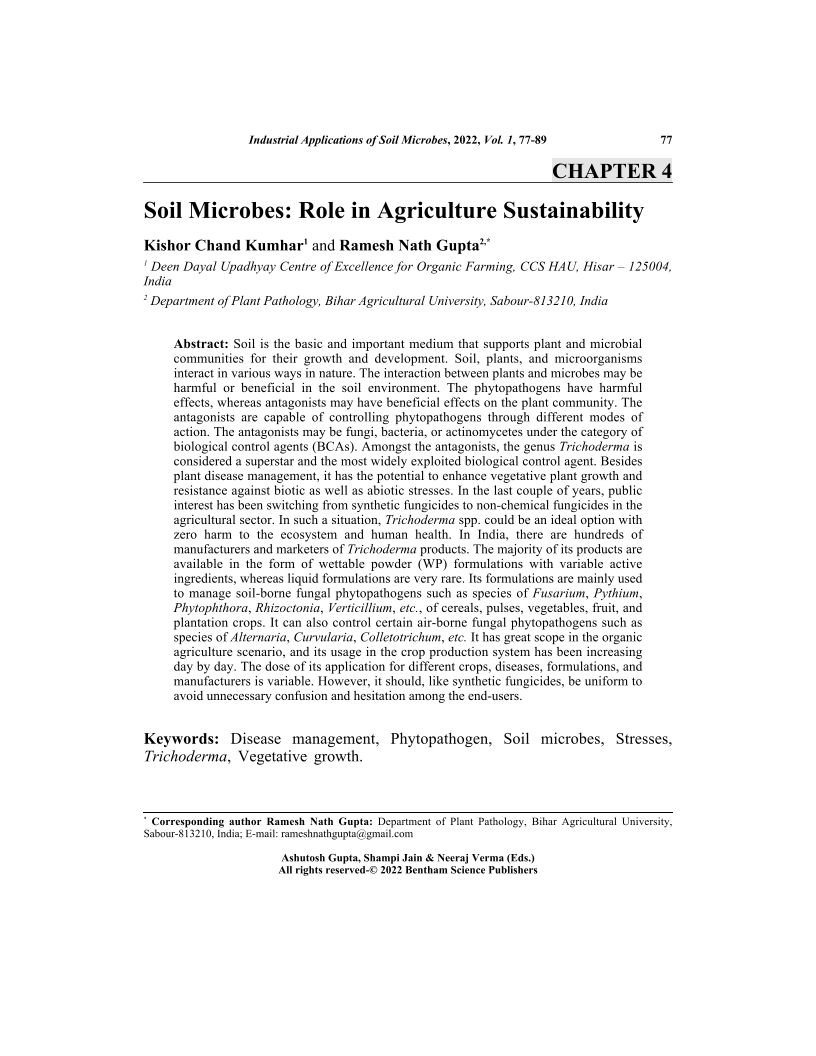
Soil is the basic and important medium that supports plant and microbial communities for their growth and development. Soil, plants, and microorganisms interact in various ways in nature. The interaction between plants and microbes may be harmful or beneficial in the soil environment. The phytopathogens have harmful effects, whereas antagonists may have beneficial effects on the plant community. The antagonists are capable of controlling phytopathogens through different modes of action. The antagonists may be fungi, bacteria, or actinomycetes under the category of biological control agents (BCAs). Amongst the antagonists, the genus Trichoderma is considered a superstar and the most widely exploited biological control agent. Besides plant disease management, it has the potential to enhance vegetative plant growth and resistance against biotic as well as abiotic stresses. In the last couple of years, public interest has been switching from synthetic fungicides to non-chemical fungicides in the agricultural sector. In such a situation, Trichoderma spp. could be an ideal option with zero harm to the ecosystem and human health. In India, there are hundreds of manufacturers and marketers of Trichoderma products. The majority of its products are available in the form of wettable powder (WP) formulations with variable active ingredients, whereas liquid formulations are very rare. Its formulations are mainly used to manage soil-borne fungal phytopathogens such as species of Fusarium, Pythium, Phytophthora, Rhizoctonia, Verticillium, etc., of cereals, pulses, vegetables, fruit, and plantation crops. It can also control certain air-borne fungal phytopathogens such as species of Alternaria, Curvularia, Colletotrichum, etc. It has great scope in the organic agriculture scenario, and its usage in the crop production system has been increasing day by day. The dose of its application for different crops, diseases, formulations, and manufacturers is variable. However, it should, like synthetic fungicides, be uniform to avoid unnecessary confusion and hesitation among the end-users.
-
From This Site
/content/books/9789815039955.chapter-4dcterms_subject,pub_keyword-contentType:Journal -contentType:Figure -contentType:Table -contentType:SupplementaryData105
