


Azolla: A Better Prospective for Biological Nitrogen Fixation and Sustainable Agriculture in Era of Climate Change
- Authors: Priyanka Chandra1, Parul Sundha2, Rinki3, Pooja Verma4, Savitha Santosh5, Vanita Pandey6
-
View Affiliations Hide Affiliations1 ICAR Central Soil Salinity Research Institute, Karnal, 132001, Haryana, India 2 ICAR-Central Soil Salinity Research Institute, Karnal, 132001, Haryana, India 3 ICAR-Indian Institute of Wheat and Barley Research, Karnal, 132001, Haryana, India 4 ICAR-Central Soil Salinity Research Institute, Karnal, 132001, Haryana, India 5 ICAR- Central Institute for Cotton Research, Nagpur, Maharashtra - 440010, India 6 ICAR-Indian Institute of Wheat and Barley Research, Karnal, 132001, Haryana, India
- Source: Industrial Applications of Soil Microbes: Volume 1 , pp 180-191
- Publication Date: August 2022
- Language: English


Azolla: A Better Prospective for Biological Nitrogen Fixation and Sustainable Agriculture in Era of Climate Change, Page 1 of 1
< Previous page | Next page > /docserver/preview/fulltext/9789815039955/chapter-11-1.gif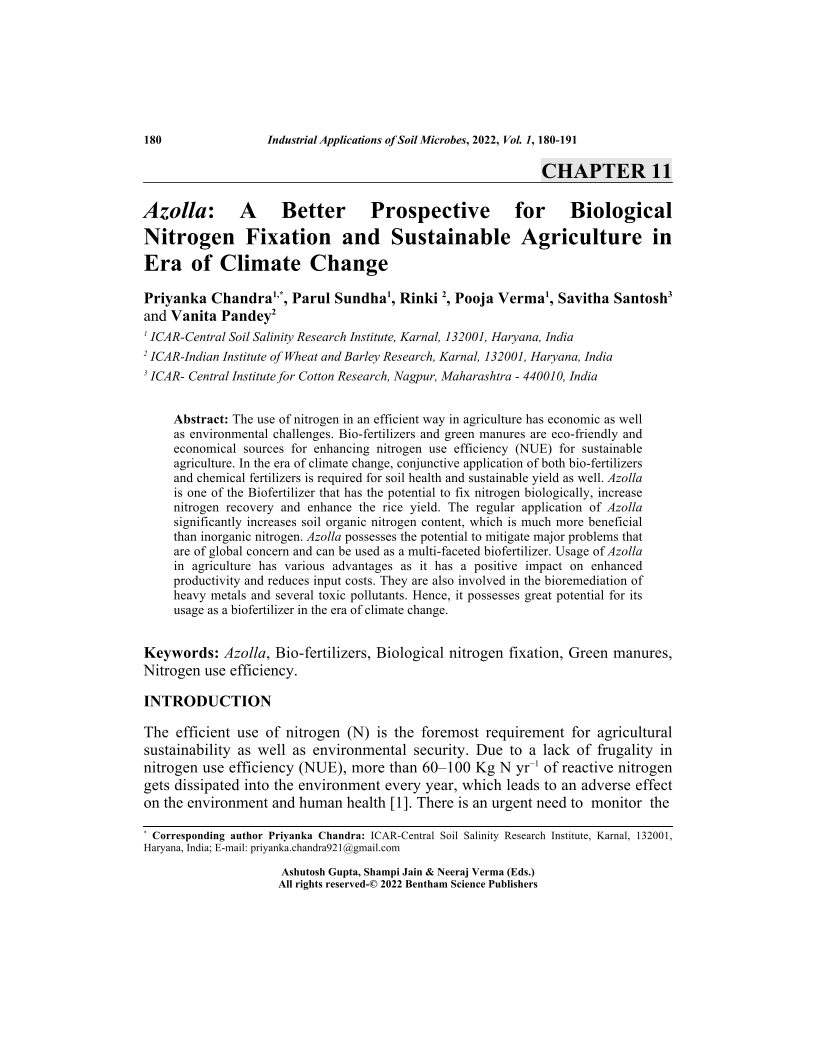
The use of nitrogen in an efficient way in agriculture has economic as well as environmental challenges. Bio-fertilizers and green manures are eco-friendly and economical sources for enhancing nitrogen use efficiency (NUE) for sustainable agriculture. In the era of climate change, conjunctive application of both bio-fertilizers and chemical fertilizers is required for soil health and sustainable yield as well. Azolla is one of the Biofertilizer that has the potential to fix nitrogen biologically, increase nitrogen recovery and enhance the rice yield. The regular application of Azolla significantly increases soil organic nitrogen content, which is much more beneficial than inorganic nitrogen. Azolla possesses the potential to mitigate major problems that are of global concern and can be used as a multi-faceted biofertilizer. Usage of Azolla in agriculture has various advantages as it has a positive impact on enhanced productivity and reduces input costs. They are also involved in the bioremediation of heavy metals and several toxic pollutants. Hence, it possesses great potential for its usage as a biofertilizer in the era of climate change.
-
From This Site
/content/books/9789815039955.chapter-11dcterms_subject,pub_keyword-contentType:Journal -contentType:Figure -contentType:Table -contentType:SupplementaryData105
