


Aptamers and Their Potential in Site-Specific Nanotherapy Against Hepatocellular Carcinoma
- Authors: Debasmita Dutta1, Samrat Chakraborty2, Biswajit Mukherjee3, Moumita Dhara4, Laboni Das5
-
View Affiliations Hide Affiliations1 Department of Molecular and Human Genetics, Baylor College of Medicine, Houston, Texas 77030, United States ⋅ Department of Pharmaceutical Technology, Jadavpur University, Kolkata 700032, West Bengal, India 2 Department of Pharmaceutical Technology, Jadavpur University, Kolkata-700032, West Bengal, India ⋅ Gupta College of Technological Sciences, Asansol-713301, West Bengal, India 3 Department of Pharmaceutical Technology, Jadavpur University, Kolkata-700032, West Bengal, India 4 Department of Pharmaceutical Technology, Jadavpur University, Kolkata-700032, West Bengal, India 5 School of Pharmacy, Techno India University, EM-4, Sector-V, Salt Lake, Kolkata, WB, India
- Source: Nanotherapeutics for the Treatment of Hepatocellular Carcinoma , pp 280-315
- Publication Date: March 2022
- Language: English


Aptamers and Their Potential in Site-Specific Nanotherapy Against Hepatocellular Carcinoma, Page 1 of 1
< Previous page | Next page > /docserver/preview/fulltext/9789815039740/chapter-7-1.gif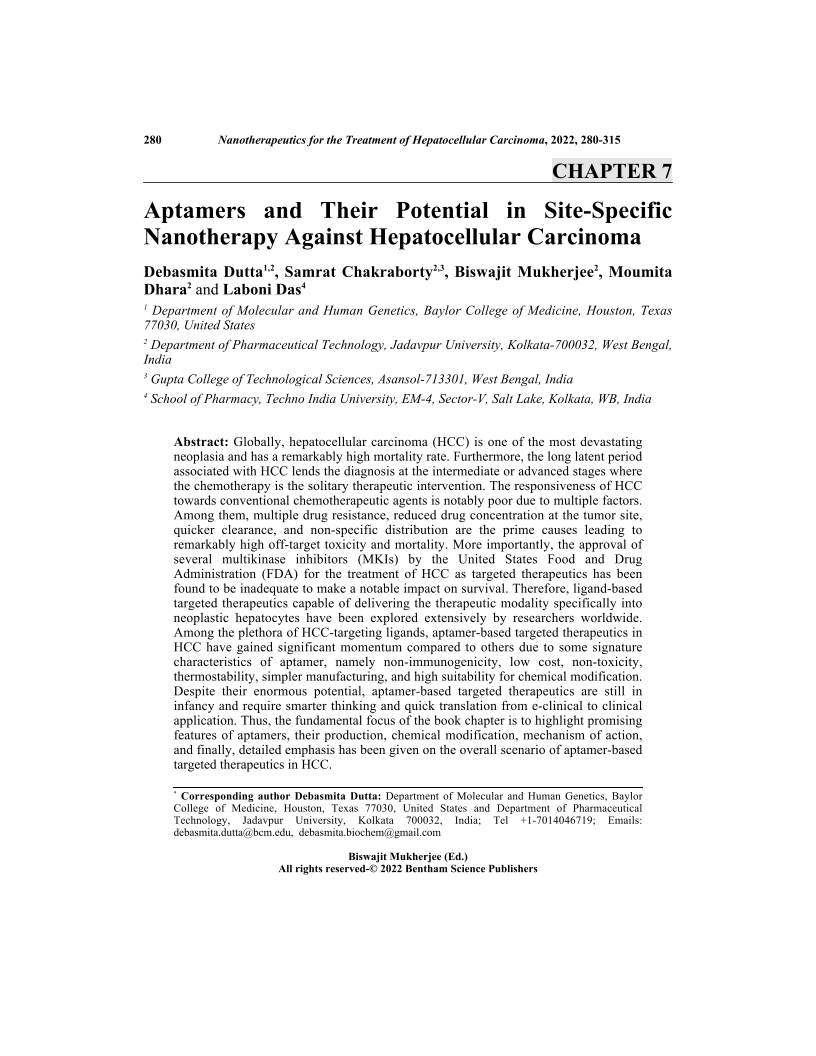
Globally, hepatocellular carcinoma (HCC) is one of the most devastatingneoplasia and has a remarkably high mortality rate. Furthermore, the long latent periodassociated with HCC lends the diagnosis at the intermediate or advanced stages wherethe chemotherapy is the solitary therapeutic intervention. The responsiveness of HCCtowards conventional chemotherapeutic agents is notably poor due to multiple factors.Among them, multiple drug resistance, reduced drug concentration at the tumor site,quicker clearance, and non-specific distribution are the prime causes leading toremarkably high off-target toxicity and mortality. More importantly, the approval ofseveral multikinase inhibitors (MKIs) by the United States Food and DrugAdministration (FDA) for the treatment of HCC as targeted therapeutics has beenfound to be inadequate to make a notable impact on survival. Therefore, ligand-basedtargeted therapeutics capable of delivering the therapeutic modality specifically intoneoplastic hepatocytes have been explored extensively by researchers worldwide.Among the plethora of HCC-targeting ligands, aptamer-based targeted therapeutics inHCC have gained significant momentum compared to others due to some signaturecharacteristics of aptamer, namely non-immunogenicity, low cost, non-toxicity,thermostability, simpler manufacturing, and high suitability for chemical modification.Despite their enormous potential, aptamer-based targeted therapeutics are still ininfancy and require smarter thinking and quick translation from e-clinical to clinicalapplication. Thus, the fundamental focus of the book chapter is to highlight promisingfeatures of aptamers, their production, chemical modification, mechanism of action,and finally, detailed emphasis has been given on the overall scenario of aptamer-basedtargeted therapeutics in HCC.
-
From This Site
/content/books/9789815039740.chapter-7dcterms_subject,pub_keyword-contentType:Journal -contentType:Figure -contentType:Table -contentType:SupplementaryData105
