


Hepatocellular Carcinoma: Diagnosis, Molecular Pathogenesis, Biomarkers, and Conventional Therapy
- Authors: Biswajit Mukherjee1, Manasadeepa Rajagopalan2, Samrat Chakraborty3, Prasanta Ghosh4, Manisheeta Ray5, Ramkrishna Sen6, Iman Ehsan7
-
View Affiliations Hide Affiliations1 Department of Pharmaceutical Technology, Jadavpur University, Kolkata 700032, India 2 East West College of Pharmacy, Bangalore, Karnataka 560091, India 3 Department of Pharmaceutical Technology, Jadavpur University, Kolkata 700032, India 4 Department of Pharmaceutical Technology, Jadavpur University, Kolkata 700032, India 5 Department of Pharmaceutical Technology, Jadavpur University, Kolkata 700032, India 6 Department of Pharmaceutical Technology, Jadavpur University, Kolkata 700032, India 7 Department of Pharmaceutical Technology, Jadavpur University, Kolkata 700032, India
- Source: Nanotherapeutics for the Treatment of Hepatocellular Carcinoma , pp 1-97
- Publication Date: March 2022
- Language: English


Hepatocellular Carcinoma: Diagnosis, Molecular Pathogenesis, Biomarkers, and Conventional Therapy, Page 1 of 1
< Previous page | Next page > /docserver/preview/fulltext/9789815039740/chapter-1-1.gif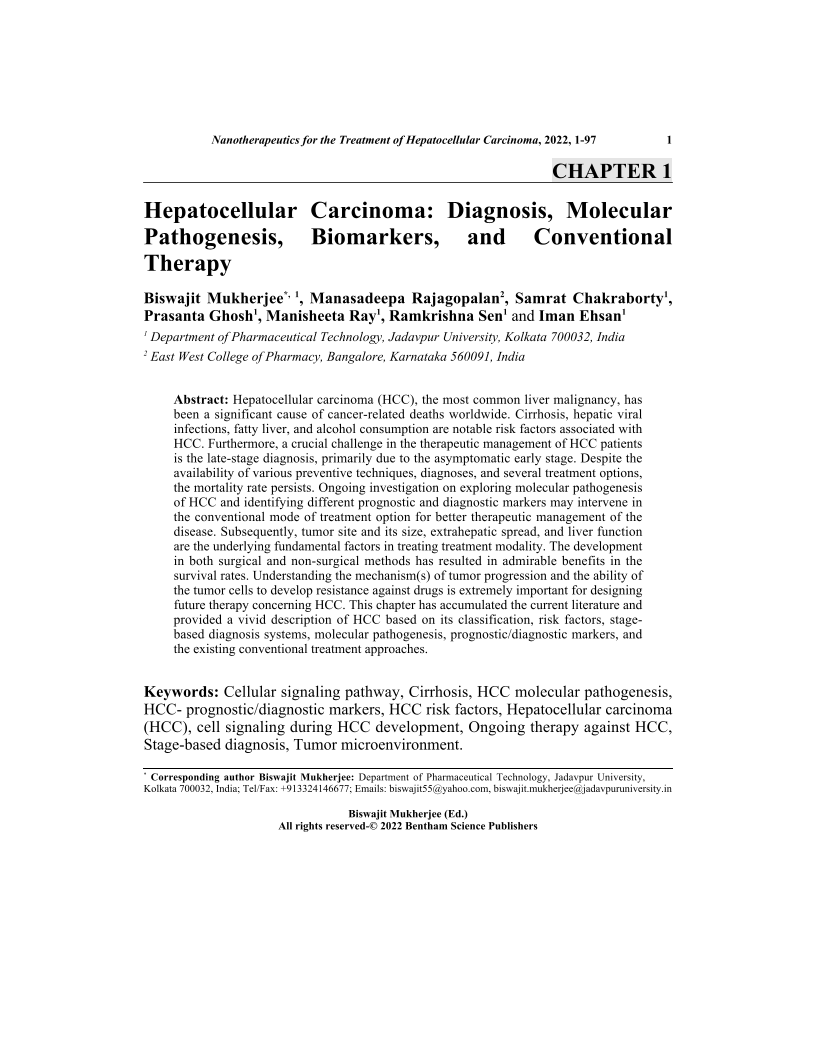
Hepatocellular carcinoma (HCC), the most common liver malignancy, hasbeen a significant cause of cancer-related deaths worldwide. Cirrhosis, hepatic viralinfections, fatty liver, and alcohol consumption are notable risk factors associated withHCC. Furthermore, a crucial challenge in the therapeutic management of HCC patientsis the late-stage diagnosis, primarily due to the asymptomatic early stage. Despite theavailability of various preventive techniques, diagnoses, and several treatment options,the mortality rate persists. Ongoing investigation on exploring molecular pathogenesisof HCC and identifying different prognostic and diagnostic markers may intervene inthe conventional mode of treatment option for better therapeutic management of thedisease. Subsequently, tumor site and its size, extrahepatic spread, and liver functionare the underlying fundamental factors in treating treatment modality. The developmentin both surgical and non-surgical methods has resulted in admirable benefits in thesurvival rates. Understanding the mechanism(s) of tumor progression and the ability ofthe tumor cells to develop resistance against drugs is extremely important for designingfuture therapy concerning HCC. This chapter has accumulated the current literature andprovided a vivid description of HCC based on its classification, risk factors, stagebaseddiagnosis systems, molecular pathogenesis, prognostic/diagnostic markers, andthe existing conventional treatment approaches.
-
From This Site
/content/books/9789815039740.chapter-1dcterms_subject,pub_keyword-contentType:Journal -contentType:Figure -contentType:Table -contentType:SupplementaryData105
