


Voltammetric Applications in Anti-inflammatory Drug Detection
- Authors: B. P. Sanjay1, D. N. Varun2, S. Sandeep3, C. S. Karthik4, A. S. Santhosh5, P. Mallu6, Nagaraja Sreeharsha7
-
View Affiliations Hide Affiliations1 Department of Chemistry, JSS Science and Technology University, Mysuru 570006, Karnataka, India 2 Department of Chemistry, JSS Science and Technology University, Mysuru- 570006, Karnataka, India 3 Department of Chemistry, JSS Science and Technology University, Mysuru- 570006, Karnataka, India 4 Department of Chemistry, JSS Science and Technology University, Mysuru- 570006, Karnataka, India 5 Department of Chemistry (UG), NMKRV College for Women, Jayanagar, Bengaluru 560011, India 6 Department of Chemistry, JSS Science and Technology University, Mysuru- 570006, Karnataka, India 7 Department of Pharmaceutical Sciences, College of Clinical Pharmacy, King Faisal University, Al- Ahsa-31982, Saudi Arabia
- Source: Voltammetry for Sensing Applications , pp 259-280
- Publication Date: February 2022
- Language: English


Voltammetric Applications in Anti-inflammatory Drug Detection, Page 1 of 1
< Previous page | Next page > /docserver/preview/fulltext/9789815039719/chapter-10-1.gif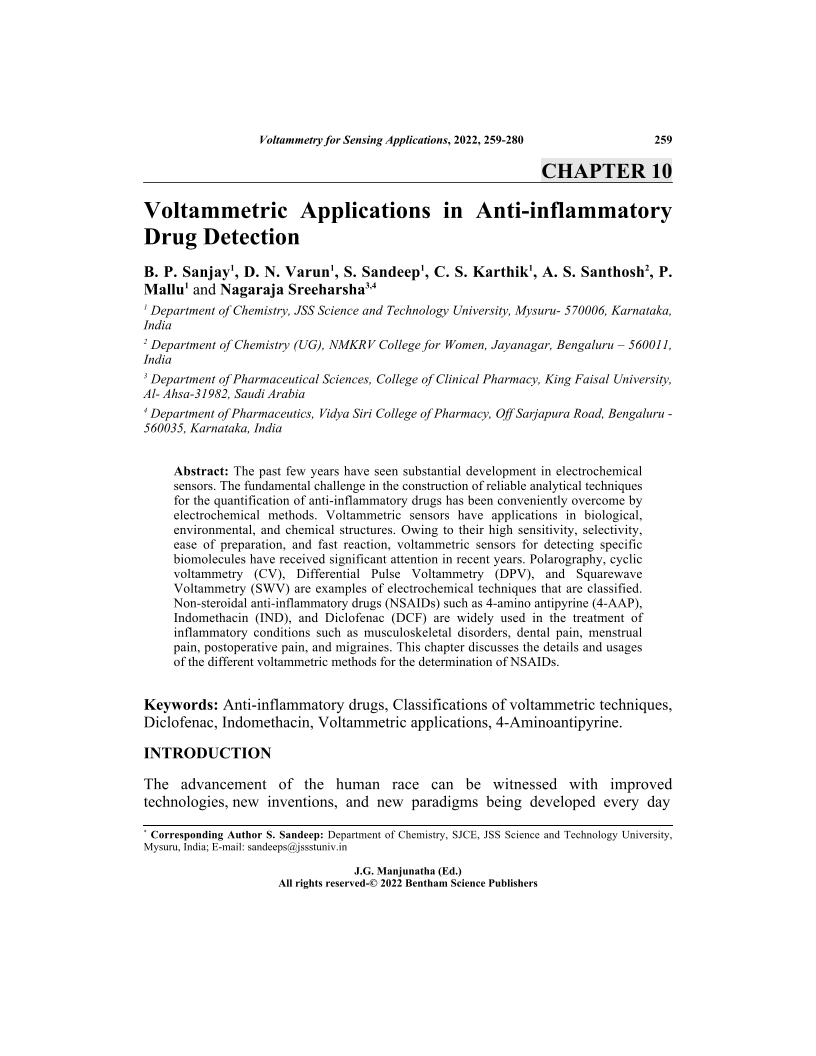
The past few years have seen substantial development in electrochemicalsensors. The fundamental challenge in the construction of reliable analytical techniquesfor the quantification of anti-inflammatory drugs has been conveniently overcome byelectrochemical methods. Voltammetric sensors have applications in biological,environmental, and chemical structures. Owing to their high sensitivity, selectivity,ease of preparation, and fast reaction, voltammetric sensors for detecting specificbiomolecules have received significant attention in recent years. Polarography, cyclicvoltammetry (CV), Differential Pulse Voltammetry (DPV), and SquarewaveVoltammetry (SWV) are examples of electrochemical techniques that are classified.Non-steroidal anti-inflammatory drugs (NSAIDs) such as 4-amino antipyrine (4-AAP),Indomethacin (IND), and Diclofenac (DCF) are widely used in the treatment ofinflammatory conditions such as musculoskeletal disorders, dental pain, menstrualpain, postoperative pain, and migraines. This chapter discusses the details and usagesof the different voltammetric methods for the determination of NSAIDs.
-
From This Site
/content/books/9789815039719.chapter-10dcterms_subject,pub_keyword-contentType:Journal -contentType:Figure -contentType:Table -contentType:SupplementaryData105
