


Spices, the Guards Against the Evil Microbes: Antimicrobial Properties of Spices
- Authors: Feba Jacob1, Rasmieh Hamid2, Lavale Shivaji Ajinath3, Shri Hari Prasad4, Mehrnaz Entesari5
-
View Affiliations Hide Affiliations1 Centre for Plant Biotechnology and Molecular Biology, Kerala Agricultural University, Thrissur, India 2 Cotton Research Institute of Iran (CRII), Agricultural Research Education And ExtentionOrganization (AREEO), Gorgan, Iran 3 Centre for Plant Biotechnology and Molecular Biology, Kerala Agricultural University, Thrissur, India 4 Centre for Plant Biotechnology and Molecular Biology, Kerala Agricultural University, Thrissur, India 5 Department of Agronomy & Plant Breeding, Faculty of Agriculture, University of Zanjan, Zanjan, Iran
- Source: The Chemistry inside Spices & Herbs: Research and Development: Volume 1 , pp 32-50
- Publication Date: April 2022
- Language: English


Spices, the Guards Against the Evil Microbes: Antimicrobial Properties of Spices, Page 1 of 1
< Previous page | Next page > /docserver/preview/fulltext/9789815039566/chapter-2-1.gif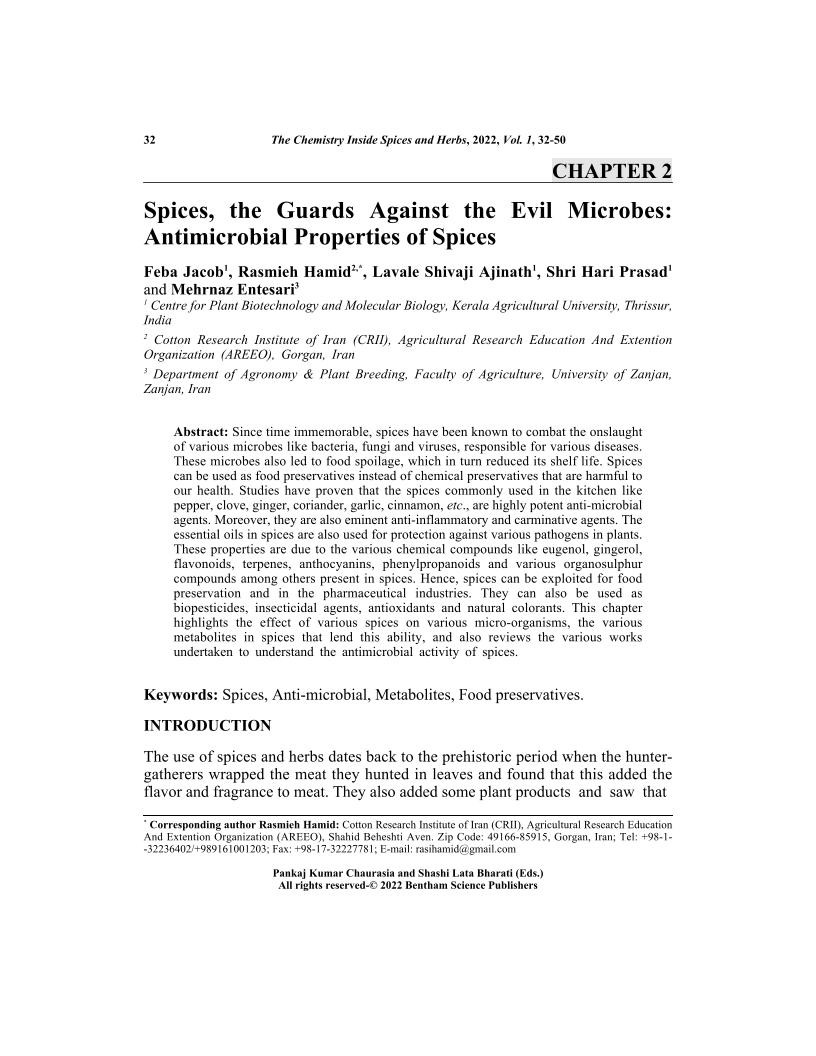
<div>Since time immemorable, spices have been known to combat the onslaught</div><div>of various microbes like bacteria, fungi and viruses, responsible for various diseases.</div><div>These microbes also led to food spoilage, which in turn reduced its shelf life. Spices</div><div>can be used as food preservatives instead of chemical preservatives that are harmful to</div><div>our health. Studies have proven that the spices commonly used in the kitchen like</div><div>pepper, clove, ginger, coriander, garlic, cinnamon, etc., are highly potent anti-microbial</div><div>agents. Moreover, they are also eminent anti-inflammatory and carminative agents. The</div><div>essential oils in spices are also used for protection against various pathogens in plants.</div><div>These properties are due to the various chemical compounds like eugenol, gingerol,</div><div>flavonoids, terpenes, anthocyanins, phenylpropanoids and various organosulphur</div><div>compounds among others present in spices. Hence, spices can be exploited for food</div><div>preservation and in the pharmaceutical industries. They can also be used as</div><div>biopesticides, insecticidal agents, antioxidants and natural colorants. This chapter</div><div>highlights the effect of various spices on various micro-organisms, the various</div><div>metabolites in spices that lend this ability, and also reviews the various works</div><div>undertaken to understand the antimicrobial activity of spices.</div>
-
From This Site
/content/books/9789815039566.chapter-2dcterms_subject,pub_keyword-contentType:Journal -contentType:Figure -contentType:Table -contentType:SupplementaryData105
