


Spices Biotechnology: Opportunities and Challenges
- Authors: Rasmieh Hamid1, Feba Jacob2, Mehrnaz Entesari3, Shri Hari Prasad4, Shivaji Ajinath Lavale5
-
View Affiliations Hide Affiliations1 Cotton Research Institute of Iran (CRII), Agricultural Research, Education and ExtensionOrganization (AREEO), Gorgan, Iran 2 Centre for Plant Biotechnology and Molecular Biology, Kerala Agricultural University, Thrissur, India 3 Department of Agronomy & Plant Breeding, Faculty of Agriculture, University of Zanjan, Zanjan, Iran 4 Centre for Plant Biotechnology and Molecular Biology, Kerala Agricultural University, Thrissur, India 5 Centre for Plant Biotechnology and Molecular Biology, Kerala Agricultural University, Thrissur, India
- Source: The Chemistry inside Spices & Herbs: Research and Development: Volume 1 , pp 1-31
- Publication Date: April 2022
- Language: English


Spices Biotechnology: Opportunities and Challenges, Page 1 of 1
< Previous page | Next page > /docserver/preview/fulltext/9789815039566/chapter-1-1.gif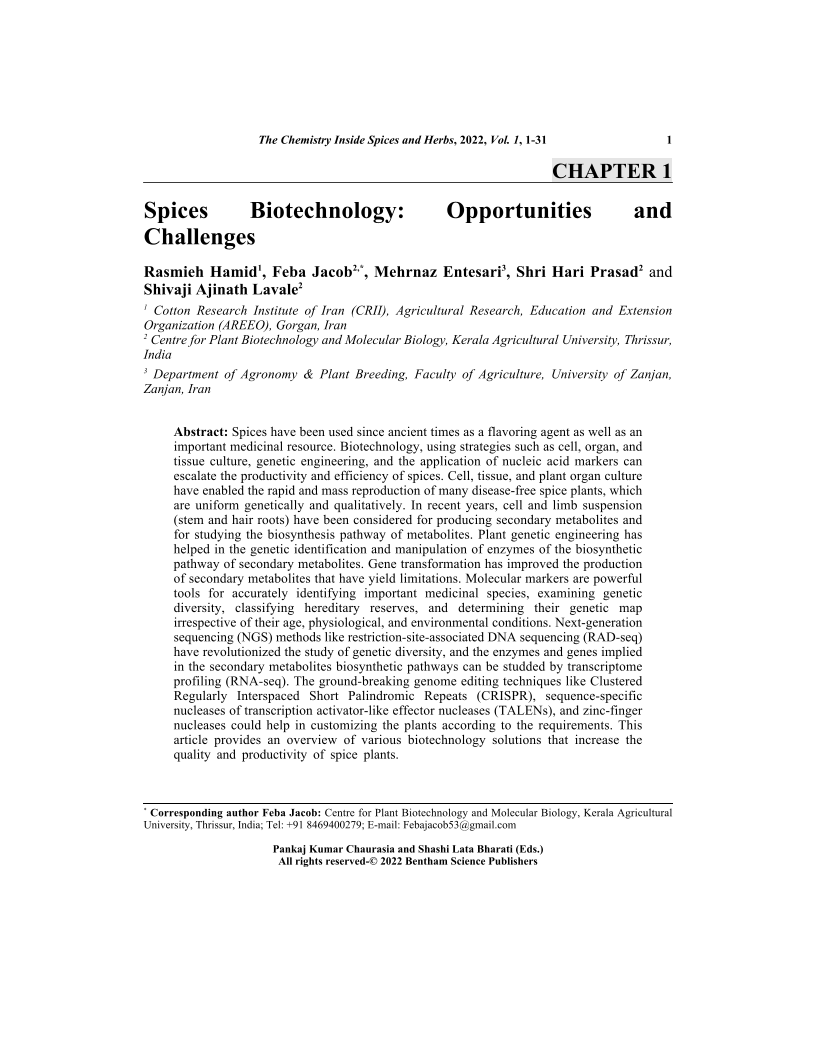
<div>Spices have been used since ancient times as a flavoring agent as well as an</div><div>important medicinal resource. Biotechnology, using strategies such as cell, organ, and</div><div>tissue culture, genetic engineering, and the application of nucleic acid markers can</div><div>escalate the productivity and efficiency of spices. Cell, tissue, and plant organ culture</div><div>have enabled the rapid and mass reproduction of many disease-free spice plants, which</div><div>are uniform genetically and qualitatively. In recent years, cell and limb suspension</div><div>(stem and hair roots) have been considered for producing secondary metabolites and</div><div>for studying the biosynthesis pathway of metabolites. Plant genetic engineering has</div><div>helped in the genetic identification and manipulation of enzymes of the biosynthetic</div><div>pathway of secondary metabolites. Gene transformation has improved the production</div><div>of secondary metabolites that have yield limitations. Molecular markers are powerful</div><div>tools for accurately identifying important medicinal species, examining genetic</div><div>diversity, classifying hereditary reserves, and determining their genetic map</div><div>irrespective of their age, physiological, and environmental conditions. Next-generation</div><div>sequencing (NGS) methods like restriction-site-associated DNA sequencing (RAD-seq)</div><div>have revolutionized the study of genetic diversity, and the enzymes and genes implied</div><div>in the secondary metabolites biosynthetic pathways can be studded by transcriptome</div><div>profiling (RNA-seq). The ground-breaking genome editing techniques like Clustered</div><div>Regularly Interspaced Short Palindromic Repeats (CRISPR), sequence-specific</div><div>nucleases of transcription activator-like effector nucleases (TALENs), and zinc-finger</div><div>nucleases could help in customizing the plants according to the requirements. This</div><div>article provides an overview of various biotechnology solutions that increase the</div><div>quality and productivity of spice plants.</div>
-
From This Site
/content/books/9789815039566.chapter-1dcterms_subject,pub_keyword-contentType:Journal -contentType:Figure -contentType:Table -contentType:SupplementaryData105
