


An Evidence-Based Approach to Treatment with Iron Chelators in Transfusion- Dependent Thalassemia Patients : Present Trends and Future Scenario
- Authors: Tirin Babu1, George Mathew Panachiyil2
-
View Affiliations Hide Affiliations1 College of Medicine, Nursing and Health Sciences, National University of Ireland, Galway, Ireland 2 College of Medicine, Nursing and Health Sciences, National University of Ireland, Galway, Ireland
- Source: Frontiers in Clinical Drug Research - Hematology: Volume 5 , pp 50-89
- Publication Date: February 2022
- Language: English


An Evidence-Based Approach to Treatment with Iron Chelators in Transfusion- Dependent Thalassemia Patients : Present Trends and Future Scenario, Page 1 of 1
< Previous page | Next page > /docserver/preview/fulltext/9789815039535/chapter-2-1.gif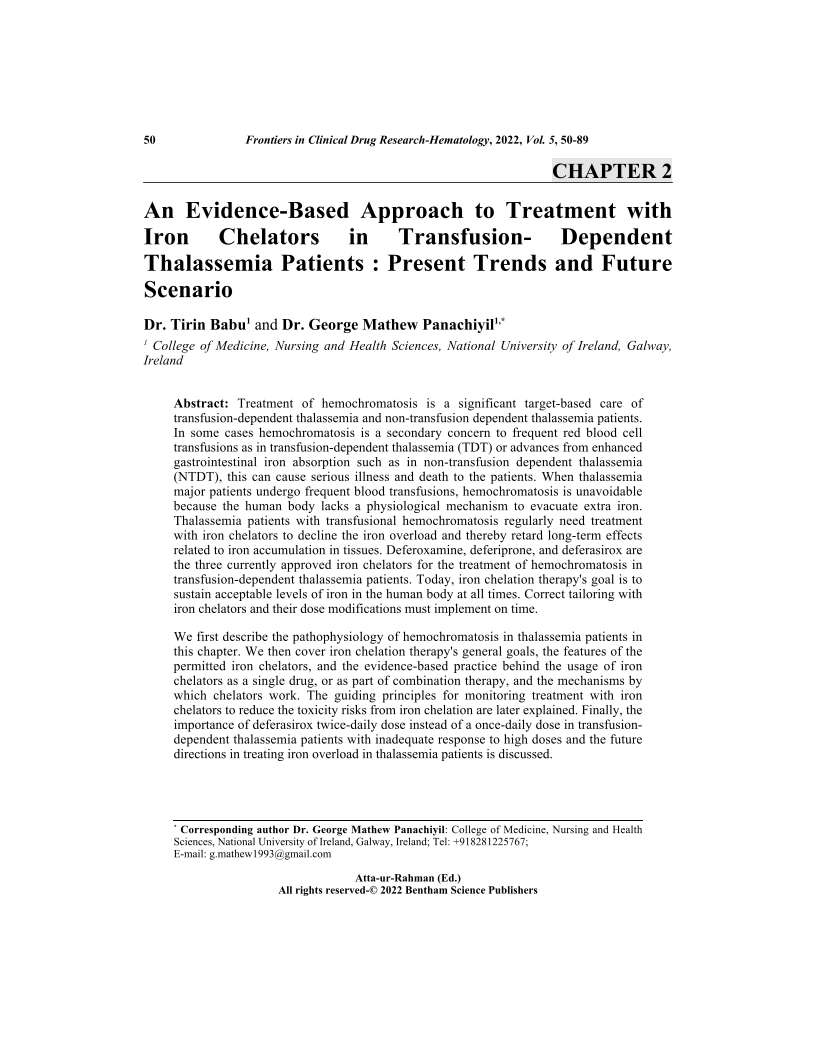
Treatment of hemochromatosis is a significant target-based care oftransfusion-dependent thalassemia and non-transfusion dependent thalassemia patients.In some cases hemochromatosis is a secondary concern to frequent red blood celltransfusions as in transfusion-dependent thalassemia (TDT) or advances from enhancedgastrointestinal iron absorption such as in non-transfusion dependent thalassemia(NTDT), this can cause serious illness and death to the patients. When thalassemiamajor patients undergo frequent blood transfusions, hemochromatosis is unavoidablebecause the human body lacks a physiological mechanism to evacuate extra iron.Thalassemia patients with transfusional hemochromatosis regularly need treatmentwith iron chelators to decline the iron overload and thereby retard long-term effectsrelated to iron accumulation in tissues. Deferoxamine, deferiprone, and deferasirox arethe three currently approved iron chelators for the treatment of hemochromatosis intransfusion-dependent thalassemia patients. Today, iron chelation therapy's goal is tosustain acceptable levels of iron in the human body at all times. Correct tailoring withiron chelators and their dose modifications must implement on time.We first describe the pathophysiology of hemochromatosis in thalassemia patients inthis chapter. We then cover iron chelation therapy's general goals, the features of thepermitted iron chelators, and the evidence-based practice behind the usage of ironchelators as a single drug, or as part of combination therapy, and the mechanisms bywhich chelators work. The guiding principles for monitoring treatment with ironchelators to reduce the toxicity risks from iron chelation are later explained. Finally, theimportance of deferasirox twice-daily dose instead of a once-daily dose in transfusiondependentthalassemia patients with inadequate response to high doses and the futuredirections in treating iron overload in thalassemia patients is discussed.
-
From This Site
/content/books/9789815039535.chapter-2dcterms_subject,pub_keyword-contentType:Journal -contentType:Figure -contentType:Table -contentType:SupplementaryData105
