


Recent Advances in the Diagnosis and Management of Pulmonary Embolism
- Authors: Kulothungan Gunasekaran1, Mandeep Singh Rahi2
-
View Affiliations Hide Affiliations1 Division of Pulmonary Critical Care, Yale New Haven Health Bridgeport Hospital, Bridgeport, 06610, USA ⋅ Division of Pulmonary Critical Care, Yuma Regional Medical Center, Yuma, AZ, 85364, USA 2 Division of Pulmonary Critical Care, Yale-New Haven Health Bridgeport Hospital, Bridgeport, 06610, USA
- Source: Frontiers in Clinical Drug Research - Hematology: Volume 5 , pp 1-49
- Publication Date: February 2022
- Language: English


Recent Advances in the Diagnosis and Management of Pulmonary Embolism, Page 1 of 1
< Previous page | Next page > /docserver/preview/fulltext/9789815039535/chapter-1-1.gif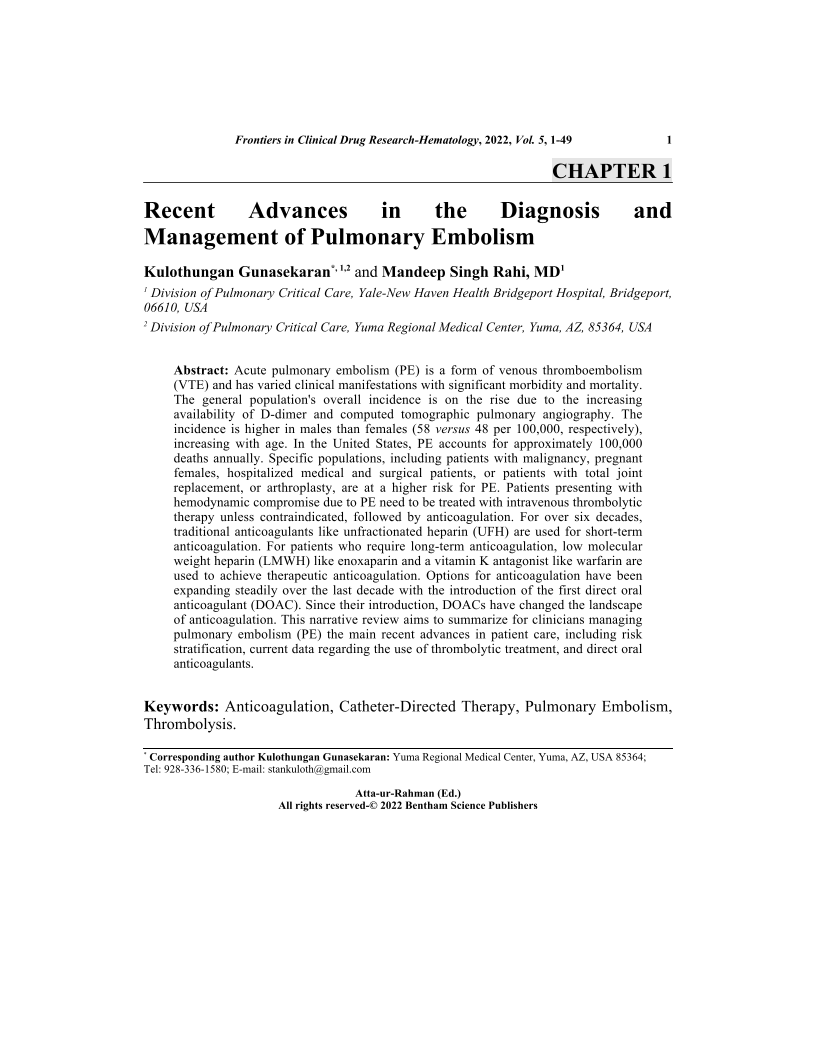
Acute pulmonary embolism (PE) is a form of venous thromboembolism(VTE) and has varied clinical manifestations with significant morbidity and mortality.The general population's overall incidence is on the rise due to the increasingavailability of D-dimer and computed tomographic pulmonary angiography. Theincidence is higher in males than females (58 versus 48 per 100,000, respectively),increasing with age. In the United States, PE accounts for approximately 100,000deaths annually. Specific populations, including patients with malignancy, pregnantfemales, hospitalized medical and surgical patients, or patients with total jointreplacement, or arthroplasty, are at a higher risk for PE. Patients presenting withhemodynamic compromise due to PE need to be treated with intravenous thrombolytictherapy unless contraindicated, followed by anticoagulation. For over six decades,traditional anticoagulants like unfractionated heparin (UFH) are used for short-termanticoagulation. For patients who require long-term anticoagulation, low molecularweight heparin (LMWH) like enoxaparin and a vitamin K antagonist like warfarin areused to achieve therapeutic anticoagulation. Options for anticoagulation have beenexpanding steadily over the last decade with the introduction of the first direct oralanticoagulant (DOAC). Since their introduction, DOACs have changed the landscapeof anticoagulation. This narrative review aims to summarize for clinicians managingpulmonary embolism (PE) the main recent advances in patient care, including riskstratification, current data regarding the use of thrombolytic treatment, and direct oralanticoagulants.
-
From This Site
/content/books/9789815039535.chapter-1dcterms_subject,pub_keyword-contentType:Journal -contentType:Figure -contentType:Table -contentType:SupplementaryData105
