


Infectious Laryngotracheitis Virus: Molecular Biology, Pathobiology, and Control Strategies

- Authors: Muhammad A. Shahid1, Ahmad J. Sabir2, Muhammad I. Arshad3, Sadeeq ur Rahman4, Muhammad F. Tahir5, Muhammad N. Zahid6, Muhammad A. Zahoor7
-
View Affiliations Hide Affiliations1 Department of Pathobiology, Faculty of Veterinary Sciences, Bahauddin Zakariya University, Multan, Punjab, Pakistan 2 Asia Pacific Centre for Animal Health, The University of Melbourne, Werribee, Victoria, Australia 3 Institute of Microbiology, University of Agriculture, Faisalabad, Punjab, Pakistan 4 College of Veterinary Sciences and Animal Husbandry, Abdul Wali Khan University, Mardan, Khyber Pakhtunkhwa, Pakistan 5 Poultry Research Institute, Rawalpindi, Punjab, Pakistan 6 Department of Biology, College of Science, University of Bahrain, Kingdom of Bahrain 7 Department of Microbiology, Government College University, Faisalabad, Punjab, Pakistan
- Source: Emerging Trends in Veterinary Virology , pp 18-40
- Publication Date: March 2022
- Language: English


Infectious Laryngotracheitis Virus: Molecular Biology, Pathobiology, and Control Strategies, Page 1 of 1
< Previous page | Next page > /docserver/preview/fulltext/9789815036961/chapter-2-1.gif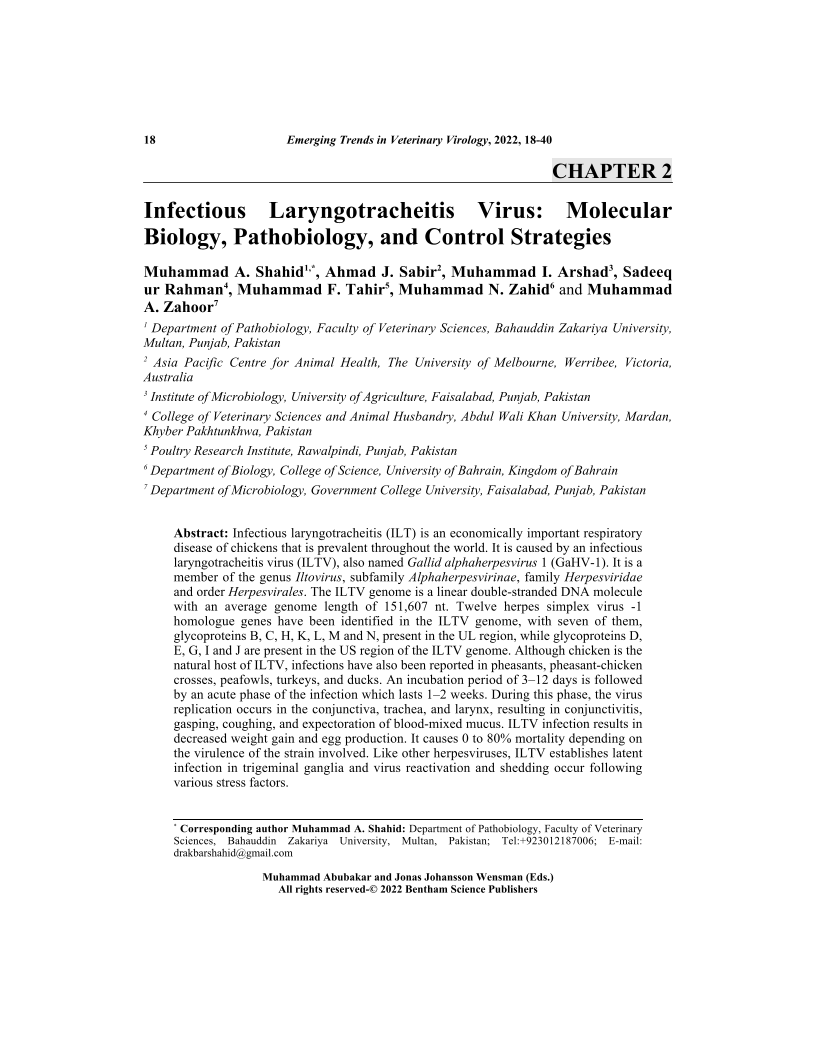
Infectious laryngotracheitis (ILT) is an economically important respiratorydisease of chickens that is prevalent throughout the world. It is caused by an infectiouslaryngotracheitis virus (ILTV), also named Gallid alphaherpesvirus 1 (GaHV-1). It is amember of the genus Iltovirus, subfamily Alphaherpesvirinae, family Herpesviridaeand order Herpesvirales. The ILTV genome is a linear double-stranded DNA moleculewith an average genome length of 151,607 nt. Twelve herpes simplex virus -1homologue genes have been identified in the ILTV genome, with seven of them,glycoproteins B, C, H, K, L, M and N, present in the UL region, while glycoproteins D,E, G, I and J are present in the US region of the ILTV genome. Although chicken is thenatural host of ILTV, infections have also been reported in pheasants, pheasant-chickencrosses, peafowls, turkeys, and ducks. An incubation period of 312 days is followedby an acute phase of the infection which lasts 12 weeks. During this phase, the virusreplication occurs in the conjunctiva, trachea, and larynx, resulting in conjunctivitis,gasping, coughing, and expectoration of blood-mixed mucus. ILTV infection results indecreased weight gain and egg production. It causes 0 to 80% mortality depending onthe virulence of the strain involved. Like other herpesviruses, ILTV establishes latentinfection in trigeminal ganglia and virus reactivation and shedding occur followingvarious stress factors.ILTV infections are generally diagnosed by the typical clinical signs and detection ofintranuclear inclusion bodies in the affected tissues. Furthermore, the detection ofvirus-specific antigen by fluorescent antibody, immunohistochemical staining ofsmears and tissues, detection of DNA by a polymerase chain reaction, and virusisolation by inoculating embryonated chicken eggs or cell cultures can also beperformed. Virus neutralization assays and different types of ELISAs have also beenestablished. To control ILTV infections, a combined effort is required encompassingprompt disease diagnosis, the use of geographic information system technology,biosecurity, vaccination, differentiation of infected from vaccinated (DIVA), anderadication of reservoir hosts.
-
From This Site
/content/books/9789815036961.chapter-2dcterms_subject,pub_keyword-contentType:Journal -contentType:Figure -contentType:Table -contentType:SupplementaryData105
