


Molecular Dynamics Applied to Discover Antiviral Agents
- Authors: Igor José dos Santos Nascimento1, Thiago Mendonça de Aquino2, Edeildo Ferreira da Silva Júnior3
-
View Affiliations Hide Affiliations1 Chemistry and Biotechnology Institute, Federal University of Alagoas, Macei, Brazil 2 Chemistry and Biotechnology Institute, Federal University of Alagoas, Macei, Brazil 3 Chemistry and Biotechnology Institute, Federal University of Alagoas, Macei, Brazil Laboratory of Medicinal Chemistry, Pharmaceutical Sciences Institute, Federal University of Alagoas, Macei, Brazil
- Source: Frontiers in Computational Chemistry: Volume 6 , pp 62-131
- Publication Date: September 2022
- Language: English


Molecular Dynamics Applied to Discover Antiviral Agents, Page 1 of 1
< Previous page | Next page > /docserver/preview/fulltext/9789815036848/chapter-3-1.gif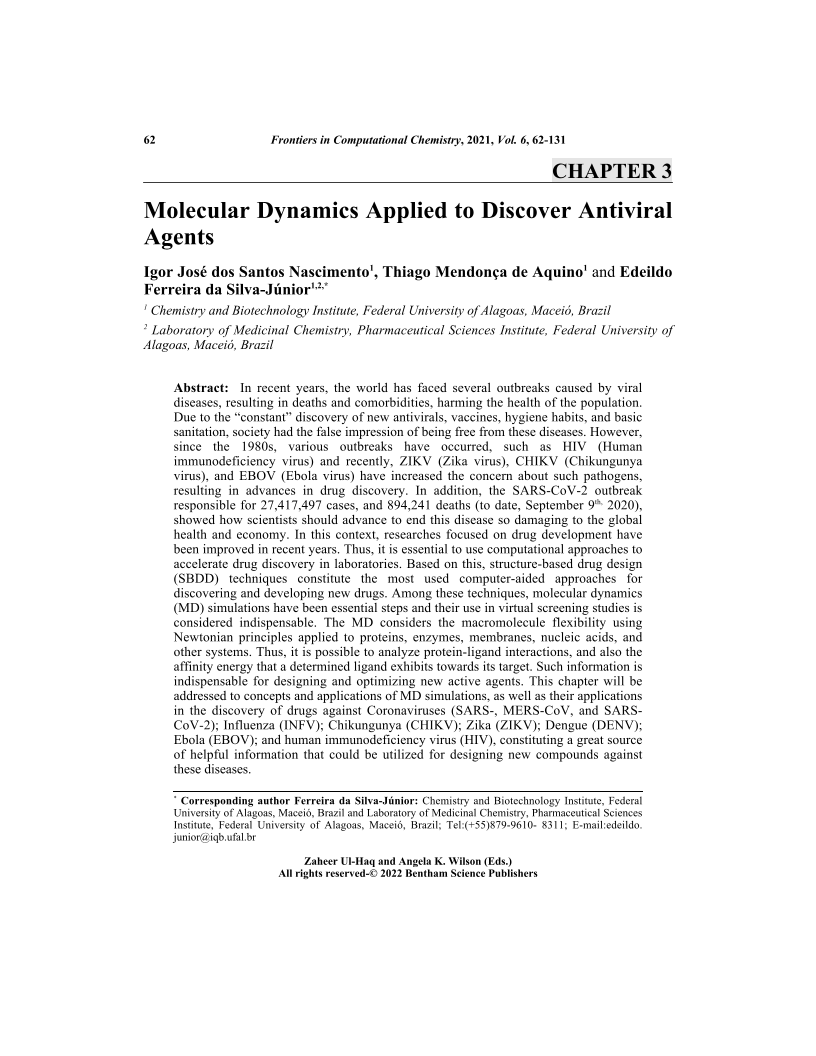
In recent years, the world has faced several outbreaks caused by viral diseases, resulting in deaths and comorbidities, harming the health of the population. Due to the "constant" discovery of new antivirals, vaccines, hygiene habits, and basic sanitation, society had the false impression of being free from these diseases. However, since the 1980s, various outbreaks have occurred, such as HIV (Human immunodeficiency virus) and recently, ZIKV (Zika virus), CHIKV (Chikungunya virus), and EBOV (Ebola virus) have increased the concern about such pathogens, resulting in advances in drug discovery. In addition, the SARS-CoV-2 outbreak responsible for 27,417,497 cases, and 894,241 deaths (to date, September 9th, 2020), showed how scientists should advance to end this disease so damaging to the global health and economy. In this context, researches focused on drug development have been improved in recent years. Thus, it is essential to use computational approaches to accelerate drug discovery in laboratories. Based on this, structure-based drug design (SBDD) techniques constitute the most used computer-aided approaches for discovering and developing new drugs. Among these techniques, molecular dynamics (MD) simulations have been essential steps and their use in virtual screening studies is considered indispensable. The MD considers the macromolecule flexibility using Newtonian principles applied to proteins, enzymes, membranes, nucleic acids, and other systems. Thus, it is possible to analyze protein-ligand interactions, and also the affinity energy that a determined ligand exhibits towards its target. Such information is indispensable for designing and optimizing new active agents. This chapter will be addressed to concepts and applications of MD simulations, as well as their applications in the discovery of drugs against Coronaviruses (SARS-, MERS-CoV, and SARSCoV- 2); Influenza (INFV); Chikungunya (CHIKV); Zika (ZIKV); Dengue (DENV); Ebola (EBOV); and human immunodeficiency virus (HIV), constituting a great source of helpful information that could be utilized for designing new compounds against these diseases.
-
From This Site
/content/books/9789815036848.chapter-3dcterms_subject,pub_keyword-contentType:Journal -contentType:Figure -contentType:Table -contentType:SupplementaryData105
