


Gene Therapy and Editing for the Treatment of Single-Gene Pain Disorders
- Authors: Fahad Hassan Shah1, Song Ja Kim2, Jawaria Idrees3, Muniba Tariq4, Syed Haroon Khalid5, Ikram Ullah Khan6, Sajid Asghar7, Saad Salman8
-
View Affiliations Hide Affiliations1 Department of Biological Sciences, College of Natural Sciences, Kongju National University, Gongju 32588,Korea 2 Department of Biological Sciences, College of Natural Sciences, Kongju National University, Gongju 32588,Korea 3 Department of Biochemistry, Lady Reading Hospital, Peshawar, KPK, 25000,Pakistan 4 The University of Lahore, Islamabad Campus, Islamabad 44000,Pakistan 5 Department of Pharmaceutics, Government College University, Faisalabad 38000,Pakistan 6 Department of Pharmaceutics, Government College University, Faisalabad 38000,Pakistan 7 Department of Pharmaceutics, Government College University, Faisalabad 38000,Pakistan 8 The University of Lahore, Islamabad Campus, Islamabad 44000,Pakistan
- Source: Nanotherapeutic Strategies and New Pharmaceuticals Part II , pp 232-260
- Publication Date: December 2021
- Language: English


Gene Therapy and Editing for the Treatment of Single-Gene Pain Disorders, Page 1 of 1
< Previous page | Next page > /docserver/preview/fulltext/9789815036725/chapter9-1.gif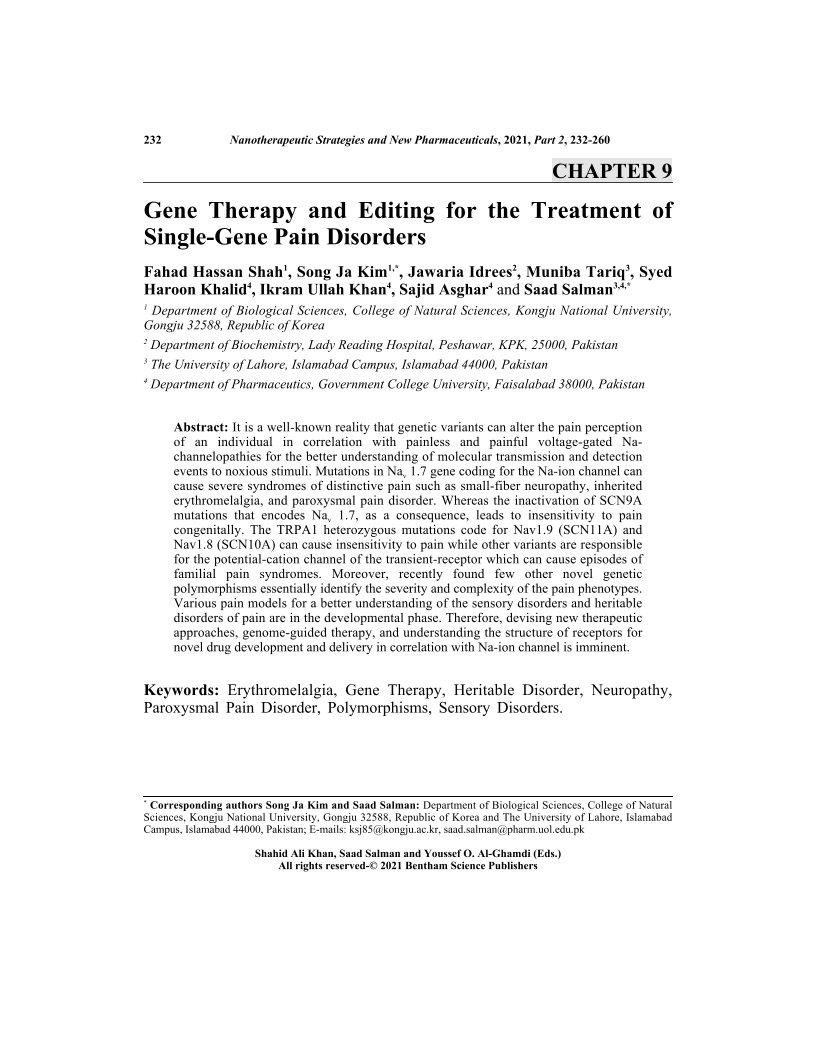
It is a well-known reality that genetic variants can alter the pain perception of an individual in correlation with painless and painful voltage-gated Nachannelopathies for the better understanding of molecular transmission and detection events to noxious stimuli. Mutations in Nav 1.7 gene coding for the Na-ion channel can cause severe syndromes of distinctive pain such as small-fiber neuropathy, inherited erythromelalgia, and paroxysmal pain disorder. Whereas the inactivation of SCN9A mutations that encodes Nav 1.7, as a consequence, leads to insensitivity to pain congenitally. The TRPA1 heterozygous mutations code for Nav1.9 (SCN11A) and Nav1.8 (SCN10A) can cause insensitivity to pain while other variants are responsible for the potential-cation channel of the transient-receptor which can cause episodes of familial pain syndromes. Moreover, recently found few other novel genetic polymorphisms essentially identify the severity and complexity of the pain phenotypes. Various pain models for a better understanding of the sensory disorders and heritable disorders of pain are in the developmental phase. Therefore, devising new therapeutic approaches, genome-guided therapy, and understanding the structure of receptors for novel drug development and delivery in correlation with Na-ion channel is imminent.
-
From This Site
/content/books/9789815036725.chapter9dcterms_subject,pub_keyword-contentType:Journal -contentType:Figure -contentType:Table -contentType:SupplementaryData105
