


Molecular Pharming: Research, Developments and Future Perspective
- Authors: Muhammad Sarwar Khan1, Ghulam Mustafa2, Faiz Ahmad Joyia3
-
View Affiliations Hide Affiliations1 Centre of Agricultural Biochemistry & Biotechnology (CABB), University of Agriculture, Faisalabad, Pakistan 2 Centre of Agricultural Biochemistry & Biotechnology (CABB), University of Agriculture, Faisalabad, Pakistan 3 Centre of Agricultural Biochemistry & Biotechnology (CABB), University of Agriculture, Faisalabad, Pakistan
- Source: Frontiers in Molecular Pharming , pp 119-161
- Publication Date: December 2021
- Language: English


Molecular Pharming: Research, Developments and Future Perspective, Page 1 of 1
< Previous page | Next page > /docserver/preview/fulltext/9789815036664/chapter-6-1.gif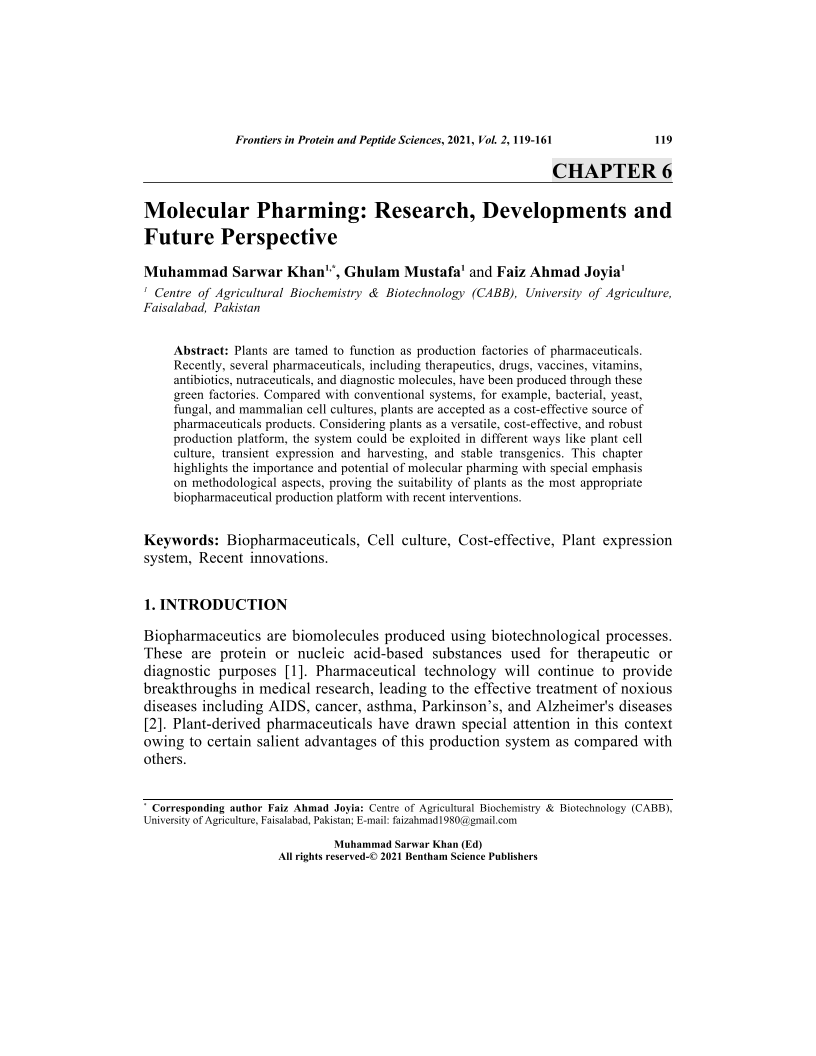
Plants are tamed to function as production factories of pharmaceuticals. Recently, several pharmaceuticals, including therapeutics, drugs, vaccines, vitamins, antibiotics, nutraceuticals, and diagnostic molecules, have been produced through these green factories. Compared with conventional systems, for example, bacterial, yeast, fungal, and mammalian cell cultures, plants are accepted as a cost-effective source of pharmaceuticals products. Considering plants as a versatile, cost-effective, and robust production platform, the system could be exploited in different ways like plant cell culture, transient expression and harvesting, and stable transgenics. This chapter highlights the importance and potential of molecular pharming with special emphasis on methodological aspects, proving the suitability of plants as the most appropriate biopharmaceutical production platform with recent interventions.
-
From This Site
/content/books/9789815036664.chapter-6dcterms_subject,pub_keyword-contentType:Journal -contentType:Figure -contentType:Table -contentType:SupplementaryData105
