


Making Trauma-Sensitive Practice & Trauma- Informed Approaches a Priority
- By Kathleen Stephany1
-
View Affiliations Hide Affiliations1 Full Time Nurse Educator in the Faculty of Health SciencesDouglas CollegeBC Canada
- Source: Cultivating Empathy: Inspiring Health Professionals to Communicate More Effectively (Revised Edition) , pp 151-168
- Publication Date: January 2022
- Language: English


Making Trauma-Sensitive Practice & Trauma- Informed Approaches a Priority, Page 1 of 1
< Previous page | Next page > /docserver/preview/fulltext/9789815036480/chapter-7-1.gif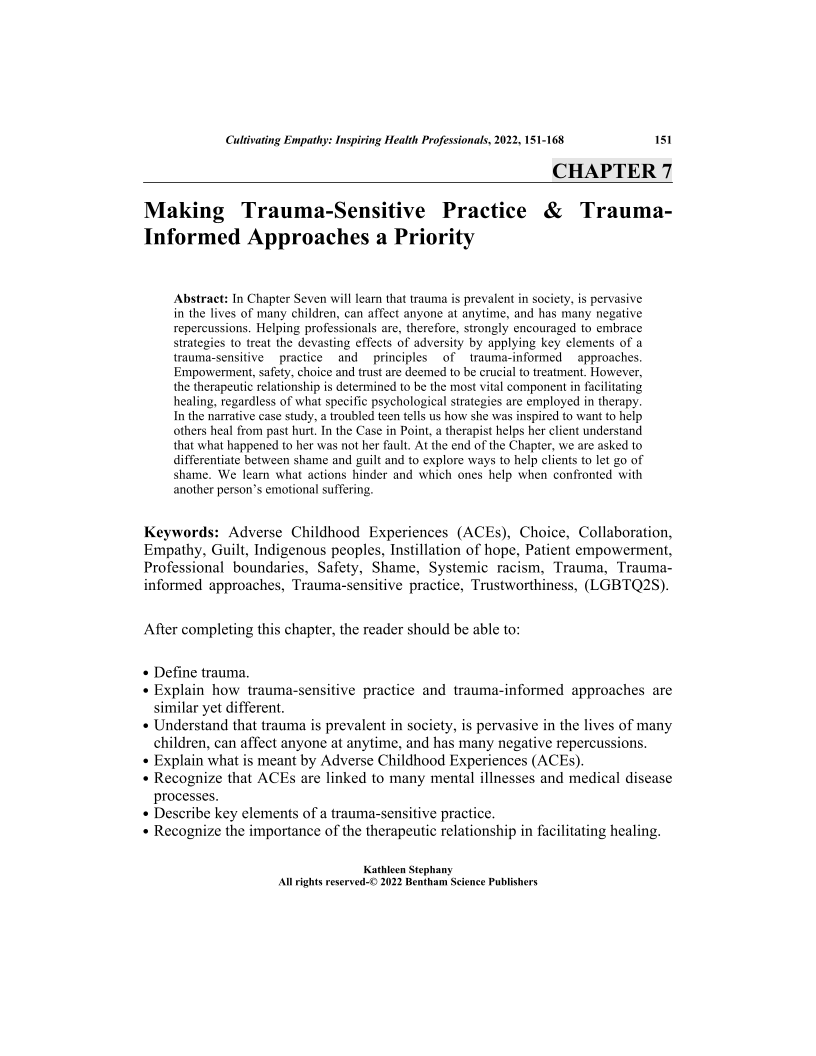
<div>In Chapter Seven will learn that trauma is prevalent in society, is pervasive</div><div>in the lives of many children, can affect anyone at anytime, and has many negative</div><div>repercussions. Helping professionals are, therefore, strongly encouraged to embrace</div><div>strategies to treat the devasting effects of adversity by applying key elements of a</div><div>trauma-sensitive practice and principles of trauma-informed approaches.</div><div>Empowerment, safety, choice and trust are deemed to be crucial to treatment. However,</div><div>the therapeutic relationship is determined to be the most vital component in facilitating</div><div>healing, regardless of what specific psychological strategies are employed in therapy.</div><div>In the narrative case study, a troubled teen tells us how she was inspired to want to help</div><div>others heal from past hurt. In the Case in Point, a therapist helps her client understand</div><div>that what happened to her was not her fault. At the end of the Chapter, we are asked to</div><div>differentiate between shame and guilt and to explore ways to help clients to let go of</div><div>shame. We learn what actions hinder and which ones help when confronted with</div><div>another person's emotional suffering.</div>
-
From This Site
/content/books/9789815036480.chapter-7dcterms_subject,pub_keyword-contentType:Journal -contentType:Figure -contentType:Table -contentType:SupplementaryData105
